

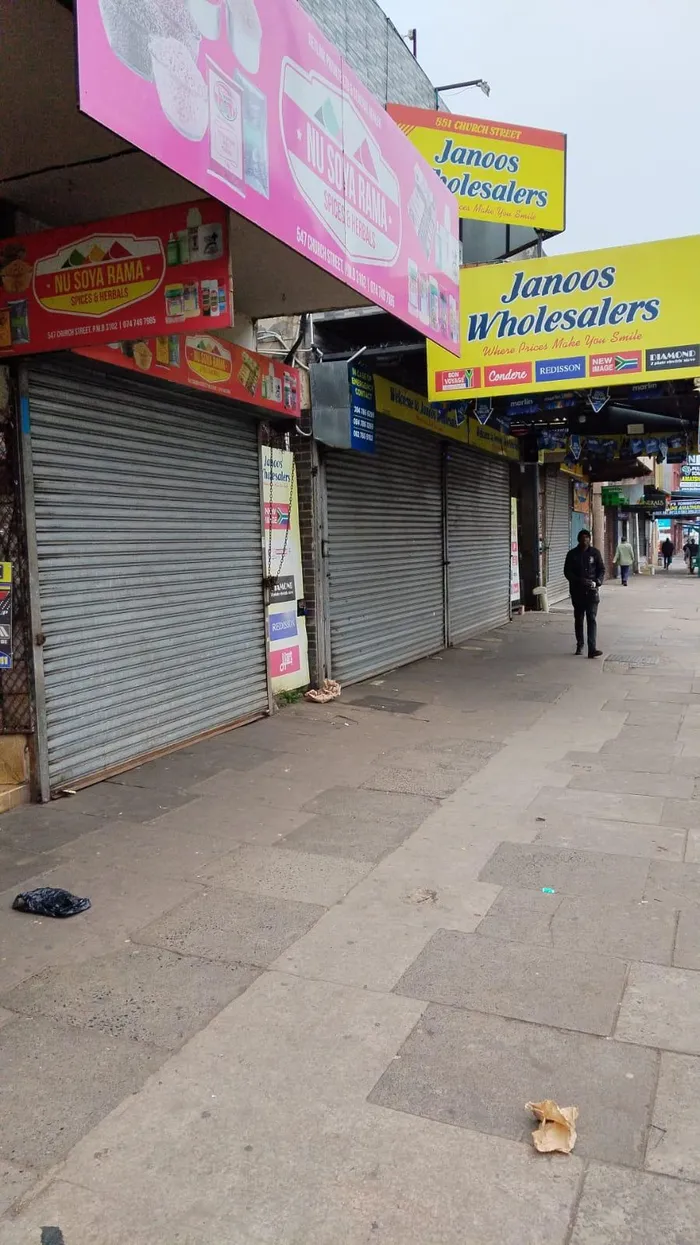
Most shops in the Pietermaritzburg CBD were closed on Tuesday in anticipation of looting during protests against illegal foreign nationals.
Image: Bongani Hans: Independent Media
Some South Africans experienced inconveniences in Pietermaritzburg on Tuesday morning, struggling to buy basic necessities like bread and milk after foreign nationals' tuck shops were shut down or even looted.
Tuesday was the day in which March and March, which is lobbying for illegal foreigners to leave the country, led marches across the country.
Although the city was identified as one of 15 areas with a high risk level of looting and attack on foreign nationals, police visibility was low.
Most police officers were concentrated at Dales Park outside the CBD, an area where foreigners, especially Malawians, had been sleeping since June 19 while waiting for the buses to transport them to the Musina border post for document processing before being allowed to leave the country.
Few incidents of looting were reported in the CBD and surrounding areas, but the situation remained relatively calm.
Sources said police prevented a small group of protesters from marching to the Dales Park, fearing a confrontation with departing foreigners.
Some of the local nationals expressed fear of losing employment as foreign nationals run hardware shops, which employed them, have been closed. and few that were opened were under heavily armed security guards and their gates were only opened for customers to go in.
Only the South African brand shops were open while most shops belonging to foreigners remained closed.
Taxi operators complained about a lack of commuters because their business mostly depended on people employed by foreign businesses.
On Tuesday morning, people moved from one area to another looking for open tuck shops to buy breakfast, bread, and milk as shopping centres are far away from them.
“I have been going from one tuck shop to another looking for bread, small sugar and milk for breakfast and all of them are closed.
“The one up the road was looted by young men who gained entry through the roof on Sunday and now we are suffering the same way we did during looting in 2021,” said a resident of Thornville.
In the townships, such as Imbali, residents said the closure of the shops has caused significant inconvenience in their daily lives.
“Right now I have to get my container, which I bought last week in anticipation of the closure of the foreign shops, so that I can start my own business and make a living out of it,” said Zama Ngema.
Some residents who rented their homes to foreigners were left with tuck shop stuff and they said they will take over the business.
However, local residents who are street vendors in the city’s CBD said they were relieved that foreigners, who competed with them in selling simple things such as fruits and vegetables, have left the city.
“Since Thursday (June 24) I have been selling enough to generate R2000 profit per day, something that had been impossible even since I started selling in 2021,” said Zandile Mlotshwa.
She said she has no sympathy for foreign nationals as they were dominating the street vending business, which should be reserved for local residents.
“They must not be beaten or harmed but they must go back to their countries because they are giving us unfair competition,” said Mlotshwa.
She said with the fierce competition from foreigners she would make less than R200 a day, which made it a struggle to make ends meet.
Nomusa Sithole said she is now enjoying more clients.
“Their departure has made a lot of difference in my business as it was unfair to compete with foreigners.
“They contribute to the high rate of young people smoking whoonga and sleeping on the pavements and those young people would rob people of their phones and sell to foreigners’ shops,” said Sithole.
Taxi operators, whose South African National Taxi Council has expressed opposition to the protests against foreign nationals, also complained that the closure of foreign national shops had robbed them of their clients.
“The business is slow because the closure of these shops has a negative effect on our transport business,” said a taxi owner who asked to remain anonymous.