

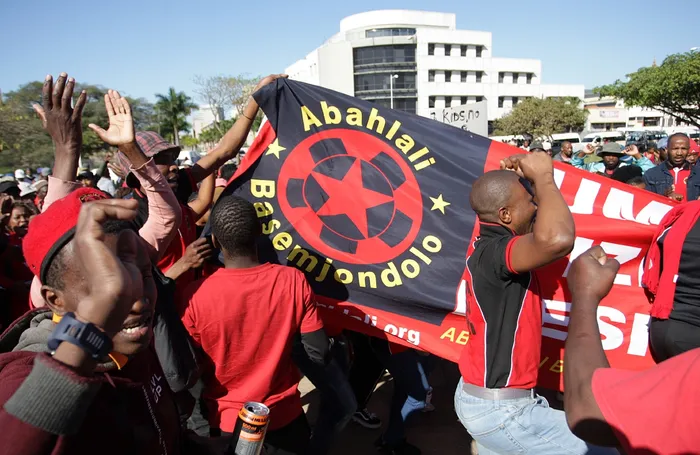
Abahlali baseMjondolo has distanced itself from anti-immigrant protests after a fake poster using the movement’s name and logo was circulated online.
Image: Independent Newspapers Archives
Abahlali baseMjondolo has denied any involvement in anti-immigrant protests after a fake poster using the movement’s name and logo was circulated on WhatsApp and Facebook.
In a statement, Abahlali baseMjondolo said the poster falsely claimed to have been issued by the movement and was being used to encourage xenophobic mobilisation.
"Abahlali baseMjondolo are not xenophobic!" the movement said.
"The post is fake. It is disinformation designed to incite hatred and violence. Those who created and shared this post must immediately cease circulating fake information."
The statement comes amid growing anti-immigrant mobilisation in parts of the country, including marches and campaigns linked to groups such as the March and March movement and the Labour and Civic Organisation (LACO).
Some campaigns have also circulated a June 30 deadline linked to demands around undocumented foreign nationals.
On Wednesday, Abahlali General Secretary Thapelo Mohapi said the movement was not part of any anti-migrant or xenophobic campaign and had always rejected xenophobia and ethnic politics.
"We believe in Ubuntu, and we will remain the movement that represents all poor and marginalised people in our country and will defend and uphold the dignity of all African people," Mohapi said.
He said Abahlali was a movement of shack dwellers founded on the principle that every human life matters.
Mohapi stated that the movement's struggles focus on poverty, evictions, poor service delivery, and the fight for land, housing, and dignity for all.
"We do not organise against our neighbours based on nationality, language, or name."
Mohapi warned that spreading false information targeting migrants could put lives at risk and called on those who had received the poster to delete it and not forward it.
"Spreading false content that targets migrants puts lives at risk and violates the law."
Mohapi said the movement would pursue legal action against those responsible for creating and circulating the poster, which he said incited violence and deliberately tarnished Abahlali’s name.
"We will be taking legal action against those who made and distributed this post, which incites violence and deliberately tarnishes our name."
He said Abahlali had instructed its legal team to identify the originators and distributors of the fake content and to pursue available civil and criminal remedies.
The movement had not responded to questions about whether legal action had already been instituted, whether the matter had been reported to police, or whether any people had been identified by the time of publication.
On Wednesday, organised labour at the National Economic Development and Labour Council (Nedlac), comprising Cosatu, Fedusa, Saftu and Nactu, also raised concern about the rise in anti-migrant sentiment.
In a statement issued after a media briefing at Nedlac, the federations said South Africa’s economic crisis was not caused by migrants.
The federations said unemployment, poverty, inequality, crime, and deteriorating public services were real grievances, but these were rooted in economic stagnation, deindustrialisation, corruption, austerity, weak governance, and state failure.
"Migrants must not be made scapegoats for failures they did not create," they said.
The federations also rejected vigilantism, saying the enforcement of immigration, labour, and criminal laws was the responsibility of the democratic state and its authorised institutions.
"No individual, organisation or self-appointed structure has the right to stop people in the streets, demand identity documents, raid workplaces, close businesses, or prevent people from accessing public services," the statement read.
The federations also noted calls for national action on June 30, warning that the action had not been called by recognised labour federations and did not constitute a protected strike.
"Workers who stay away from work will not enjoy the protections afforded to participants in a protected strike."
They urged workers to report for duty and called on the government to act against intimidation, unlawful shutdowns, attacks on workers, violence, and threats to critical infrastructure.
Mohapi said xenophobia would not solve the problems faced by poor communities.
"Xenophobia will not fix broken toilets, unemployment, or housing. It will not ensure a fair distribution of land and wealth. It will not restore the dignity of the oppressed."
He added that Abahlali refused to allow the name of the movement to be misused for political opportunism ahead of the local government elections.