

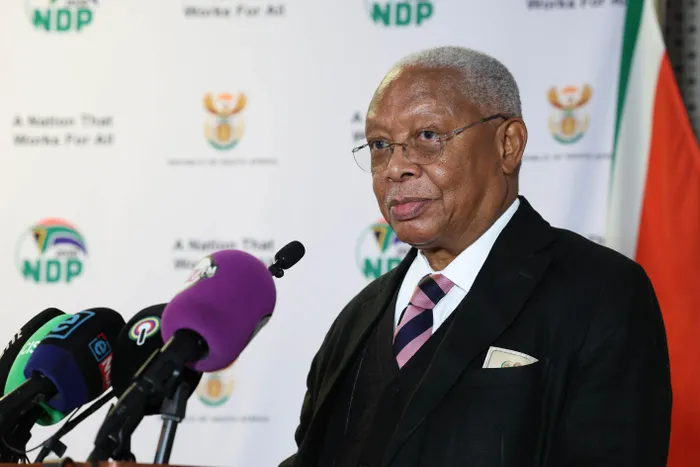
Health Ombud, Professor Taole Mokoena, this week released the findings of a joint investigation into a series of deaths involving healthcare professionals at public health establishments in KwaZulu-Natal.
Image: Ntswe Mokoena/GCIS
The Health Ombud's findings of significant systemic challenges in KwaZulu-Natal's healthcare system must urgently be addressed.
This is according to Dr Imran Keeka, MPL, DA KZN spokesperson on Health who was commenting after the Office of the Health Ombud released the findings after a joint investigation into the tragic deaths of six healthcare professionals employed within provincial public hospitals.
The Ombud found no evidence of a direct causal link between the deaths and workplace bullying, victimisation or adverse working conditions at the hospitals investigated. However it did find that there were significant systemic challenges affecting healthcare professionals throughout KZN’s health system.
The investigation was sparked after the death of young Dr Alulutho Mazwi, a medical intern at Prince Mshiyeni Memorial Hospital. At the time it was alleged that Dr Mazwi had been ordered to report for work despite being sick and had later died. However the investigation found that this claim was fabricated.
Professor Taole Mokoena said the investigation showed that Dr Mazwi became ill at his hospital doctors’ residence and was rushed to the hospital medical emergency room, where he was pronounced dead on arrival.
He said the likely cause of Dr Mazwi’s death was pulmonary embolism from deep vein thrombosis.
Keeka said the outcome brought clarity to a matter that had caused immense public concern. He added that the findings also served to exonerate healthcare professionals and managers, against whom allegations were made without sufficient evidence, including the senior clinical consultant who faced suspension in the aftermath of Dr Mazwi's death.
Other deaths that were investigated included that of Dr Tumelo Kgaladi, a 31-year-old doctor who died at his residence while not on duty at Addington Hospital. The investigation had found that he had mental health problems and an inquest into his death is under way.
Other matters investigated included:
In all of the matters, Mokoena said the investigation found no evidence pointing to a direct causal link between the deaths under the investigation and workplace bullying, victimisation, adverse working conditions at any of the facilities concerned.
However he said while the report concluded that the deaths cannot be directly attributed to workplace bullying or working conditions, this must not be interpreted as a clean bill of health for KZN’s public healthcare system.
The investigation found that there were persistent staffing shortages, frozen vacant posts, excessive workloads, shortages of medical equipment and supplies, infrastructure challenges, inadequate employee wellness support and security concerns affecting healthcare workers.
Keeka said the DA has consistently raised similar concerns through oversights, parliamentary questions, debates and engagements with frontline healthcare workers.
“We continue to receive reports of excessively long working hours, severe staff shortages, overwhelming patient volumes, inadequate clinical support and workplace cultures in some facilities where junior staff feel unable to raise concerns freely. Whether described as intimidation, poor management or bullying, these experiences cannot be ignored simply because they remain difficult to quantify.”
He said KZN’s Department of Health (DoH) must urgently implement the Ombud's recommendations and address systemic weaknesses that continue to undermine staff wellbeing and patient care.
“While it is understandable that this cannot be immediately addressed in the face of its long-standing poor financial predicament, there must be a commitment to prioritising these issues. KZN’s Health Portfolio Committee must now request the full investigation report. It is duty-bound to interrogate its findings and recommendations in detail, identify areas requiring urgent intervention, and ensure that the DoH is held accountable for implementing it.”
Keeka said healthcare professionals deserve safe, supportive and well-managed workplaces while KZN’s people deserve a healthcare system that enables dedicated professionals to provide quality care - without unnecessary administrative, operational or institutional obstacles.
For more stories from The Mercury, click the link THE MERCURY