

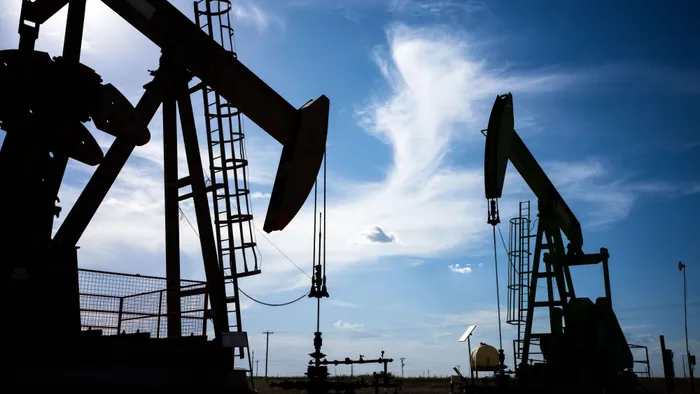
Renewed conflict between the United States and Iran has reignited fears over global oil supplies, with analysts warning crude prices could remain elevated through 2027.
Image: File / AFP
Renewed hostilities between the United States and Iran have reignited concerns over global energy security, sending oil prices sharply higher and reinforcing expectations that crude markets will remain under pressure well into 2027.
Market analysts say the latest escalation around the Strait of Hormuz has reversed the brief optimism that had eased supply concerns, with crude prices climbing as traders reassess the risks to one of the world's most critical energy shipping routes. Brent crude, the international benchmark, climbed to $84.84 per barrel on Wednesday afternoon, up 11.6% from $76.01 on Sunday.
Sarah Raffoul, Senior Analyst at Argus Media, said the market had underestimated how vulnerable global oil supplies remain to disruptions in the region.
"The brief optimism that pushed oil markets toward contango has evaporated, with renewed US Iran hostilities exposing how dependent global supply chains remain on the Strait of Hormuz and pushing crude prices sharply higher," Raffoul said.
She warned that the latest crisis was unfolding under far tighter market conditions than previous disruptions.
"A second Hormuz crisis is unfolding against a much weaker inventory backdrop, with OECD oil stocks near multi decade lows and governments across Asia planning major strategic reserve expansions that could add hundreds of millions of barrels of demand over the next 12 to 18 months."
The Strait of Hormuz is one of the world's most strategically important shipping corridors, carrying a significant share of globally traded crude oil and refined petroleum products. Any disruption to traffic through the waterway has immediate implications for international energy prices.
Raffoul said refined fuel markets were facing even greater pressure than crude oil.
"Refined oil product markets are even tighter than crude, as product flows through the Strait have proven more constrained than crude exports. At the same time, Ukrainian drone attacks on Russian refineries and Moscow's diesel export ban remove supply from a market where European and US diesel inventories are already well below seasonal norms."
The tightening diesel market is expected to have wider economic implications, particularly for industries heavily reliant on freight transport, mining and agriculture.
Gasoline prices are also climbing despite being less directly exposed to disruptions in the Gulf.
According to Raffoul, strong seasonal demand is colliding with constrained refinery output.
"Gasoline prices are rising despite limited direct exposure to Strait disruptions, as peak Northern Hemisphere driving demand collides with constrained supply. Refiners have prioritised higher margin diesel and jet fuel production, leaving gasoline balances increasingly tight."
The shifting dynamics are also reshaping global fuel trade patterns.
"Global oil product trade flows are being reshaped once again, with the US replacing Russia as Brazil's leading diesel supplier and refiners increasingly redirecting barrels away from Europe in response to stronger margins elsewhere," Raffoul said.
China could also become an increasingly important factor in determining oil prices over the coming months.
Raffoul said Beijing's recent policy changes could lift crude demand after a period of weaker imports.
"China could emerge as a surprise source of rising import demand, having relaxed restrictions on gasoline, diesel and jet fuel exports. Higher refinery runs and export activity could trigger a rebound in crude imports after a steep decline earlier this year."
However, she cautioned that renewed instability in the Middle East could alter China's strategy.
"Renewed tensions in the Middle East could undermine the recovery in Chinese product exports, prompting Beijing to prioritise domestic supply security over export growth. A new inventory linked policy is tightening supply constraints further, even as stronger margins make exports more attractive than they have been in recent weeks."
Looking ahead, Raffoul believes the combination of geopolitical instability, historically low inventories and recovering demand will continue to support elevated oil prices.
"The combination of geopolitical risk, low inventories, recovering Chinese crude demand and constrained products supply challenges forecasts of a significant oil surplus, suggesting prompt crude prices and refining margins are likely to remain supported through 2026 and into 2027."
The outlook suggests businesses and consumers may continue to face elevated fuel costs, while central banks will closely monitor the inflationary impact of higher energy prices on the global economy.
Meanwhile, amid continuing instability in the Middle East, global markets are experiencing a notable shift in sentiment following the release of the latest Consumer Price Index (CPI) data from the US.
Bianca Botes, MD at Citadel Global said that the CPI came in at a softer-than-anticipated 3.5% for June, prompting a reassessment of rate hike expectations and giving investors a glimmer of hope amidst ongoing turbulence.
"This positive response from investors reflects a growing complacency as they adjust their expectations for future monetary policies in light of the latest economic indicators," Botes said on Wednesday.
In Asia, the positive trends continued, with the Nikkei 225 index in Japan climbing by 1%. Notably, the Korea Composite Stock Price Index surged by an impressive 7%, illustrating the resilience of these markets against the backdrop of geopolitical unrest.
"The price of Brent crude oil remains closely tied to developments in the Middle East, as it traded at $84.98 per barrel on Wednesday.US President Donald Trump also reaffirmed that military actions will persist until a satisfactory deal is achieved in the region," Botes added.
Gold prices, however, struggled to maintain their gains driven by the CPI report, retreating 0.5% on Wednesday morning to settle at $4,030 per ounce.
"Investors seem to be recalibrating their gold holdings as the anticipated easing of inflation pressures begins to reshape market dynamics. Adding to the mix, robust economic data from China released this morning suggests a stabilising economy," Botes said.
The South African rand demonstrated resilience, as it traded within a range as it strengthened back towards R16.38 against the US dollar following the softer CPI data.
Follow Business Report on Facebook, X and on LinkedIn for the latest Business and tech news.