

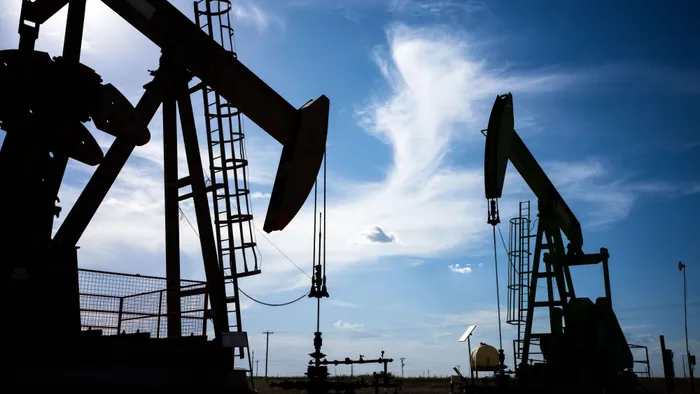
Oil prices went up over 5% amid indications that the US and Iran peace deal has faltered, with the US launching new bombing attacks on Iran after the Middle Eastern state attacked vessels in the Strait of Hormuz.
Image: File / AFP
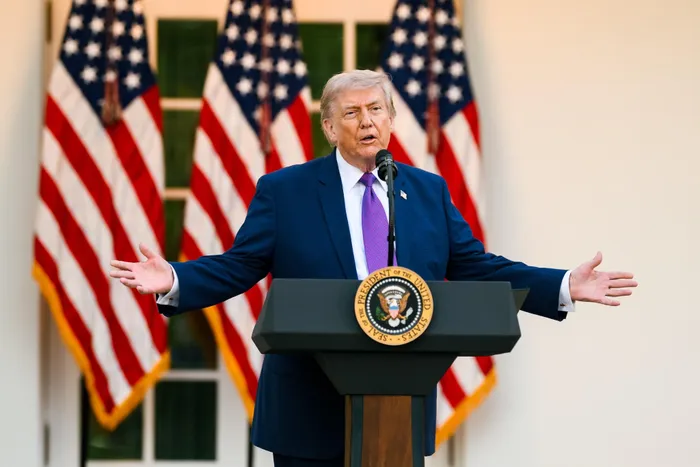
Donald Trump's declaration that the ceasefire with Iran was effectively over rattled global markets, sending oil prices sharply higher and triggering a broad retreat in equities.
Image: Facebook/The White House
Global financial markets came under renewed pressure on Wednesday after United States President Donald Trump declared the ceasefire with Iran effectively over, reigniting fears of further conflict in the Middle East and sending oil prices sharply higher.
Brent crude climbed more than 5% to nearly $79 a barrel during trading after the US launched strikes against dozens of Iranian targets in response to attacks on ships in the Strait of Hormuz. The renewed escalation reversed weeks of easing oil prices that had followed optimism surrounding a peace agreement announced just three weeks ago.
Neil Wilson, Investor Strategist at Saxo UK, said Trump's remarks significantly worsened already fragile market sentiment.
"President Trump woke up in a very bad mood. Equity markets lurched lower and oil kicked on after Trump said the ceasefire between the US and Iran was over," Wilson said.
"Sentiment was already wobbling at the open after the US and Iran traded military strikes but Trump's remarks set sparks flying. The comments underscored fears that we could see further escalation and a return to pre memorandum of understanding conditions."
Wilson cautioned that while markets were reacting sharply, a complete collapse in negotiations was not yet the most likely outcome.
"For what it's worth I don't think this is the base case as Trump is wont to throw around threats and both sides need to return to a kind of hazy pre war normality.
But it clearly seems the risk of a total breakdown in negotiations has increased and markets are reflecting this fresh dynamic," he said.
Trump dismissed any prospect of further negotiations with Iran.
"For me, I think it's over. As far as I'm concerned, it's just a waste of time," Trump said.
"I do not want to deal with them anymore, they are scum."
"There is something wrong with them. They are cuckoo. As far as I am concerned, it is over."
According to Anchor Capital, the conflict premium has returned rapidly after the latest military action.
"The US military has launched strikes against dozens of Iranian targets in response to tanker attacks," the investment firm noted.
Brent crude rose from about $71 a barrel to above $76 within two trading sessions before extending gains following Trump's comments, reflecting renewed concerns over supply disruptions through the Strait of Hormuz.
The JSE also felt the impact of the deteriorating geopolitical outlook.
The FTSE/JSE All Share Index declined 1.66% to 108 489.03 at the close, with platinum miners, gold miners, banks and telecommunications companies leading the losses as investors reduced exposure to risk assets.
Technology shares provided some support however, with Naspers advancing 5.3% to R898.28 per share and Prosus gaining 4.39% to R764.04, becoming the two top gainers in the bourse for the day by value.
Sasol, which benefits from higher world oil prices, also gained 4.2% to R170.45. The FTSE/JSE Precious Metals and Mining Index was down by 4.51%
Global equity markets reflected the broader risk off mood.
In the US, the S&P 500 fell 0.4%, the Nasdaq declined 1.2% and the Dow Jones Industrial Average slipped 0.2%. Semiconductor companies remained under pressure as Intel dropped 9.7%, AMD fell 6.5% and Micron Technology lost 4.7%.
European markets weakened sharply following Trump's comments.
"European equity indices had traded down by around 1% but extended losses to beyond 2% on the session on the comments," Wilson said.
"The DAX was 2.3% lower while the CAC was 2.1% lower. The FTSE 100 was down a little less as Shell and BP did some heavy lifting but this wasn't enough to offset some big losses across airlines, travel, housebuilders and miners."
Wilson added that banks also came under pressure while US futures moved sharply lower.
"Bond yields have moved up on inflation concerns and the dollar gained ground back."
Asian markets were mixed as investors assessed the latest developments. Japan's Nikkei 225 declined 0.7%, South Korea's Kospi fell 1%, while Hong Kong's Hang Seng Index rose 2%.
Energy companies benefited from the jump in oil prices. In the United States, Devon Energy gained 5.1%, Diamondback Energy climbed 3.9% and Chevron rose 3.5%.
Meanwhile, gold initially declined 1.6% before recovering some losses as investors returned to traditional safe haven assets.
The rand weakened against the US dollar as geopolitical tensions intensified, as it traded at R16.42 against the dollar on Wednesday
South Africa's 10-year government bond yield edged higher to 8.34% as inflation concerns resurfaced alongside rising energy prices.
Visit:www.businessreport.co.za