

Explore the resurgence of currency wars in 2026, where major economies are quietly manipulating exchange rates, impacting global markets and economies. Discover how these strategies affect countries like South Africa and the broader implications for international trade.
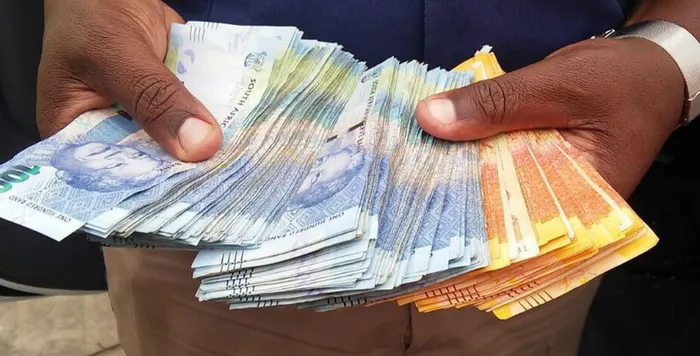
Image: File
The term "currency war" was last in wide circulation around 2010, when Brazil's then-Finance Minister, Guido Mantega, used it to describe what major economies were doing to their exchange rates through quantitative easing and competitive devaluation.
The label faded but deployment of these practices did not.
What is happening in currency markets in 2026 is not broadly coordinated, declared, or acknowledged by any of the parties involved, it is, however, systematic.
Japan, China, India and several smaller emerging market economies are all managing their exchange rates more actively than their public communications suggest, through a combination of direct intervention, capital flow restrictions and monetary policy, calibrated as much for exchange rate stability as for domestic inflation targets.
The cumulative effect is a global currency environment where market price discovery (the continuous process of determining an asset’s price through interactions of buyers and sellers) is quietly being overridden and where the countries that are not intervening – South Africa (SA) included – are absorbing the consequences.
Japan offers the clearest case.
The yen has been a managed currency for years but the mechanics have shifted.
The Bank of Japan (BoJ) spent the better part of 2024 defending the ¥160/$ level through direct intervention, burning through foreign exchange reserves at a pace that drew attention from the International Monetary Fund (IMF).
The underlying problem has not been resolved. Japanese monetary policy remains the loosest among developed market central banks on a real-rate basis, which means the yen carry trade – borrowing in yen at near-zero rates to invest in higher-yielding assets elsewhere – remains structurally attractive.
Every time that trade unwinds, as it did violently in August 2024, it sends shockwaves through asset markets that have nothing obvious to do with Japan.
China's management of the yuan is more deliberate and less apologetic. The People's Bank of China (PBoC) sets a daily fixing rate for the currency and allows it to trade within a narrow band around that fix. The fixing itself is a managed number.
When the yuan faces depreciation pressure – from capital outflows, tariff-related trade deterioration, or dollar strength – the PBoC adjusts the fix to slow the move, intervenes through state banks in the offshore market and occasionally tightens restrictions on capital leaving the country.
None of this is covert – China has never pretended to have a freely floating exchange rate.
The effect on trading partners is the same regardless of how it is publicly positioned. A managed yuan that absorbs dollar strength more slowly than it otherwise would, exports deflationary pressure to everyone competing with Chinese goods.
India's situation has been complicated by the Iran conflict, when the rupee hit record lows earlier this year as the oil import bill expanded and foreign exchange reserves came under pressure.
The Reserve Bank of India responded with a combination of direct dollar sales, restrictions on banks' open foreign exchange positions and pressure on exporters to repatriate dollar earnings immediately.
Indian Prime Minister, Narendra Modi's public appeal to citizens to stop buying gold was, in part, a demand management tool for foreign exchange. India is not devaluing its currency, it is defending it. But the intervention dynamic is the same – the market price is not being allowed to clear.
The countries sitting outside this system are the ones absorbing the adjustment.
When the yen is kept from weakening as fast as fundamentals suggest it should and when the yuan is managed to limit depreciation, the currencies that float freely take a larger share of the impact from the dollar's movement.
The rand is one of those currencies.
SA does not intervene in the currency market in any meaningful way.
The South African Reserve Bank (Sarb) does not have the reserves to do so sustainably and the country's open capital account means the rand reflects global risk sentiment, commodity prices and dollar dynamics in real time.
When major economies are quietly capping their own currency weakness, freely floating emerging market currencies tend to overshoot on the downside during risk-off episodes.
As such, the rand's volatility is partly a function of what other countries' central banks are doing, not just what is happening domestically.
The broader consequence of this quiet intervention regime is that currency signals are being suppressed as economic information. Exchange rates are supposed to reflect relative economic conditions and adjust to absorb external shocks.
When they are managed, the adjustment has to happen somewhere else – in growth, inflation, or asset prices. The countries doing the managing avoid short-term pain but delay the adjustment and the countries absorbing the spillover get more volatility than they generate.
On Thursday, the US 10-year Treasury yield eased to 4.44%, partly reversing the previous session’s move higher, while the two-year yield rose to 4.20%.
Although the US Federal Reserve (Fed) kept rates unchanged, the meeting was not interpreted as dovish. The Fed’s inflation projections were revised up, around half of officials still expect a 2026 hike and new Fed Chair, Kevin Warsh, reiterated the focus on price stability. Markets have therefore shifted closer to pricing an interest rate hike by October.
United Kingdom (UK) gilts weakened as the 10-year yield rose to 4.78%, moving away from recent two-month lows.
The Bank of England (BoE) left rates at 3.75% in a seven-to-two vote, on Thursday, but the message remained cautious rather than relaxed.
Policymakers flagged lingering inflation risk from the Middle East energy shock, and BoE Governor, Andrew Bailey, warned that price pressure has not fully faded. The expected 2026 fourth quarter inflation peak was lowered to 3.25% from 3.6%.
Germany’s 10-year bund yields edged up to 2.93% but remained near mid-March lows.
Lower oil prices reduced some inflation concern after reports that the US and Iran had agreed to reopen the Strait of Hormuz. That helped sentiment but did not remove pressure from the rates backdrop. The European Central Bank (ECB) has already raised rates recently and markets still expect at least one more increase before year-end.
SA bonds softened on Thursday, with the 10-year yield up about four basis points to 8.44%.
The broader trend, however, remains constructive. Yields are still roughly 50 basis points lower over the month and about 1.7% below levels a year ago.
Local fixed income continues to benefit from firmer demand, a resilient rand, improved global risk appetite and relief from lower oil prices.
US equities finished stronger, with technology providing most of the lift. The S&P 500 gained 1%, the Nasdaq 100 added 2.4% and the Dow rose 21 points. Technology giant, Intel, led the advance, up 10.6%, after US President, Donald Trump, said the company would produce chips for Apple in the US.
The news also supported semiconductor companies, Nvidia and Micron. Airlines were firmer, including a 3.3% gain in American Airlines. Wall Street is closed on Friday for the US’s Juneteenth holiday.
The UK’s FTSE 100 fell more than 1%, dragged lower by commodity-linked shares and a cautious rates backdrop. Energy and mining counters were under pressure as Shell, BP, Rio Tinto, Glencore and Anglo American all declined. Grocery retailer, Tesco, also weakened after first-quarter sales growth missed expectations. Real estate companies, Persimmon and Land Securities and private equity firm, 3i Group, traded ex-dividend, adding to the softer tone.
The local FTSE/JSE All Share Index slipped 0.74% to 115,168.58, suggesting profit-taking after a strong recent run.
The underlying trend remains positive and the index is still up about 1.2% over one month and more than 21% over the past year.
Lower oil prices reduced geopolitical tension and a firmer global risk tone continued to support local equities.
Brent traded near $79/barrel on Thursday and was heading for a weekly decline of just over 10%.
The risk premium built into crude faded as the US-Iran MOU improved conditions around the Strait of Hormuz.
US Central Command lifted restrictions near Iranian waters, allowing delayed tankers to move, while Kuwait signalled higher output. Prices are close to giving back the gains made since the conflict began in late February.
This may hang in the balance, given Friday’s breaking news that the US and Iran have pulled back from negotiations.
Gold fell below $4,200/ounce as rate expectations became the dominant driver.
A more hawkish Fed message reduced demand for non-yielding assets, even as lower oil prices eased some inflation pressure.
The dollar’s strength remains anchored in US rate expectations, with the US Dollar Index hovering around 100.8 and close to its strongest level since May 2025.
The Fed’s interest rate hold was not viewed as dovish, given higher inflation forecasts and continued support among policymakers for a possible rate hike later in 2026.
Markets are now leaning toward an October move. Lower oil prices and reduced geopolitical risk helped sentiment, but the hawkish Fed policy signal remained the key driver.
The euro came under renewed pressure, slipping below $1.15/€ as the Fed’s projections reinforced expectations of tighter US policy.
While recent rate increases by the ECB and BoJ show that other major central banks remain alert to inflation, the market focus has shifted back to relative US rate support.
Lower oil prices have eased some inflation concern, but geopolitical risks have not fully disappeared, limiting the euro’s ability to recover.
Bianca Botes, Managing Director at Citadel Global.

Bianca Botes, Managing Director at Citadel Global.
Image: Supplied
Follow Business Report on Facebook, X and on LinkedIn for the latest Business and tech news.