

The latest flare up in the Iran conflict is adding pressure to global markets, lifting oil prices and raising concerns about higher interest rates and weaker economic growth worldwide.
Image: ISNA /AFP
Growing tensions in the Middle East are raising concerns about a prolonged period of elevated oil prices, renewed inflationary pressures and slower global economic growth, according to economists and market analysts.
United States (US) President, Donald Trump on Thursday posted on Truth Social that the US will be hitting Iran “very hard tonight“ and vowed to take Kharg Island “in the not too distant future“, assuming total control of Iran oil and gas markets.
Markets reacted with equities trimming gains and oil climbing higher. Sounds very bad, but it's more nuanced than it looks, and Brent still cannot catch much bid on any headline.
Frank Blackmore, lead economist at KPMG, said recent developments suggest hostilities involving Iran have intensified once again, undermining hopes that a lasting ceasefire could bring stability to global energy markets.
"The latest from the war in Iran is that hostilities have again increased. News going around is that the United Statess (US) has attacked various Iranian targets in retaliation for a helicopter that was shot down by the Iranian armed forces," Blackmore said.
He added that the conflict appears to be spreading beyond Iran's borders.
"This has led to attacks even in neighbouring countries in the region, and that is obviously not good in terms of the ceasefire that we have had in the last few weeks."
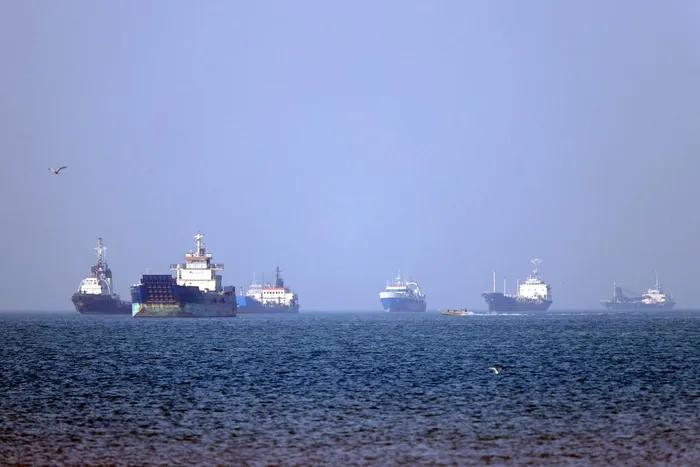
Blackmore noted reports that many vessels travelling through the strategically important Strait of Hormuz are operating under unusual conditions.
"There is news to the contrary suggesting that, especially at night, many ships are going completely dark, switching off all their lights and communications systems. There appears to be a steady trickle of vessels moving through the Strait of Hormuz, which I suspect has been the case throughout the conflict, as a certain amount of crude oil and other commodities has continued to pass through the Strait."
The Strait of Hormuz remains one of the world's most critical energy chokepoints, handling a substantial portion of global oil exports.
Blackmore warned that continued disruptions could have significant economic consequences.
"Obviously, the ongoing hostilities are not a favourable outcome and will likely prolong the period of elevated oil prices. This, in turn, will add to the inflationary pressures faced by many countries around the world, potentially leading to higher interest rates. As a consequence of these higher rates, global economic growth could also come under further pressure."
Oil market forecasts have become increasingly bullish as concerns grow over supply constraints.
Martha Tallas, crude oil analyst at Argus Media, said the market had initially expected exports from the region to recover quickly but that outlook is now changing.
"The market still seems to believe an end to the Iran war is close at hand and that exports will shortly start to build back to more normal levels," she said.
"But the market is short by around 14 million barrels a day, and given the lack of progress in negotiations we now think it is likely to remain so for the foreseeable future."
Tallas said Argus Media now expects the Strait of Hormuz to remain effectively closed until the end of August.
"Even allowing for the crude that is now being diverted for export from the Saudi Red Sea port of Yanbu and from Fujairah in the UAE, this will keep significant volumes of crude off the market."
As a result, the company has sharply revised its oil price outlook.
"Because of this, we have revised the forecast for North Sea Dated to an average of $120 per barrel for the third quarter, up from our previous $95 per barrel forecast."
While prices are expected to moderate later in the year if exports resume, Tallas cautioned that the impact could extend well into 2027 and 2028.
"Extended disruption through August would mean oil exports had been severely curtailed for six months, and this would have implications for 2027 and 2028."
The supply shortfall has largely been managed through stock releases. According to Tallas, strategic reserves have played a growing role in balancing markets.
"We estimate that around two thirds of the one billion barrels of cumulative supply loss since the strait closed has been covered by stock draws."
She added that more than 58 million barrels have already been released from the United States Strategic Petroleum Reserve, while Japan has also accelerated drawdowns from its strategic reserves.
Neil Wilson, Saxo UK Investor Strategist said that the main takeaway for the market is that the disjointed escalation that has been building this week could tilt towards a full ripping up of the ceasefire and return to full-blown hostilities.
Wilson said, "Attacks on Iranian oil infrastructure would constitute a material escalation from the previous period of kinetic action. Kharg was talked about a lot but the US refrained from taking it that far, albeit we should not that he is not talking about taking the island, but in the future, which sounds like another bargaining ploy more than anything. It's increasingly clear Trump is running out of patience with Iran but has no appetite to restart the war, so we are left with these kinds of threats and ultimatums."
Wilson said that this could be the reason why the market response remains fairly orderly.
Bianca Botes, managing director at Citadel Global, said Wall Street came under pressure as investors reacted to geopolitical risks and a sharp technology sector sell off.
"A new round of attacks and counterattacks between Iran and US forces has compounded investor anxiety, overshadowing economic indicators that, although consistent with expectations, reveal a trend of persistent inflation," Botes said.
Oil prices were trading at around $93 per barrel on Thursday, while the rand hovered near R16.51 against the US dollar as investors continued to assess the impact of escalating geopolitical tensions on global markets.
Follow Business Report on Facebook, X and on LinkedIn for the latest Business and tech news.