

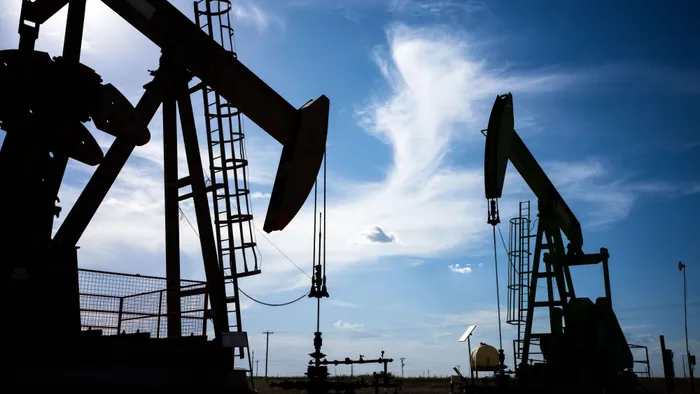
As global markets react to the upheaval stemming from the Iranian conflict, investors are being forced to reassess their strategies amidst rising oil prices, fluctuating stock performances, and a deeper focus on the future of energy. The unfolding situation underscores the intricate interconnections between geopolitical tensions and economic outcomes, leaving many to ponder where the next opportunities—and challenges—will arise.
Image: File / AFP
The escalating conflict in the Strait of Hormuz has reignited tensions in global oil markets, pushing prices back above the $100 mark.
As investors navigated the shifting landscape, stock markets felt the weight of these developments, with the FTSE 100 showing a decline of approximately 0.5% in early trading on Thursday.
In contrast, the CAC saw a boost, aided significantly by L’Oréal’s impressive 8% surge following robust financial results.
While Wall Street achieved record highs just one day prior, a wave of wariness has cascaded across Asian markets, sending futures lower in early trade.
The catalyst for this shift appears to be Iran’s recent military manoeuvres in the Strait of Hormuz, where the nation seized two commercial vessels.
Bianca Botes, Managing Director at Citadel Global said, "This act has raised alarms about the potential for escalated conflict in a region that is pivotal to global oil supply. As a result, oil prices surged back above the crucial $100-per-barrel threshold, now settling at $103. This surge underscores the market's anxiety regarding stability in the Middle East, where any disruption could have far-reaching implications for global energy supplies."
"Despite reports of strong earnings from the technology sector, which normally bolsters investor confidence, Asian markets have reflected a more fragile sentiment. Investors are adopting a cautious stance amidst the geopolitical turmoil, leading to a downturn in stock prices that could reverberate further afield," Botes added.
Asia's markets reflected mixed sentiments; while Tokyo, Seoul, and Taipei originally set fresh records, they later adjusted, influenced by the overall global tone.
In the US, futures appear lower after Wall Street managed to recover from a two-day losing streak, with the S&P 500 rallying by 1% and the Nasdaq soaring by 1.6% to reach record highs, aided by former President Donald Trump extending a ceasefire with Iran.
Mega-cap tech stocks played a pivotal role in this recovery session, with giants like Apple, Microsoft, Amazon, and Alphabet all registering gains around 2%.
Tesla shares, however, remained relatively subdued despite the company reporting earnings that exceeded expectations; investors are pondering the implications of Elon Musk's announcement regarding an increased capital expenditure forecast—raising it from $20 billion to $25 billion in a bid to innovate in self-driving taxis, robots, and AI chips.
Neil Wilson, Saxo UK Investor Strategist, said, "This significant surge in Tesla's capex has created uncertainty in the market, particularly as it attempts to balance growth with profitability. Although Tesla's earnings per share surpassed forecasts, its revenue figures fell short. Notably, the automotive margins did improve, marking their best performance in over a year, yet investors remain cautious."
Wilson added that in the wake of the Iranian conflict, concerns are growing over the economic impact on everyday consumers and vital sectors such as housing and travel.
"Warnings from Sainsbury’s, WH Smith, and Foxtons highlight the already palpable strain in these markets. WH Smith, in particular, lowered its profit outlook following the crisis, resulting in a steep 14% drop in its shares, although some losses were later mitigated. Sainsbury's shares fell by 5%, while Foxtons declined by 2%," Wilson said.
Meanwhile, the ramifications of the Iranian war extend beyond consumer sentiment, affecting the UK's fiscal health.
"Government borrowing figures for March surpassed forecasts, revealing a precarious mix of rising bond yields, escalating energy costs, and declining business and consumer confidence. The pound slipped below $1.35, while the two-year yield surged approximately 25 basis points this week, moving from 4.1% to 4.35%," Wilson said on Thursday.
In a notable pivot driven by the crisis, investors are returning to the renewables sector.
"The iShares Global Clean Energy Transition ETF, which includes notable names such as Bloom Energy, First Solar, and Enphase Energy, has witnessed a remarkable 20% increase year-to-date. This ETF recently gained significant traction, becoming one of the most traded among UK clients, with 76% of transactions being buys," Wilson said.
In the currency markets, the increasing tensions have influenced the South African rand, which continues to respond to the shifting geopolitical landscape.
On Thursday, the rand traded at R16.53 to the US dollar, and firmed marginally to trade at R16.48, R19.34 to the euro, and R22.29 to the British pound.
"This performance illustrates the rand's susceptibility to external shocks and its investors' scrutiny over geopolitical developments," Botes said.
Follow Business Report on Facebook, X and on LinkedIn for the latest Business and tech news.