

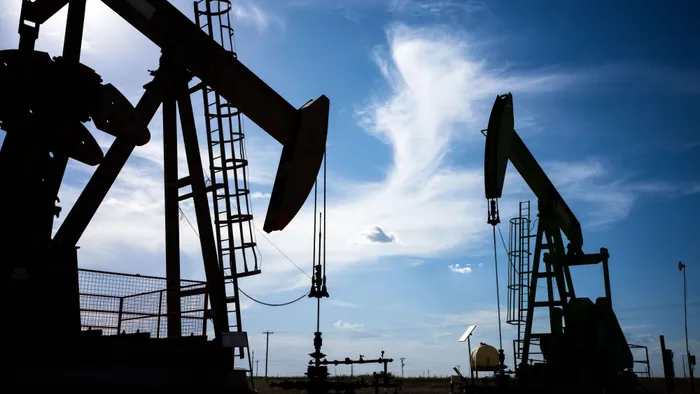
Explore the latest trends in financial markets as geopolitical tensions drive oil prices higher, impacting global economies and investor sentiment.
Image: AFP
Financial markets across the globe continue their downward correction mode.
In January 2026 projections from the World Bank and IMF initially anticipated a "commodity glut" with prices falling toward $60/barrel.
The current geopolitical escalations have pushed Brent crude back above $100–$114/barrel.
The sudden price surge has shifted investor sentiment from "soft landing" optimism to risk-off defensive positioning.
On equity markets indices have faced sharp pullbacks. European bourses (FTSE 100, DAX) declined 5%–7% due to high energy import reliance, while the S&P 500 saw more modest drops around 2.5%.
The IMF warns that a sustained 10% increase in energy prices could raise global inflation by 40 basis points. This has stoked fears of "higher-for-longer" interest rates, causing bond yields to climb (e.g., South African 10-year yields hit 8.8%).
On the JSE the ALSI lost 5.8% over the last seven trading days and at the close last Friday was 17 1756 or 13.28% down from its record level of 128 455 on 110 070.
The sharp decrease in precious metals prices, especially gold and platinum, also contributed to a sharp decrease in the Resources and precious metal equity prices and lost their advantage as haven amongst investors.
The gold price dropped sharply by $534 per ounce or 11.0% last week and the price for platinum with 9.3%. This pushed the precious metals and mining sector index down by 11.8%.
The sharp decrease in precious metals prices and sell-off of shares and bonds by foreigners last week, had a devastating effect on the Rand exchange rate.
Against the USD the currency depreciated another 16 cents last week to R17.11/ $ and is 116 cents weaker than the R15.95 on the day of the Israel/US attack on Iran.
Against the Pound the Rand lost 44 cents to R22.85/£ and is 138 cents weaker that the beginning of the Iranian attack.
Against the Euro the Rand also depreciated by 44 cents last week and by 104 cents last week to close Friday on R19.84/ €. Expectations are that the Rand will start to move stronger again this coming week.
STATSSA announced last week that South Africa’s inflation rate was 3.0% in February. This is 0.5% lower than the 3.5% recorded in January and the lowest since June last year and on the 3.0% target of the Reserve Bank.
However, given the expected sharp increase in fuel prices (30.0%) and electricity prices (9.5% for consumers) on 1 April, it is forecasted that the inflation rate will increase by between 1.5% and 2.0% over the next three months.
Last Thursday the price of petrol was already under recovered by 519 cents per liter and that of diesel 0.5% by 852 cent per liter. The fuel price will also increase by another 21 cents per liter due to increased fuel taxes.
This coming week the Monetary Policy Committee (MPC) of the Reserve Bank will announce its interest rate decision at a press conference on Thursday.
Although inflation came down to 3.0% in February, the expected inflation rate that will be used in the Banks Quarterly Projection Model (QPM) will reject any changes of lowering the repo rate.
It is not expected that the Bank will increase interest rates at this meeting but may give some indications when it will have to hike the repo rate.
The move in oil prices and the Rand/exchange rate this coming week will be crucial for risky asset prices as the Iranian conflict continues.
On global markets the UK will release its inflation rate and retail sales for February and the US its current account balance for Q4 2025 and import and export prices for February.

Chris Harmse is the consulting economist of Sequoia Capital Management and a senior lecturer at Stadio Higher Education.
Image: Supplied
Chris Harmse is the consulting economist of Sequoia Capital Management and a senior lecturer at Stadio Higher Education.
Follow Business Report on Facebook, X and on LinkedIn for the latest Business and tech news.