

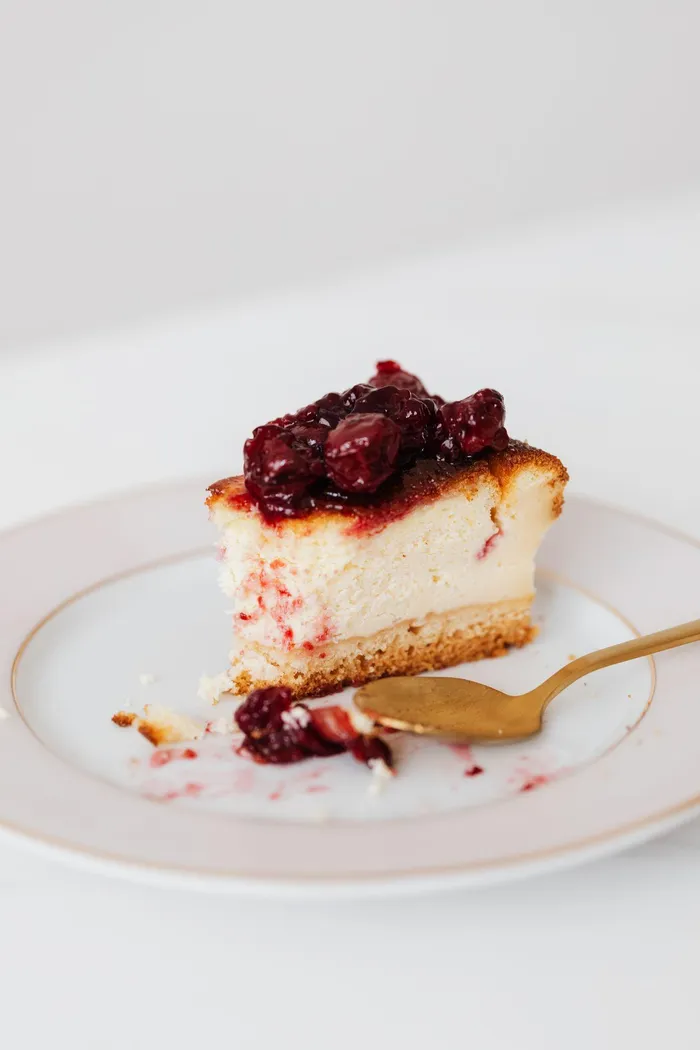
A rich and creamy cheesecake is impressive enough for birthdays, dinner parties or a weekend treat.
Image: www.kaboompics.com / Pexels
There's something incredibly satisfying about pulling a beautifully baked cheesecake from the oven. It's rich, creamy and impressive enough for birthdays, dinner parties or a weekend treat.
But anyone who has baked one before knows that the moment you spot a crack running across the top, it can feel like all that effort was wasted.
The good news is that cracks aren't usually caused by a bad recipe.
They're almost always the result of how the cheesecake is mixed, baked and cooled. A few small changes to your technique can make all the difference.
Here are the tips that help keep a baked cheesecake smooth, creamy and crack-free.
One of the biggest mistakes is using cream cheese straight from the fridge.
Cold cream cheese doesn't blend properly, leaving small lumps in the batter.
The temptation is then to keep mixing until they're gone, but that introduces too much air.
Instead, let your cream cheese, eggs and any dairy ingredients come to room temperature before you start baking. They'll combine much more easily, giving you a silky, smooth batter without overworking it.
Unlike cake batter, cheesecake doesn't benefit from lots of air.
Overmixing traps air bubbles, causing the cheesecake to puff up in the oven before sinking as it cools. That's one of the main reasons cracks appear.
Beat the cream cheese and sugar until smooth, then add the eggs one at a time, mixing only until each one is incorporated. Once everything is combined, stop mixing.
Before pouring the filling into the crust, gently tap the bowl or pan on the counter to release any larger air bubbles.
A water bath, also known as a bain-marie, creates gentle, even heat while the cheesecake bakes.
Without it, the outside can cook too quickly while the centre is still setting, increasing the chance of cracks.
Wrap the outside of your springform tin well with foil before placing it inside a larger roasting pan.
Pour hot water into the roasting pan until it reaches about halfway up the sides of the cheesecake tin.
The steam helps the cheesecake bake more evenly and keeps the texture beautifully creamy.
Cooling is just as important as baking.
When the cheesecake is ready, the edges should be set while the centre still has a slight wobble. Resist the temptation to bake it until it's completely firm.
Switch off the oven, leave the door slightly open and allow the cheesecake to cool inside for about an hour.
This gradual drop in temperature helps prevent the sudden shrinking that often causes cracks.
Once it's at room temperature, refrigerate it for at least six hours, or preferably overnight, before slicing.
The extra patience is worth it. Not only will the texture become firmer and creamier, but the flavours will also have time to develop.