

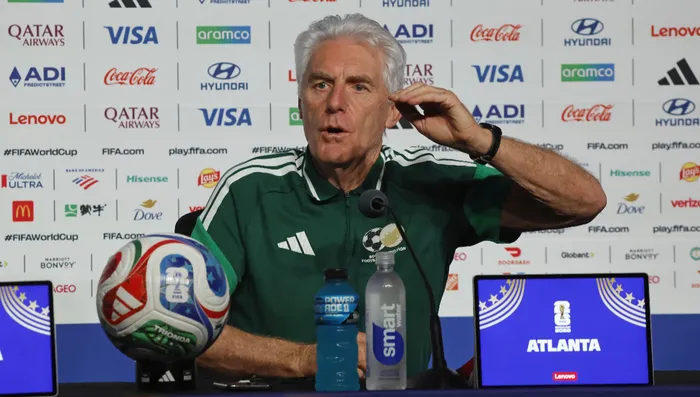
Bafana Bafana coach Hugo Broos.
Image: BackpagePix
Hugo Broos and his technical team have done what no South African men’s national side has achieved before — guiding Bafana Bafana into the FIFA World Cup knockout stages.
In pure footballing terms, it is a milestone that should have unified a country behind a team writing its most successful chapter on the global stage.
Instead, the narrative is drifting into uncomfortable territory.
It was not unusual — major tournaments amplify scrutiny, and South African football has always been deeply emotional in its relationship with the national team. At that point, Broos and his technical staff looked under pressure and exposed.
But football moves quickly, and so did Bafana.
The response on the pitch was exactly what elite tournaments demand. Improved structure, better game management, and a growing sense of tactical discipline carried South Africa into the knockout rounds for the first time in history.
The victory over South Korea, sealed by Thapelo Maseko’s decisive strike, should have been the moment where football took centre stage and everything else faded into celebration.
Yet the messaging from within the camp has complicated that moment.
Broos, in reflecting on the win, said: “I think we gave really a good answer to all those big mouths from previous weeks who wanted us to change things and wanted to tell us what we need to do.”
It was a line delivered in emotion, but it lands differently in the broader context. Instead of closing the gap between team and public, it risks widening it at a time when unity should be at its strongest.
South Africans who followed the team through disappointment, debate and eventual triumph are unlikely to feel included in that framing.
The sentiment was echoed even more sharply by analyst Sinesipho Mali, who said: “Back home, they’re talking, we are here doing the work and that’s the difference.”
While intended as a defence of the team’s focus and internal environment, the tone comes across as confrontational rather than conciliatory.
It creates an implied divide between “those doing the work” and those watching and engaging from afar — a divide that is unnecessary in a moment of national achievement.
This is where the tension now sits. Not in results, but in perception.
Broos and his technical team are, by any objective measure, delivering success. The football has improved, the structure is clearer, and the team has reached unprecedented heights. That should be the story.
However, public communication matters just as much in modern football.
National teams do not operate in isolation — they exist within a shared emotional space between squad and supporters. When that space is framed as oppositional, even unintentionally, it risks turning success into division.
And that is the danger here.
South Africa is not dealing with failure — it is witnessing history. But instead of a unified celebration, there is now a growing sense of separation between those inside the camp and those outside it.
The reality is simple: Broos has delivered results that silence sporting criticism.
But in attempting to respond to that criticism verbally, the messaging has reopened a different kind of conversation — one about respect, tone and connection.
If Bafana are to continue this historic run, they will need more than tactical discipline and transitional sharpness. They will need a united front.
Because at this level, the biggest battles are not always on the pitch — sometimes they are in how victory is spoken about.