

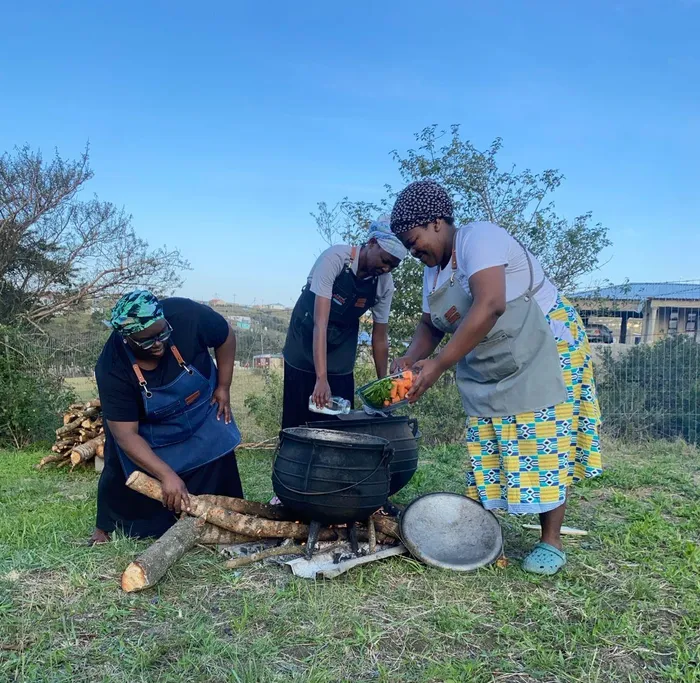
Phumeza Stuurman (black dress), Zintle Magalela (centre) and Azakhiwe Sijila taken at Seya Location, Nxarhuni Village in East London.
Image: Supplied.
An East London entrepreneur is proving that rural communities can create high value businesses by looking to the past for inspiration.
Phumeza Stuurman, founder of Rural Impaqt Bone Broth, is transforming a traditional food practice into a modern wellness business that creates opportunities for women, supports rural economic development and adds value to an agricultural by product often discarded.
Operating from Nxarhuni village on the outskirts of East London, Stuurman and her all female cooking team produce fresh chicken and beef bone broth, which is delivered weekly to customers across the city.
The business uses bones that would often go to waste, creating a circular economy model that converts agricultural by products into nutritious food while creating income opportunities in rural areas.
Bone broth has gained renewed popularity among health conscious consumers globally due to its natural collagen, amino acids and mineral content, with advocates highlighting its benefits for joint health, digestion, skin and immunity.
For Stuurman, the opportunity lies in combining traditional African knowledge with modern consumer trends.
“We are bringing what our grandmothers knew back to the table, in a format that meets modern food safety standards and consumer desires to live well and eat well,” she said.
“In a market dominated by synthetic supplements, we offer a wholefood alternative that is affordable, natural, healing, and deeply rooted in African food tradition.”
The entrepreneur said the idea was inspired by the African principle of “vukuzenzele”, meaning wake up and do it yourself.
“Inspired by the African term ‘vukuzenzele’, meaning ‘wake up and do it yourself’, I saw untapped potential in the wisdom and resources that we already have in our rural community, rather than focusing on what we lacked,” she said.
Stuurman’s journey into entrepreneurship followed a 15 year career in public sector financial management and performance monitoring in Gauteng.
She later returned to East London due to family responsibilities, where she began exploring ways to build a sustainable business.
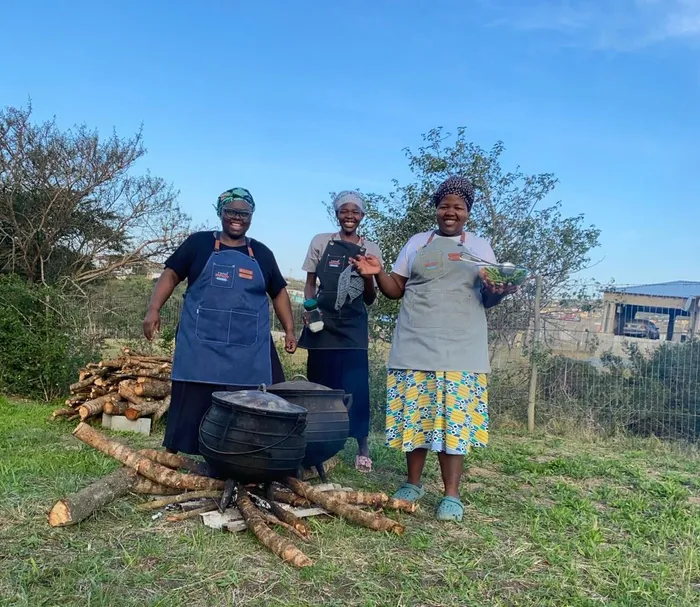
Phumeza Stuurman (black dress), Zintle Magalela (centre) and Azakhiwe Sijila taken at Seya Location, Nxarhuni Village in East London.
Image: Supplied.
While she holds an MBA degree, Stuurman said entrepreneurship required a different mindset.
“My mindset then was of an employee, not a business owner. The knowledge gained through the MBA has come in handy in strategising for the business and most business concepts are not foreign to me,” she said.
“However, the SBA is an opportunity to equip myself to think big and scale the business, to learn to work on the business, not just in the business.”
Stuurman is currently part of the second East London programme of the Stellenbosch Business School’s Small Business Academy (SBA), a partnership with Standard Bank and the Border Kei Chamber of Business.
The programme aims to support entrepreneurs from underserved communities by providing business education, mentorship and practical skills needed to grow sustainable enterprises.
SBA Head Professor Armand Bam said small businesses often fail because entrepreneurs lack access to the knowledge needed to manage and scale their operations.
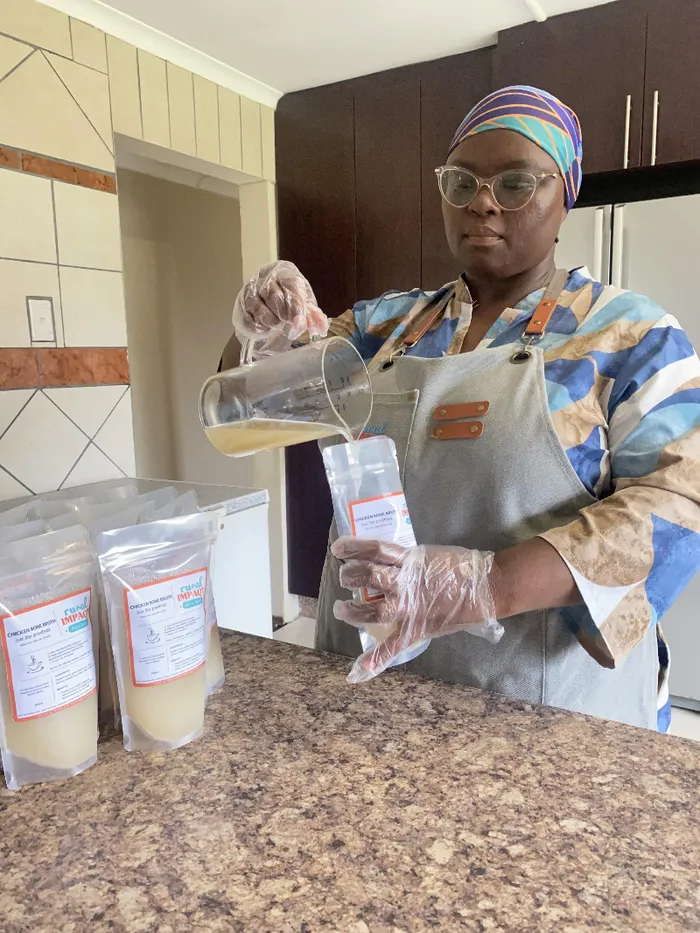
From a home kitchen in Nxarhuni to a vision for a rural manufacturing hub, Rural Impaqt Bone Broth is building a business rooted in heritage, sustainability and community development.
Image: Supplied.
“The majority of small start ups fail in their first 12 to 24 months because the entrepreneurs, while having the technical skills in their sector, lack the knowledge of how to plan, run and sustain a business,” he said.
“The SBA is designed to bridge this gap by providing formal business education, practical skills, and ongoing mentorship and business development opportunities.”
Stuurman currently operates from her home kitchen, which functions as a small scale production facility. Her three part time employees help with production, while orders are managed through social media and WhatsApp, with deliveries taking place at collection points in Beacon Bay and Vincent in East London.
However, her ambitions extend far beyond the current operation.
Her vision is to establish a dedicated production facility that could create between five and eight permanent jobs for unemployed rural youth and women in the first year.
“Our vision is not just to build a food brand but to grow a rural manufacturing ecosystem, based on a commercially viable, scalable business that uses health food as a vehicle for rural economic transformation,” she said.
Stuurman said the goal is to create meaningful employment while proving that innovative businesses can emerge from rural communities.
“Creating dignified local employment, activating local supply chains, and demonstrating that high value health food production can happen outside of urban centres,” she said.
Professor Bam said programmes such as the SBA are designed to give entrepreneurs more than short term assistance.
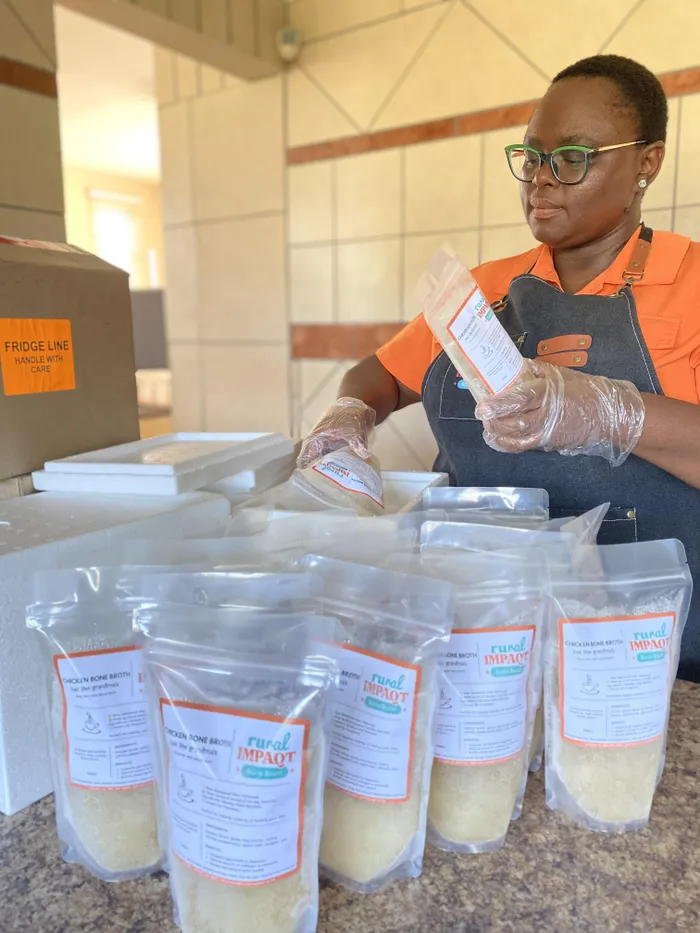
From a home kitchen in Nxarhuni to a vision for a rural manufacturing hub, Rural Impaqt Bone Broth is building a business rooted in heritage, sustainability and community development.
Image: Supplied.
“Unlike many other SME support programmes, we don’t hand over a certificate and walk away. The continued involvement with each business is key to the programme’s demonstrated success,” he said.
With more than 460 entrepreneurs having graduated from the SBA programme and ongoing research showing strong business survival rates among participants, the organisation believes structured support can help entrepreneurs overcome many of the challenges facing small businesses.
For Stuurman, bone broth represents more than a food product. It represents a pathway to rural transformation.
“Farming is not easy, but with patience, commitment and hard work, it is possible to build something meaningful and create opportunities for yourself and others,” she said.
Follow Business Report on Facebook, X and on LinkedIn for the latest Business and tech news.