

On Africa Day, we reflect on the African Union's theme of ensuring sustainable water availability and sanitation systems, recognising these as vital for economic transformation and climate resilience. This article explores the interconnected challenges of climate change and community agency in Africa's development.
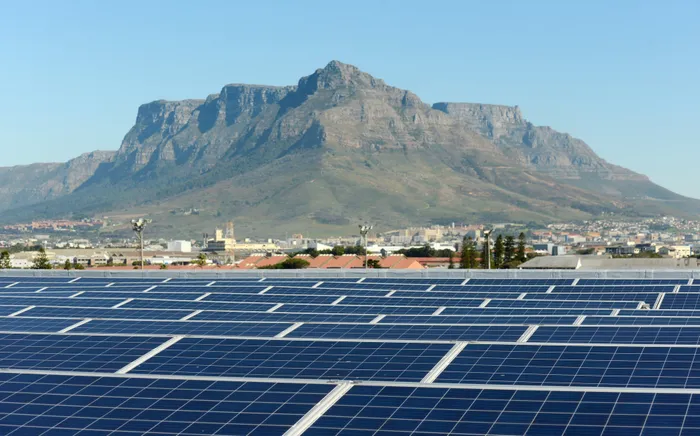
Image: Armand Hough/Independent Newspapers
This Month, we celebrate Africa Day on the 25th of May which the African Union (AU) has themed “Assuring Sustainable Water Availability and Safe Sanitation Systems to Achieve the Goals of Agenda 2063.”
This theme elevates water and sanitation to a continental political priority, recognising them as catalysts for economic transformation, climate resilience, public health, food security, and regional stability – all of which remain at the mercy of how we navigate the climate change and the just transition.
Whilst African countries are amongst the least historic producers of global carbon emissions, we remain the most vulnerable to and impacted by climate change in multiple of ways including water stress, damaging agricultural harvests, affecting lifestyles, and amplifying gender and other dimensions of inequality.
For many of our communities, particularly rural and traditional communities, climate change is not a distant or abstract concept.
With current levels of external and domestic debt, rapid urbanisation, social inequality, the number of people living in rural poverty and informal urban settlements continues to rise.
It is lived and experienced daily through persistent water scarcity, declining agricultural productivity and food insecurity loss of livelihoods and income opportunities, increasing exposure to climate-related hazards such as floods, droughts, and extreme heat.
These impacts are not isolated; they are interconnected and cumulative, compounding existing vulnerabilities shaped by poverty, inequality, and limited access to basic services, and lack of share of voice in many communities as it relates to the choice and options for the own development pathways.
In this context, climate change is fundamentally a development challenge as much as it is an environmental one. It places additional strain on already fragile local economies and undermines the resilience of communities that are least equipped to absorb such shocks.
Addressing these realities requires more than technical solutions; it demands inclusive, community-driven approaches that recognise local knowledge systems, strengthen adaptive capacity, and prioritise equitable access to resources and opportunities.
Without this, the transition to a low-carbon and climate-resilient future risks reinforcing existing inequalities rather than alleviating them.
South Africa’s Just Transition Framework emphasises the importance of participatory decision-making, including the design and implementation of climate actions as proposed by individuals and communities in affected areas.
Meaningful engagement with affected stakeholders is also essential to ensuring appropriate action is taken to prevent harms to people and maximise the social, environmental, and economic benefits of the enterprise.
The importance of meaningful engagement is further outlined in the Just Transition Framework, through the notion of procedural justice.
This means that people must have a real and meaningful voice in decisions that affect their lives, with participation that is genuine rather than tokenistic.
It is in these engagements, especially in rural communities where institutions of traditional leadership become critically important.
Their proximity to communities and understanding of local dynamics positions them as essential intermediaries between policymakers, developers, and community members.
Traditional leaders play a significant role in the social, political, and economic lives and also provides guidance that is grounded in local knowledge systems and lived experience, helping to ensure that transition initiatives are culturally appropriate, socially accepted, and responsive to community needs.
They are not only custodians of culture and heritage, but also key anchors of rudimentary people’s power within communities.
In the context of a just transition, traditional leaders play a vital role in facilitating dialogue, building trust, and creating space for meaningful participation, particularly in areas where there may be scepticism, uncertainty, or resistance to change.
By strengthening collaboration with traditional institutions, the just transition process can be more inclusive, legitimate, and effective, ensuring that development pathways are co-created with communities rather than imposed on them.
Communities are not passive beneficiaries of the just transition; they are active economic participants and agents of change.
One of our key priorities as the Presidential Climate Commission is to strengthen commissioner-led community engagement, not as imply a communication exercise but a governance accountability and a mechanism for co-creation of climate resilient solutions through community owned and led initiatives.
This means supporting local enterprise development, enabling community ownership models, and ensuring that new economic opportunities, whether in renewable energy, agriculture, or other sectors, are accessible and inclusive.
These dimensions are not peripheral, but central to the success of South Africa’s just transition.
As we navigate one of the most significant economic and social transformations in our country’s history, all communities in both urban and also rural areas, must lead the transition.
Ultimately , when we craft our development pathways the success of Africa and South Africa’s decarbonisation and green revolution will not be measured only by megawatts but on whether all communities feel heard, and opportunities are shared fairly and dignity is preserved and restored, as the most durable sustainable capitalisation of a people driven just transition.
Her Majesty Neo Mopeli is Queen of the Bakoena Nation in the Free State and Deputy Chairperson of the South African Queens Council. She is Commissioner of the Presidential Climate Commission and an admitted attorney of the High Court of South Africa.

Her Majesty Neo Mopeli is Queen of the Bakoena Nation in the Free State and Deputy Chairperson of the South African Queens Council. She is Commissioner of the Presidential Climate Commission and an admitted attorney of the High Court of South Africa
Image: Supplied.
Follow Business Report on Facebook, X and on LinkedIn for the latest Business and tech news.