

As South Africa hosts key investment conferences, the challenge remains: will these pledges translate into real opportunities for those facing poverty and inequality?
Image: File
Hot off the heels of the sixth South Africa Investment Conference, followed the Gauteng Province and last week the Northern Cape Province also hosted its first ever Investment and Jobs Conference in Kimberley as a flagship investment mobilisation platform designed to unlock job-intensive industrial development aligned with South Africa’s green economic transition.
Through these investment drive, South Africa once again opened its doors to global investors, policymakers, and business leaders at the annual Investment Conference.
Billions were pledged, promises were made, optimism filled the room but outside the conference halls and the networking booths, people in places like Tembisa, eMalahleni, Komani, Galeshewe and rural villages across Limpopo, the Eastern Cape and the Kgalagadi the question remains, what does this mean for us?
Because for the majority of South Africans, those facing the triple challenge of poverty, unemployment, and inequality, investment is not about numbers on a spreadsheet, it is about dignity.
It is about jobs; it is about whether the next generation will inherit opportunity or despair.
Let us talk about What needs to be on the table.
We have spent two decades designing climate adaptation strategies, including work on water, energy, and urban resilience. Yet many still struggle to access the first rand they need to prove their model. Who is failing them — policy, capital markets, or corporates?
Each year, investment announcements are celebrated as milestones of economic progress.
Yet, too often, these investments are concentrated in sectors, regions, and industries that do not directly touch the lives of marginalized communities.
We must ask uncomfortable but necessary questions, how many of these investments are labor-intensive?
How many are there in historically disadvantaged areas?
How many actively include young people, women, and persons with disabilities?
How many are designed with communities, rather than imposed on them?
Investment cannot be measured only by its value in rands, it must be measured by its value in lives changed.
There is a growing disconnect between announcement and implementation, projects are “pronounced” with great fanfare, yet their rollout often happens quietly, behind closed doors, with little transparency.
Communities are left in the dark.
Procurement processes are unclear. Local participation is minimal.
Skills development is an afterthought.
Why are these processes not public?
Why are communities not co-designers of projects that will reshape their environments and livelihoods?
If investment is truly for development, then transparency must not be optional, it must be foundational.Another critical concern is the nature of these investments, are they grants?
Are they equity partnerships?
Or are they loans that will ultimately be repaid by the public?
Too often, large scale investment, especially in infrastructure and energy, are financed through debt, while these may stimulate growth in the short term, they risk deepening inequality if the burden of repayment falls on taxpayers who see little direct benefit.
We must confront a difficult truth, development financed through expensive loans can become a cycle where the poor subsidize projects that do not serve them.
A just transition cannot be built on unjust financing.South Africa’s energy transition is central to its climate commitments and Nationally Determined Contributions (NDCs).
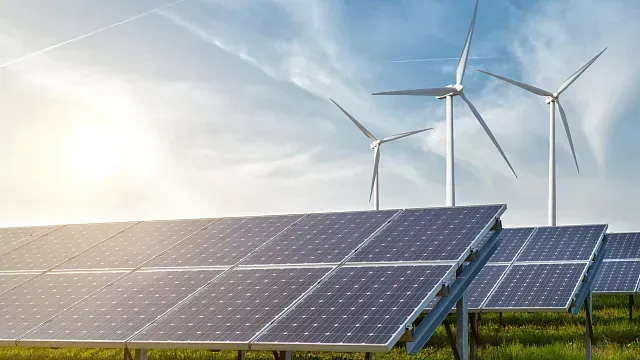
Renewable energy investments are increasing, and rightly so.
But the critical question is, will these investments deliver justice, or simply replace one form of exclusion with another.
For communities in coal-dependent regions like Mpumalanga, the transition is not theoretical; it is immediate and personal. Jobs are being lost. Local economies are shrinking.
Social fabrics are under strain.
It is welcome that the Chairperson of the Presidential Climate Commission, President Cyril Ramaphosa, led the charge at the Investment conference and declared that key to our investment , growth and prosperity is decarbonisation.
But decarbonisation must be just and equitable; it must rewrite our prosperity, unemployment, and happiness indexes of our landscape.
If renewable energy projects are developed without integrating local labour, local ownership, and local skills development, they risk becoming enclaves of opportunity surrounded by seas of exclusion.
A just transition is not a slogan. It is a commitment grounded in three key principles: procedural justice, distributive justice, and restorative justice.
Procedural justice demands that communities are included in decision-making from the beginning. Distributive justice requires that benefits, jobs, skills, infrastructure, and ownership, are shared equitably.
Restorative justice calls for actively addressing historical inequalities by investing in those who have long been excluded.
For marginalized communities to truly tap into investment opportunities, several shifts are needed, localization of supply chains, skills aligned with future industries, accessible information, and strong accountability mechanisms.
The 2026 Investment Conference must not be remembered only for the billions pledged, but for the transformed lives.
We cannot afford a future where investment deepens inequality. We cannot afford a transition that leaves workers, women, youth, and vulnerable communities behind.Asikhulume.
Let us talk—not just in boardrooms and conferences, but in community halls, taxi ranks, schools, and households across the country.
Because a truly just transition is not measured by how much we invest, but by how much we uplift. And in a country like South Africa, justice is not optional, it is urgent, now and into the future.
Andile Erroll Mlambo is the Commissioner at the Presidential Climate Commission.
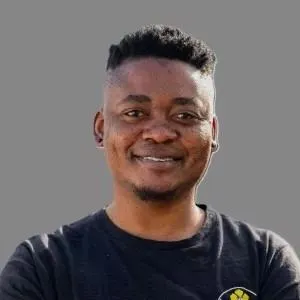
Andile Erroll Mlambo is the Commissioner at the Presidential Climate Commission.
Image: Supplied.
Follow Business Report on Facebook, X and on LinkedIn for the latest Business and tech news.