

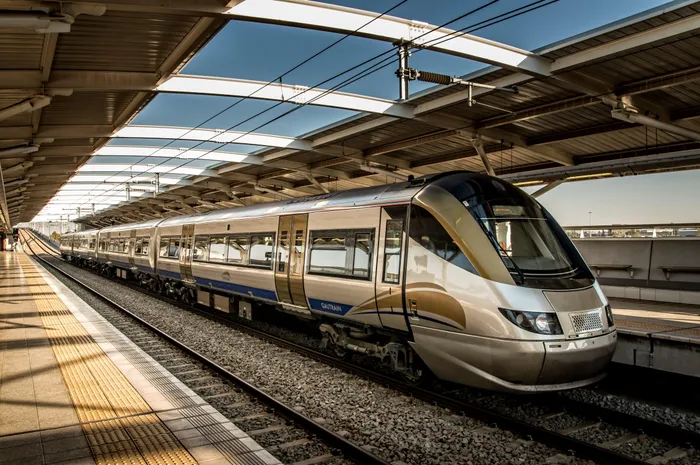
The Easter holiday highlights the urgent need for a sustainable transport system in South Africa, as rising costs and limited options threaten mobility for all.
Image: Supplied
The Easter holiday with its voyage of South African multitudes traversing the rural and peri-urban parts of the country, returning home, reconnecting with family, or seeking rest- has come and gone.
This migration, a major boost for the domestic tourism market, is not without its ups and downs, and requires us to once again reexamine what needs to be done to plot our transport sector’s pathway to a sustainable future.
The potpourri of these constraints includes the costs of the movement of people and goods, limited options for road and rail, a constrained and unaffordable domestic airlift service, and a very intermittent and sometime unsafe bus, coach and taxi services for long haul public use.
These pressures are not made easy by the costs of fuel, worsened by the current global disruptions in key oil-producing regions and maritime routes.
For households, the impact is significant as we saw April 2026 recording one of the steepest single-month fuel price increases in South Africa, with petrol rising by R3.06 per litre, and diesel by up to R7.37 per litre.
Transport costs take up a growing share of households monthly income.
For low-income households, who rely solely on public transport, even modest increases can be hard hitting.
Lessons from the current middle east conflict and foresight requires us to unshackle South Africa from fuel and energy imports dependency and build the necessary resilience for all our energy needs, particularly transportation.
At the same time, the transition from fossil fuels and the transformation of the transport sector must be managed carefully.
It is ultimately about “all things mobility”. Which means addressing the quality of our infrastructure and services, the full cycle emissions reduction actions which are sector wide, increasing regional connectivity, addresses safety and efficiency – ultimately building a transport sector for people and for our future economy.
A just transport transition must be sequenced and managed appropriately through supporting the gradual introduction of lower-carbon alternatives such as electric vehicles, and sustainable fuels, while maintaining sufficient conventional capacity to ensure stability.
This means a just transport transition is not only about sustainable fuel and types of vehicles, but also about access and affordability. Therefore, a responsible transition must therefore strike a balance: advancing cleaner energy solutions while safeguarding energy security in the near term.
Public transport remains the backbone of mobility for the majority of South Africans, with trains, buses and minibus taxis carrying roughly 80% of commuters.
Yet the system is uneven.
Ultimately, the challenge is not simply about moving people more efficiently, it is about ensuring that mobility remains a public good and that people have affordable options when it comes to choices of mobility. Transport should enable access: to jobs, education, healthcare, and social connection. When costs rise and options shrink, that access is eroded.
A just transition in transport must therefore prioritise affordability and accessibility as core a policy objective and an implementation priority.
This includes stabilising and reducing the cost burden of transport for low-income households and investing in reliable and integrated public transport networks.
It also requires aligning transport planning with spatial development and economic policy ensuring that housing, jobs, and services are better located relative to one another to reduce the need for costly and time-intensive travel.
Without this broader systems approach, the transition risks becoming exclusionary, where cleaner technologies are accessible only to a minority, while the majority continue to face deteriorating mobility conditions.
The PCC’s transport modelling reports “Greening the Journey: South Africa’s Transport Path to Net Zero, outlines practical pathways toward a more inclusive system that is aligned to a 1.5°C global temperature limit and a well below 2°C alternative by 2050.
These include strengthening public transport networks, expanding non-motorised options like walking and cycling, and enabling remote work to reduce congestion and travel demand.
The study also highlights amongst others, the options for decarbonisation of fleet electrification, including the growing potential of fuel cell electric vehicles particularly for long-haul freight as the technology matures to address cost and efficiency as well.
As government refocuses its attention on a just transition for the transport sector, recent deliberations at South Africa’s National Transport Conference have reinforced the urgency of this need, while also pointing to a more coordinated path forward and to confront the structural weaknesses in the country’s transport system.
A key takeaway was the need to move beyond fragmented interventions toward a unified mobility strategy that links energy planning, infrastructure investment, and social outcomes.
Equally, a strong emphasis was placed on integration, affordability, sustainability and infrastructure resilience considering increased climate impacts.
If we get it right, we have a chance to build a system that is more reliable, more affordable, and better able to withstand global shocks.
Bridgette Setshedi is the manager of mitigation at the Presidential Climate Commission.

Bridgette Setshedi is the manager of mitigation at the Presidential Climate Commission.
Image: Supplied.
Follow Business Report on Facebook, X and on LinkedIn for the latest Business and tech news.