

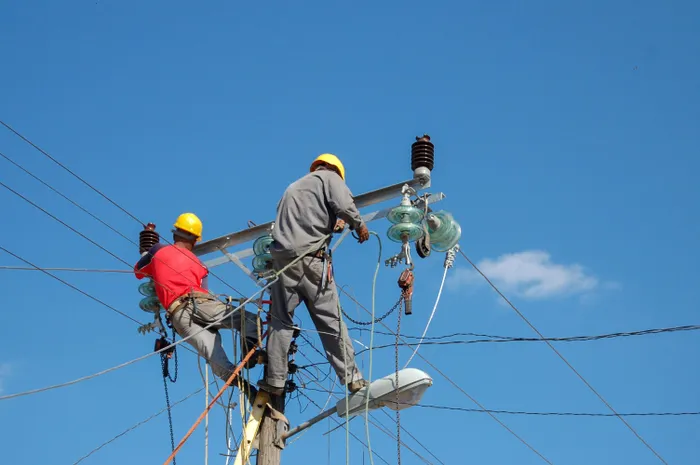
As South Africa embarks on a monumental R1 trillion energy infrastructure campaign, are we prepared to ensure that informal settlements benefit from this investment?
Image: Supplied.
Ahead of us there is a massive, complex campaign to repair and expand our energy transmission and distribution infrastructure.
The state and private sector are both deploying historic amounts of capital, and soon thousands of technicians and workers will be deployed to see this vision materialise.
I worry we aren’t ready to support them as much as we are ready to support the budget requirements.
In 2025 a record 7.5 GW of planned private renewable energy projects were registered with the National Energy Regulator (Nersa) for a combined investment value of R158 billion.
That’s almost half of the investment value of all the private energy projects that have ever been registered with Nersa.
On the state and government side, National Treasury’s 2026 budget outlined a monumental R1 trillion general infrastructure spend over the next 3 years.
Eskom, through its unbundled subsidiary, the National Transmission Company of South Africa (NTCSA), faces the 4-year challenge of spending hundreds of billions of its own budget to build around 14 000km of new high tension transmission lines to connect the flood of new renewable projects to the grid.
Eskom Distribution and local municipalities responsible for distribution infrastructure face similarly huge tasks in the coming years.
There’s a lot happening – or, at the very least, being planned to happen soon. Part of the reason is to catch up on years of underinvestment, which means there is increased pressure for speed. Speed is often necessary, but it can cause big – and often unforeseen – issues.
What the high-level strategy of this colossal infrastructure drive doesn’t always include in the slide deck is the raw operational reality of the flesh-and-blood technicians tasked with physically executing this project in volatile, high-tension areas – often in informal settlements where communities have grown deeply suspicious of any work done on their ailing electric infrastructure for fear of it being removed entirely.
At the scale the national infrastructure push entails, the vast majority of required technicians are also going to be third party, external contractors.
When technicians enter so-called "red zones" to build or repair energy infrastructure, they can sometimes meet community resistance, hostility, and even violence. It is a fundamental mistake to assume these neighbourhoods are inherently dangerous by default.
They are volatile, at least partially, because they exist within a profound information vacuum.
A technician arriving unannounced to work on a local substation becomes the immediate, visible target for months of collective frustration.
A work team sent to remove illegal electricity connections is labelled as a threat when the scope of their work isn’t even made clear to the struggling citizens in the community who do pay.
None of this information disconnects are the fault of frontline technicians.
These frontline workers are effectively forced to act as human shields for struggling administrative processes or a lack of effective community engagement. They may not even be employees of the organisations the community members are upset with.
Public announcements by utilities communicating that technical teams won’t be sent into certain areas due to “safety concerns” are not uncommon. But even when immediate danger due to potential unrest isn’t obvious, work teams facing safety concerns in the ‘red zones’ aren’t eager to receive those work orders.
Organisations sometimes default to rudimentary financial solutions to manage this type of friction, primarily by offering higher hazard pay to incentivise employees to enter high-risk areas.
Paying people more to accept the threat of violence or injury is not a sustainable operational strategy.
You cannot buy a safe working environment.
True safety requires equipping field workers with real-time intelligence and integrating them into a transparent communication loop – one that also includes the affected communities.
Operational communication must flow rapidly in multiple directions to mitigate these risks. A centralised control room needs the ability to instantly warn a maintenance team to avoid a specific sector due to a sudden flare-up of violence or protest.
Conversely, the frontline worker needs a secure, immediate channel to report hazards or escalate issues.
When teams are chased out of red zones because communities were never informed of their arrival or the scope of their work, projects stall. The cascading effects are severe: the administrative burden of redeploying teams’ spirals, project costs overrun significantly, and organisations face massive audit headaches trying to account for lost hours and abandoned sites.
But communication doesn’t solve the problem if it is siloed by design.
Communication as a solution needs to include all the relevant stakeholders. Managers, offices, control rooms, support teams, frontline teams, communities. They may not all be at the same place, but the relevant information needs to flow seamlessly through to all of them as part of an ecosystem.
We have already witnessed the consequences of leaving citizens and stakeholders in an information vacuum. During the height of the energy crisis, the explosive growth of third-party apps for loadshedding alerts demonstrated a desperate national hunger for accurate, predictable scheduling data.
The private sector stepped in to fill a communication void because information is as critical a utility as electricity itself. While that period represented a missed opportunity for authorities to build trust through transparent and user-friendly communication, we cannot afford to repeat the error during the rebuild and expansion phase.
We should not view past administrative issues as permanent handicaps. The current capital injection into our grid presents a rare opportunity to finally get the human element of infrastructure development right. It is a massive case study in the making. If we integrate communication as a core pillar of the infrastructure rollout, we change the entire dynamic on the ground.
By pushing accurate operational intelligence to the frontline and providing communities with visibility into the work being done, we transform isolated, vulnerable technicians into informed ambassadors. They stop being surprise visitors triggering community anxiety and become recognised agents of recovery.
Securing a social licence to operate in volatile areas cannot be achieved through engineering prowess or hazard pay. It requires operational empathy.
Fixing the grid demands that we treat the flow of information with the exact same urgency as the flow of electricity, ensuring we protect the human lifeblood driving our economic recovery.
Merel van der Lei, CEO of Wyzetalk.

Merel van der Lei, CEO of Wyzetalk.
Image: Supplied.
Follow Business Report on Facebook, X and on LinkedIn for the latest Business and tech news.