

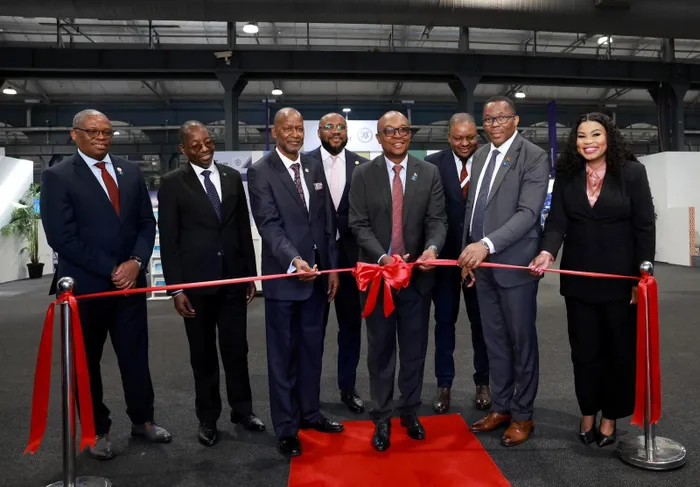
Industrialisation remains the most effective pathway to economic transformation; this was the key message at the opening day of the 9th annual Southern African Development Community (SADC) Industrialisation Week, at the Durban ICC on Monday.
Image: eThekwini Municipality
Industrialisation remains the most effective pathway to economic transformation, regional leaders said on Monday as the 9th annual Southern African Development Community (SADC) Industrialisation Week got underway.
The week-long event, SADC's flagship platform for advancing regional industrial development, investment and economic transformation, was officially opened by eThekwini Mayor Cyril Xaba, while Minister of Trade and Industry and Competition Parks Tau delivered the keynote address.
According to the eThekwini Municipality, this year's gathering is focused on strengthening regional trade, expanding industrial capacity and creating sustainable employment opportunities.
The municipality said the event supports the implementation of the SADC Industrialisation Strategy and Roadmap 2015–2063, which is built around three pillars: industrialisation, competitiveness and regional integration.
“The main goals of the week are to advance the SADC Industrialisation Strategy and Roadmap 2015–2063, which is centred on three pillars: industrialisation, competitiveness, and regional integration.”
“The main goals of the week are to advance the SADC Industrialisation Strategy and Roadmap 2015–2063, which is centred on three pillars: industrialisation, competitiveness, and regional integration. These objectives will be achieved while empowering women and young entrepreneurs through innovation and digital transformation,” said the City.
Mayor Xaba said eThekwini is honoured to host this important gathering, describing Durban as a strategic gateway to Africa and a city committed to driving regional industrialisation, investment, and economic growth.
SADC executive secretary Elias Magosi said the week provides an opportunity to discuss the future of industrial development and that merely talking about change does not translate into action.
“This platform enables us to share experiences, forge effective partnerships, create opportunities, and identify innovative solutions. Aspirations alone will not bring about transformation; real implementation and the creation of opportunities for industries and businesses must lead the way,” he said.
Tau said industrialisation provides a foundation for productivity, economic diversification, technological advancement, and greater resilience against external shock.
“Stakeholders must be mindful of strategic vulnerabilities and focus on implementing outcomes that are measurable and visible.”
Tau added that in many ways they are experiencing greater industrialisation and trade in the countries.
“We need to accelerate this and this is the focus of the SADC Industrialisation Week. It is about addressing industrial capacity and also issues of logistics. We expect increased industrial trade among SADC countries.”
Tau said that addressing issues of infrastructure is key to industrialisation.
“It’s important not just for South Africa but for SADC that we address issues of ports, roads, and railway networks. Without the infrastructure, it's difficult to trade. It is crucial to be able to get your goods from one point to another to trade. We need to address the issues that impede trade.”
Tau added that they have agricultural products that are imported from outside the African continent.
“It would be great to see our region improve our farmlands and increase output and yield. This week is about dialogue between business and government to identify the issues of policy and implementation, and it is an important platform for the government.”
Tau concluded that the outcomes of the SADC Industrial Week will be presented at the 6th Ordinary Summit of SADC Heads of State and Government taking place in Durban in August. “It makes a critical input into the policy decisions that will be made by the heads of state.”
Khulekani Mathe, chairperson of the SADC Business Council and CEO of Business Unity South Africa, said that businesses need certainty to invest.
“The idea of a business putting money into fixed investment, building things and building factories, is that they want to see a decent return on investment. We need to make the region attractive for investment and make it known that our region is open for investment,” he said.
Mathe added that SADC is a block of 16 countries.
“The great thing about 16 countries in SADC is that we have 16 countries talking about the same problems, and when we all talk about the same things, we can come up with solutions.”
Mathe concluded that the policy conversation taking place will allow for problems being faced by the region from a business point of view to be communicated to different governments in SADC.
BUSINESS REPORT