


Some takes are best kept in pencil.
Image: Kim Leary on Unsplash.
A few weeks ago I clocked Iyinoluwa Aboyeji's big week, and the Africa Finance Corporation's (AFC) part in it, as a sovereignty moment prone to awkward oversimplification.
Aboyeji read it differently.
In the LinkedIn comments he said he wasn't sure I had it right, and pointed me to a 25-minute fireside chat with Tage Kene-Okafor at Accelerate Africa's AA4 Demo Day on 30 May 2026. So I watched it.
I reckon part of why Aboyeji is easy to misread is that he speaks from several roles at once. He has been a founder and, in some ways, still is.
He is a general partner (GP) in a fund, writes cheques as an angel investor, has served LP interests, and has become a turn-key advisor who’s something of a policy-shaping elder statesman.
That range makes him a singular reader (and himself a singular read) moving between frameworks and convictions without losing the plot. Read him from only one role and you might come to wobbly conclusions. I did.
The first thing I noticed is that he's right, on the question he was actually answering. I'd read Lightrock Africa Fund II's Liechtenstein roots as a sign of African founders being quite a way from not needing to board a plane for capital.
Read from the role he meant, one of the fund's major backers, that's backwards.
AFC, an African institution, is the anchor in Lightrock Africa II, as Lightrock's own chief executive said in welcoming the commitment. In a sense, the old European house is the one taking African institutional money as its cornerstone.
That isn't the only way to read it, though. A growth-stage founder raising from the fund isn't so much weighing its anchor LP as whose cheque they're taking.
And that cheque is written by a London-headquartered, Liechtenstein-rooted manager who holds the decision and the carry, whoever seeded the fund behind them.
To the founder, the capital is still owned and run offshore. Clearly, the same deal can be fairly read two ways.
While I’m at it, I may as well admit something about Aboyeji himself, rather than the deal that sparked my public reflections.
In my piece I'd wondered whether his advisory role at the new(ish) Africa Jobs Fund served Future Africa's interests, softening its case against venture capital as an Africa-relevant asset class. The fireside chat he put me onto largely dissolved my wariness about his intent.
Asked whether his warning that pre-2022 venture bets need re-examining, given how far the ground has shifted, applied to Future Africa, he said yes.
A fund manager who effectively impairs his own vehicle in public, on the record, doesn’t appear to be protecting his own fund (or his pride) at all costs.
I underrated his willingness to open-source his GP playbook, call a spade a spade about how hard African tech VC finds returning capital, and admit that even his fund wasn’t immune to the disruptive market dynamics he senses are emerging. Hats off, really.
And yet, watching, a few things still sit oddly, none of which necessarily need a verdict, mind.
AFC put $25 million behind Lightrock and $15 million behind Future Africa.
The larger initial cheque went to the foreign-rooted manager, the smaller to the local one.
There are unremarkable reasons it might be so: a longer track record, a lower-risk thesis, the fact such funds absorb more per commitment. Still, worth leaving as a question that the larger commitment went to the manager whose ownership and control sit furthest from home.
Then there's who backs the anchor. AFC is sometimes read as a sovereign vehicle, but it's a multilateral institution: African central banks, financial institutions and private investors on its share register, the Central Bank of Nigeria the largest single holder.
It raises much of its capital on international debt markets, including dollar Eurobonds, on investment-grade ratings it must keep earning from S&P and Moody's.
The capital AFC anchors Lightrock with is itself partially raised on external markets and priced by external agencies. AFC de-risks Lightrock. You could argue that global markets de-risk AFC.
My take? Pristine financial sovereignty is a fiction, here and everywhere. What's real, and worth negotiating for, is agency.
The rare flashes of self-determination delivering benefits at home that external interests alone likely wouldn't have, left unprodded, are worth registering as progress. I doubt that this would be the take-away Aboyeji most wanted me to draw from that post.
The fireside chat is less about one deal than a shift he thinks the ecosystem needs to accept is well underway.
The digital economy, he sketches, was indexed on talent and is now indexed on intelligence, repricing nearly everything backed before it. His case runs in three moves. First, steam gave Europe industrialisation at scale.
Then, manufacturing gave China the same. And finally, intelligence at scale is Africa's turn, cheaper here because the continent is young with almost no legacy knowledge-work to disrupt.
From there Aboyeji's view on jobs follows. He frames the job as a function of productivity rather than charity. Give a young African the same AI tools as a Stanford graduate, and cost does the rest. It's a seductive argument, and the standout part I need to ruminate on further is his assertion that the model still runs on a price gap.
He concedes African founders were once a cheaper destination for global capital. However, the new pitch points the same cost advantage at global knowledge work. It runs the same, trusty opportunity-conversion engine, albeit harnessing something new.
As to whether the gap holds as markets mature and how long it will stay open, well…
The move he's making with his own firm is telling, though. Apparently, Future Africa is leaving fancy apps behind to become infrastructure for founders, the talent, payments and regulation rails rather than (just) the cheques. He frames it as venture growing up. Venture Studio 2.0 cum 3.0?
The picture of VC under pressure I sketched in January seems to apply neatly to some of Aboyeji’s sentiments. There are undoubtedly many funds under pressure resorting to various portfolio consolidation tactics aimed at showing backers something for the 2022 vintage.
It was illuminating to hear a high-profile fund manager such as Aboyeji describe that pressure from the inside unprovoked, and let us in on his choice to rebuild the firm rather than defend its record, or indeed try to rescue some imagined sense of how VC ought to work in Africa.
So I'm left with less of a verdict than when I started, which feels about right. Aboyeji sense-checked me on the fact we were approaching from different angles, tempered a suspicion about his motives I mightn’t have defaulted to so readily, and made a case I half-agree with and will contentedly wait on time to test.
Still, the sovereignty question recurs the closer I look.
The productivity case rests on a price gap that may or may not last long enough to pay dividends for those going all in on it. And a (venture-slash-ecosystem) builder I'd read as defending his patch turns out to be dismantling (and restructuring) parts of it in plain sight.
Just another day in Africa's startup ecosystem.
Andile Masuku is co-founder and executive producer at African Tech Roundup. He serves as executive editor of Future in the Humanities (FITH), powered by the SA–UK Chair in the Digital Humanities at Wits University. Connect and engage with Andile on X (@MasukuAndile) and via LinkedIn.
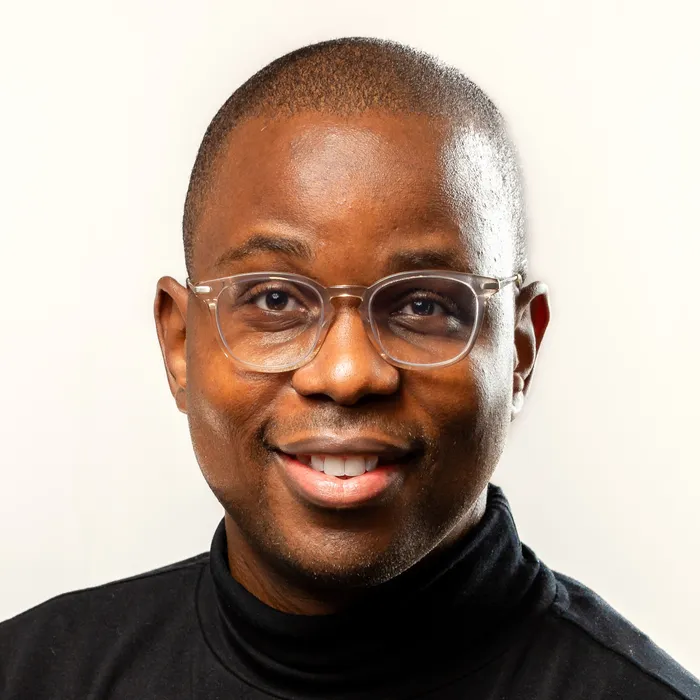
Andile Masuku is co-founder and executive producer at African Tech Roundup. He serves as executive editor of Future in the Humanities (FITH), powered by the SA–UK Chair in the Digital Humanities at Wits University. Connect and engage with Andile on X (@MasukuAndile) and via LinkedIn.
Image: Supplied.
Follow Business Report on Facebook, X and on LinkedIn for the latest Business and tech news.