


The question Katapult Future Fest 2026 kept returning to.
Image: Tim Mossholder / Unsplash
Tayo Akinyemi is a keen thinker working the intersection of African tech ecosystems and the capital structures that supposedly serve them.
She’s spent the better part of two decades inside enabling institutions like AfriLabs, the World Bank and the United Nations Development Programme (UNDP) — close enough to the systemic pipework to discern leaks. No doubt, her ongoing email series, The Trajectory Africa Distilled, is a popular fixture on African Tech Roundup for good reason.
Akinyemi was recently in Amsterdam for Katapult Future Fest 2026: partly as an observer, partly as a participant, co-hosting a session on systemic investing that felt, by her account, like a natural extension of the work she and fellow analyst Osarumen Osamuyi of The Subtext have been building toward — from their Chasing Outliers whitepaper published in 2021, through their ’village square’ salon at Norrsken East Africa’s Africa/Week 2025, and now into their latest insight collaboration, Capital for Infrastructure, emerging later in 2026. Worth looking out for.
What follows is Akinyemi’s account, in her words.
Ruigoord is a small village on the outskirts of Amsterdam. Today it exists as a legalised enclave of studios, galleries, and workshops — a living rebuke to the idea that the forces of heavy industry always win. In 1972, a group of artists moved in and squatted its abandoned buildings, preventing its planned demolition as part of a petrochemical port expansion.
This makes the selection of Ruigoord as the venue for Katapult Future Fest 2026 (KFF) an inspired choice. Its story defines the energy of the space — upending expected outcomes to become the grounds where communities converge to enjoy art and music.
For the two days of the festival, it became the physical manifestation of an embedded question: What narratives inform who belongs to communities that are shifting our relationships with critical systems (political, natural, financial) — and who defines the boundaries?
A definitive answer to these questions didn’t emerge from KFF, but it did offer up some important clues.
Rumman Chowdhury, founder of Humane Intelligence, was the first speaker in a series of context-setting lightning talks. I immediately popped open my notebook when she offered this provocation: What are the intelligences we’re leaving behind? In our enthusiastic embrace of engineering, technology, and AI (the “hard” sciences), we’ve systematically devalued the “soft, squishy” stuff — the arts, intuition, and relational knowledge.
Clearly, the stories we tell about who creates and captures value in AI-driven economies are not neutral. These are stories that some of us are choosing, but the rest of us can choose differently.
For starters, Chowdhury challenges us to consider what technology looks like when it’s built without centring tech companies. With this new frame, we can start to imagine what Timnit Gebru (founder and executive director of The Distributed Artificial Intelligence Research (DAIR) Institute) pointed out in dialogue with polymath podcaster Stacey Abrams — smaller, nimbler LLMs with bespoke missions focused on solving specific, community-relevant problems.
Kate Raworth is an economist and the author of Doughnut Economics, which offers a framework that asks societies to meet human needs within ecological limits rather than chase endless GDP growth. Raworth was one of the main events at KFF, and I mean that literally. Why? Because she staged an actual circus.
First up was the playful exploration of the negative impacts of extreme wealth on society. Our volunteer billionaire, a very tall Dutch woman, received a shopping bag of props from Raworth. One by one she pulled them out to comment on the implications of each — a ballot with a wad of cash attached to represent the outsized influence of money on democracy, a toy plane symbolising the exponentially larger output of carbon tonnage from private aviation, and a newspaper representing the media platforms being hoovered up by ultra-wealthy buyers along with press freedoms and our right to well-informed civic dialogue.
The second was an invitation to collectively define a ceiling for ultra wealth. To pull this off, two other super tall volunteers held between them a ribbon representing the wealth line. Raworth asked the crowd to stomp their feet when they heard the dollar amount at which wealth should be capped. One million? Five? Ten? Thirty? Ten million dollars was the winning number, but the show’s finale was the real kicker.
Raworth recapped the harms caused by extreme wealth and asked our volunteer billionaire what she most wanted. “Love and trust,” was her response. At that point, Raworth invited her to step down and join the rest of us. She did, because the boundaries of community shifted as soon as the narrative did.
A real lesson on the boundary-shifting power of narrative emerged from an aptly-named workshop, The Epic Narrative. Jordan Fabyanske, CEO of Dalberg Catalyst and Integral, mapped the enabling infrastructure a collective story requires — tools, networks, data, and shared identity markers — before two other speakers named where those foundations are still missing.
Amber Quiñones, partner at Stray Works, challenged us to think about what schema-level change looks like. In her words, mindsets lead to narratives, then to paradigms, and finally to schemas. She also named the schema-level shifts we desperately need: from white supremacy to plurality and from apathy to eagerness, for example. In short, Amber called out boundaries that are too seldom named in the very rooms where they’re often enforced and reinforced.
This ray of clarity spread when Nolita Mvunelo, principal for the Club of Rome, posed questions that pushed on the boundaries Amber named: Are we creating conditions where people can come as they are? How do we create conditions for self-liberation? She warned of the real dangers of obscuring parts of the human experience lived by people who will be affected by the narratives we craft, but aren’t in the room while we’re doing it.
I’d like to believe that the boundaries of our dialogue, and the temporary community we inhabited to engage in it, expanded in those moments.
Fittingly, the threads connecting storytelling to communal belonging wove through Misfits of Finance, a session I co-hosted with Jen van der Meer, CEO of Reason Street.
In a “wooden Barbie townhouse on a person-made island in Amsterdam”, we gathered with people who found systemic investing after wrestling with the limitations of traditional finance. As we retold each other’s origin stories, almost without exception, each one was anchored by a moment of clarity.
One person recalled mounting scepticism towards the conservative sustainable investment strategies (think negative screen index funds) deployed by a large financial institution. Another pursued finance as a way to earn a good living, only to later question what was being achieved, eventually landing with a values-aligned family foundation.
In each of these stories, we found the seeds of metamorphosis as old stories of value creation and meaning dissolved, creating space for new ones.
I’ll admit that I experienced my first KFF as someone who is actively exploring the boundaries of different communities — African tech entrepreneurship and the venture capital that powers it, and systemic investing. And I’ve carried with me a certain level of uncertainty about whether I’m qualified to belong to either. That tension wasn’t resolved in Amsterdam, but I’ve left with a resolve to carry it, to share the stories of those who are pushing these boundaries, and to help create language that allows these seemingly distinct communities to recognise and work with each other.
To that end, Capital for Infrastructure is launching in a few months. Osarumen Osamuyi and I are speaking with Africa-focused founders to sort out where the “edge” of technology-driven value creation lies in “asset-heavy” sectors like food and agriculture, healthcare, and mobility, where critical infrastructure-building is often needed. It picks up a thread that runs from Chasing Outliers — the research that gave names to what infrastructure-building founders actually absorb: diseconomies of scale and first-mover disadvantage.
We’re curious about what technology can or can’t solve, what type of capital is best suited for infrastructure-building, and what (non-capital) investments are essential for creating markets.
If you’re a founder, investor, thinker or productive troublemaker who wants to contribute, get in touch: [email protected].
Andile Masuku is co-founder and executive producer at African Tech Roundup. He serves as executive editor of Future in the Humanities (FITH), powered by the SA–UK Chair in the Digital Humanities at Wits University. Connect and engage with Andile on X (@MasukuAndile) and via LinkedIn.
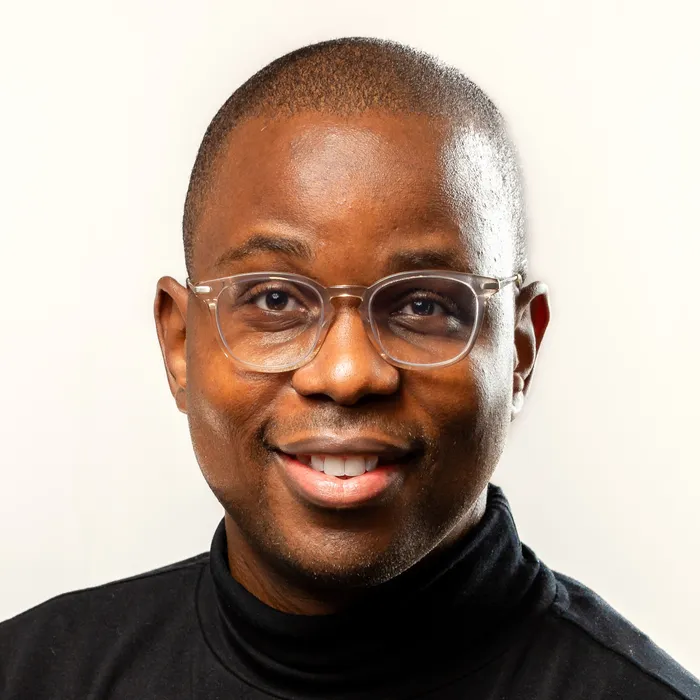
Andile Masuku is co-founder and executive producer at African Tech Roundup. He serves as executive editor of Future in the Humanities (FITH), powered by the SA–UK Chair in the Digital Humanities at Wits University. Connect and engage with Andile on X (@MasukuAndile) and via LinkedIn.
Image: Supplied.
Tayo Akinyemi is the producer and writer of The Trajectory Africa, a Substack and (retired) podcast series exploring the pathway of venture capital and startup formation in Africa from first principles.
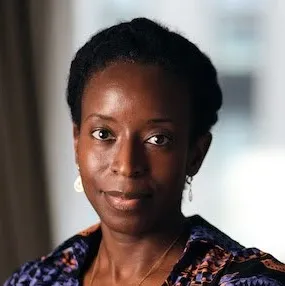
Tayo Akinyemi is the producer and writer of The Trajectory Africa, a Substack and (retired) podcast series exploring the pathway of venture capital and startup formation in Africa from first principles.
Image: Supplied.
Follow Business Report on Facebook, X and on LinkedIn for the latest Business and tech news.