

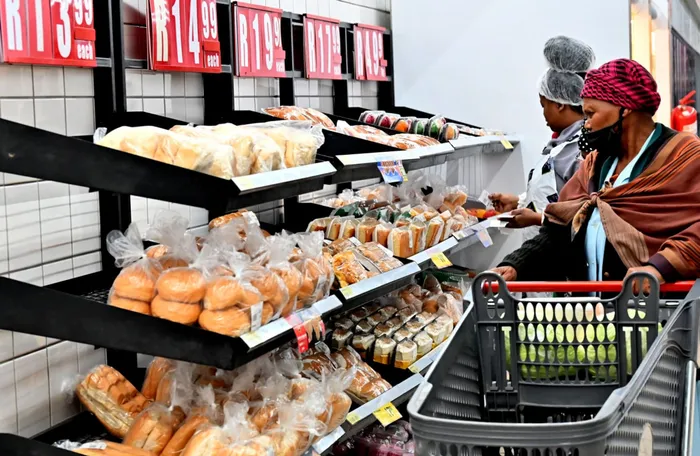
A drop in fuel prices offers welcome relief, but South African households remain under pressure as unemployment rises, food costs stay elevated and municipal bills increase.
Image: Ayanda Ndamane / Independent Newspapers.
South African consumers received some welcome relief this week as fuel prices declined, but the benefit comes against a difficult economic backdrop of rising unemployment, persistent affordability pressures and households struggling to keep pace with the cost of living.
Economic data released this past week painted a mixed picture.
While lower fuel prices and easing food inflation provide some support for consumers, the labour market remains under pressure, with new employment figures showing a decline in jobs during the first quarter of 2026.
Statistics South Africa’s Quarterly Employment Statistics for the first quarter of 2026 showed total employment falling by about 80,000 jobs, declining from 10.548 million jobs in December 2025 to 10.468 million jobs in March 2026.
The largest job losses were recorded in community services, which shed 53,000 jobs, followed by trade with 40,000 jobs lost. Transport declined by 3,000 jobs, while electricity employment fell by 1,000 jobs.
Frank Blackmore, Lead Economist at KPMG South Africa, said the employment figures highlight continued pressure within the labour market.
“In line with the recent labour force statistics that showed an increase in unemployment, these figures reveal a total employment decrease of about 80,000 jobs,” Blackmore said.
However, not all sectors contracted. Manufacturing added 7,000 jobs, business services increased by 7,000, mining gained 2,000 jobs and construction added 1,000 jobs.
Blackmore said the outlook could improve if economic growth strengthens following the easing of geopolitical pressures.
“Moving forward, if economic growth accelerates, especially now that the Middle East conflict has reached a ceasefire, we should see a decline in inflationary pressures. This may be followed by a decrease in interest rates, ultimately boosting economic growth later this year,” he said.
The reduction in fuel prices from 1 July has offered immediate relief for motorists after months of sharp increases.
The price of 95 unleaded petrol declined by R1.96 per litre, while 93 unleaded petrol fell by R2 per litre. Diesel prices dropped by more than R3 per litre.
The decrease follows significant fuel price increases between March and June 2026, which pushed petrol prices up by more than R8 per litre, with inland 95 unleaded petrol reaching a record R28.06 per litre in June.
Blackmore said the reduction is positive for households and businesses because fuel costs filter through the wider economy.
“The over recovery in prices came to around R5 per litre for diesel and around R3 for petrol, but we are still equalising the National Treasury’s fuel levy that it removed and we are adding it back in increments,” Blackmore said.
“Generally, we will see around a R2 decrease in the price of petrol and around a R3.15 to R3.50 decrease in the price of diesel. This is obviously still a welcomed price relief.”
He said lower fuel costs could help reduce inflationary pressure over time.
“The pressure of those prices translates through the entire economy. To move any goods around the economy, we use these fuels, and a decrease in those costs will mean those transactional transport costs will decrease as well,” Blackmore said.
However, Neil Roets, CEO of Debt Rescue, warned that consumers should not mistake the fuel reduction for a full recovery in household finances.
“Fuel prices influence far more than what motorists pay at the pumps. They filter through the entire economy, affecting transport costs, food prices, logistics, municipal service delivery and ultimately household cash flow,” Roets said.
“While the July reduction is welcome, it is simply too small to offset the cumulative inflationary pressure consumers have absorbed over recent months.”
Food prices have shown some improvement, with KPMG reporting that South African food inflation cooled to a 17 month low of 1.6% in June.
Blackmore said lower fuel costs and a stronger rand contributed to easing pressure.
“In line with recent fuel cost reductions and a relatively stable rand, South African food price inflation cooled to a 17 month low of 1.6% in June,” he said.
Despite the improvement, the cost of feeding a household remains high. The average 44 item food basket remains around R5,452, while a minimum nutritious food basket for a family of four costs approximately R3,787.
The Household Affordability Index also showed that the household food basket increased by R23.15 in June to R5,502.42.
Tando Ngibe, Senior Manager at Budget Insurance, said the comparison between household income and food costs remains concerning.
“The National Minimum Wage at R30.23 per hour averages R5,078.64 for a 21 day working month,” Ngibe said.
“It is important to see the connections between what minimum wage South Africans earn and what is typically spent towards food necessities, not forgetting electricity and transportation.”
Despite lower fuel prices and easing food inflation, households continue to face higher electricity costs, municipal increases and elevated debt repayments following recent interest rate increases.
Roets said consumers are experiencing multiple pressures simultaneously.
“Fuel, electricity, municipal charges, transport and food costs rarely increase in isolation. Together they create a compounding affordability problem that places sustained pressure on household cash flow,” he said.
Consumer expert Hayley Parry, Money Coach and Facilitator at 1Life’s Truth About Money, said the labour market challenges make financial resilience even more important.
“Wages are rising slightly, income growth is not keeping up with the cost of living, and job opportunities are declining,” Parry said.
She encouraged households to focus on practical financial steps, including building emergency savings, reducing debt and avoiding unnecessary borrowing.
“Consumers should focus on building an emergency fund, even in small, consistent amounts, reducing debt by keeping up with their loan repayments and avoiding new debt altogether,” Parry said.
While the fuel reduction provides short term relief, economists warn that a sustainable improvement in household finances will depend on stronger economic growth, job creation and continued moderation in inflation.
For millions of South Africans, the challenge remains balancing reduced fuel costs with the ongoing reality of expensive food, utilities and uncertain employment prospects.
Follow Business Report on Facebook, X and on LinkedIn for the latest Business and tech news.