


An import certification dispute between South Africa and Argentina could tighten winter oxtail supplies, pushing up prices for consumers and placing pressure on retailers.
Image: Supplied.
South Africans could soon be paying substantially more for one of the country's favourite winter comfort foods as an administrative dispute threatens imports of Argentine oxtail, which accounts for the majority of local supply.
The Association of Meat Importers and Exporters South Africa (AMIE) has urged the Department of Agriculture to urgently resolve what it described as a preventable certification issue before shortages begin affecting retailers and consumers.
South Africa imports about 70% of its oxtail from Argentina because local producers cannot meet domestic demand, particularly during winter when oxtail stew and potjie become household staples.
According to AMIE, importers are already carefully managing available stock and consumers could soon face higher prices if the impasse continues.
The dispute centres on sanitary certificates used for bovine products imported from Argentina. AMIE explained that the certificates contain a reference to Ovine Scrapie, a disease that affects sheep and goats rather than cattle.
Industry stakeholders and Argentine authorities proposed removing the reference from certificates for beef products, but instead the process has become more complicated after the Department of Agriculture introduced a new certificate with extensive Foot and Mouth Disease biosecurity requirements for bone in beef products, including oxtail.
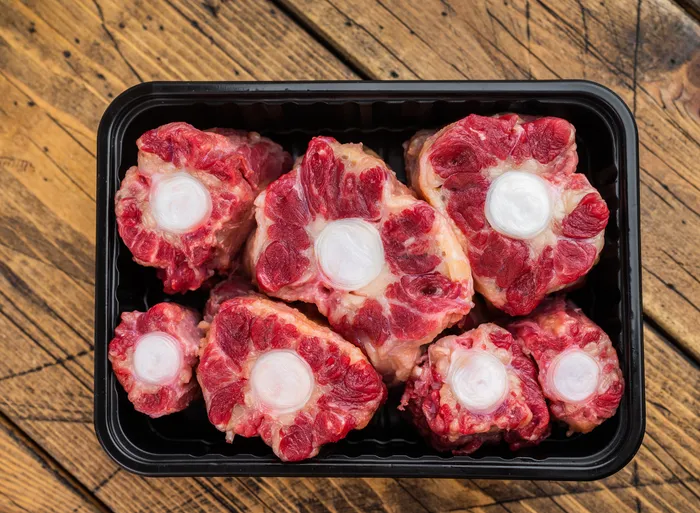
An import certification dispute between South Africa and Argentina could tighten winter oxtail supplies, pushing up prices for consumers and placing pressure on retailers.
Image: Supplied.
AMIE Chief Executive Paul Matthew said the issue should never have escalated to this point.
"This should have been a simple administrative amendment. Ovine scrapie does not apply to cattle, and removing that reference from bovine certificates should not have become a regulatory obstacle of this scale. Argentina has the product, South Africa needs the product, and consumers should not lose access to oxtail because of a certificate issue that can be easily resolved," Matthew said.
The association argued that the situation is particularly frustrating because Argentina and South Africa have a long history of cooperation on animal health, especially in managing Foot and Mouth Disease.
Argentina is one of the countries supplying Foot and Mouth Disease vaccines to South Africa and has worked closely with local authorities on disease management and biosecurity frameworks.
AMIE maintained that the current challenge is not the result of weak biosecurity controls or poor cooperation between the two countries, but rather an unnecessarily burdensome administrative process.
The consequences for the local market could be significant.
Importers estimate that as much as 1,000 tonnes of oxtail, valued at more than R100 million, could fail to reach South African shelves during the winter season if the dispute is not resolved quickly.
Some importers have already begun cancelling winter contracts as uncertainty over certification deadlines continues.
Matthew warned that consumers will ultimately bear the cost of the delays.
"South Africans cannot access a product that South Africa itself cannot produce in sufficient quantities while the imports needed to make up the shortfall remain blocked. Consumers don't care about veterinary certificate wording, but expect affordable food on supermarket shelves. When a straightforward administrative correction turns into months of delay, it is South African families who ultimately pay the price," he said.
The timing is particularly sensitive as households continue to battle rising living costs despite recent relief from lower fuel prices and easing food inflation.
Although the broader inflation outlook has shown signs of improvement in recent weeks, supply disruptions affecting staple food products could place fresh pressure on household budgets during the peak winter season.
AMIE stressed that it supports South Africa's biosecurity standards and is not calling for any weakening of animal health protections.
Instead, the organisation is advocating for a practical solution that remains scientifically justified while allowing trade to continue.
"AMIE fully supports South Africa's biosecurity requirements. Our request is simply that those requirements be scientifically justified, practical to implement, and applied in a way that protects both animal health and South African consumers," Matthew said.
The association has engaged with the Department of Agriculture's Deputy Director General and has also approached the Argentine embassy in an effort to accelerate discussions.
Matthew added that the issue now extends beyond a single certificate amendment and reflects broader concerns about administrative delays affecting South Africa's food supply and international trade.
"This issue is now bigger than one certificate clause, and corrective action must be expedited. This situation serves as yet another example of how unnecessary administrative delays are affecting both South Africa's export ambitions and the availability of affordable imported food," he said.
Unless the certification issue is resolved soon, consumers may find that one of winter's most popular meals becomes increasingly difficult and expensive to put on the table.
Follow Business Report on Facebook, X and on LinkedIn for the latest Business and tech news.