

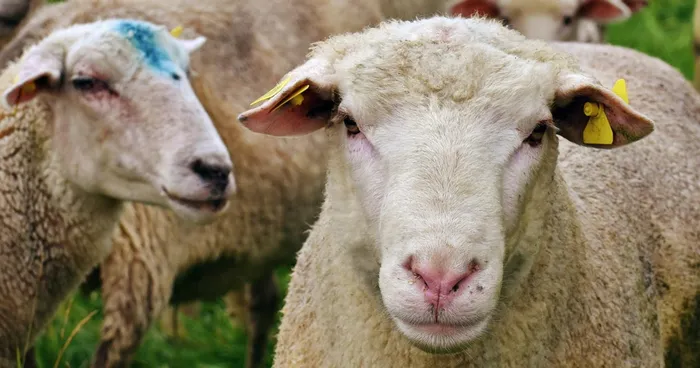
The local meat industry has potentially lost R1.5 billion in lamb exports to Qatar over the past two years, highlighting the urgent need to improve export systems and market access processes.
Image: Alexas_Fotos, Pixabay
South Africa's meat industry has warned that the country risks missing out on lucrative export opportunities unless longstanding regulatory and certification bottlenecks are urgently resolved.
The warning comes after Italy recently expressed significant interest in importing South African beef during discussions at the SA Italy Agriculture Business Forum in Cape Town.
While industry stakeholders welcomed the prospect of expanding exports into Europe, they cautioned that new opportunities mean little if existing export channels remain constrained.
Paul Matthew, chief executive of the Association of Meat Importers and Exporters of Southern Africa (AMIE), said South Africa needed to focus not only on securing new markets but also on ensuring that approved and commercially viable export routes function effectively.
"Italy's interest in South African beef should be a positive signal for local producers," Matthew said.
"However, new export opportunities mean little if government cannot restore access to meat markets already accessible, approved, or commercially ready."
AMIE chairman Mark Luff said global trade dynamics, including growing tariff pressures in the United States, made it increasingly important for South Africa to diversify its agricultural export relationships.
"Italy's interest in local beef confirms that demand exists for South African red meat," Luff said.
"However, the meat industry's immediate problem is not a shortage of buyers. Exporters are still struggling to move product into markets where demand already exists because authorisation and government to government processes remain unresolved."
According to AMIE, South Africa has potentially lost around R1.5 billion in lamb export opportunities to Qatar over the past two years due to unresolved certification and market access processes.
The association said Qatar banned South African lamb imports on 1 June 2024, and although buyers are reportedly ready to resume purchases, the renegotiation and authorisation process remains incomplete.
Before the ban, South Africa exported approximately 300 tonnes of lamb to Qatar every month, equivalent to around 150 000 lamb carcasses.
"The industry cannot speak seriously about future access to new European markets while existing export channels remain blocked," Luff said.
"Lamb exports to Qatar have been stuck for two years while access into Dubai is still not finalised, and facilities affected by foot and mouth disease remain shut out of key Middle Eastern markets where commercial momentum should already have been restored."
AMIE estimated that the loss of the Qatar market alone has cost the industry approximately R750 million annually.
The organisation said similar delays are affecting access to other Middle Eastern markets, including Mauritius and Bahrain, where administrative and regulatory processes remain unresolved despite engagement from trading partners.
"Market access has no practical value if exporters cannot turn it into approved product moving through the supply chain," Luff said.
"Once buyers replace South African lamb or beef with a more reliable supplier, that space is difficult and costly to win back. Importers prefer to build their procurement systems around suppliers that can deliver consistently, and by the time South Africa is ready to trade, the opportunity may already have moved on."
The association believes the Department of Agriculture must urgently prioritise the regulatory protocols and health certification requirements needed to reopen existing markets and facilitate exports.
AMIE also raised concerns about inconsistent veterinary interpretations across provinces, which can create uncertainty and disrupt shipments even when exporters believe they have complied with all requirements.
Luff said these inconsistencies were adding further pressure to an already strained export environment.
"Italy may want South African beef, but no buyer in Rome, Doha, or Dubai can trade on promises of future system readiness," he said.
"They need signed certificates, mutually agreed health conditions, approved facilities, and a veterinary authority that moves at commercial rather than bureaucratic speed."
He added that exporters were being hampered by differing interpretations of national regulations between provincial veterinary authorities.
"A consignment may have the necessary permits or approvals in place, only to be delayed or rejected because officials apply the same national documents inconsistently," Luff said.
"The cost is carried across the chain through significant financial loss, product spoilage risk, damaged buyer confidence, and greater uncertainty for producers, abattoirs, cold chain operators, and logistics providers."
With demand for South African meat products already established in several international markets, AMIE said the immediate priority should be removing barriers that prevent exporters from capitalising on existing opportunities.
"The priority now must be to clear the backlog in countries where demand for South African lamb and beef already exists, and for government to reform and modernise the systems, protocols, certification processes, and communication channels that determine whether a product can move," Luff said.
"Only then will our current market access challenges begin to be resolved, allowing new trading partners like Italy to be considered."
Follow Business Report on Facebook, X and on LinkedIn for the latest Business and tech news.