


.Join the vital conversation shaping South Africa's economic future, where leaders from various sectors unite to explore how innovation can drive growth, create jobs, and ensure competitiveness in a digital world.
Image: File.
South Africa is currently engaged in an important national conversation about its future.
Across government, industry, academia and civil society, leaders are gathering to debate how we stimulate economic growth, create jobs, accelerate industrialisation and position our country for success in an increasingly digital and competitive global economy.
These conversations matter.
Policy shapes markets. Markets shape industries. Industries shape livelihoods.
However, it is important to ensure that key contributors are not missing from the table.
Too often, discussions about South Africa's economic future are dominated by established institutions, large corporations and traditional centres of influence. While these voices are important, the future will not be built by incumbents alone. It will also be built by entrepreneurs, startups, innovators, researchers and technology pioneers who are creating entirely new industries and solving problems that did not exist a decade ago.
This is why platforms such as the National Policy Dialogue 2026, hosted by the Gauteng Industrial Development Zone (GIDZ) in partnership with key stakeholders including the Department of Science, Technology and Innovation (DSTI), the Department of Trade, Industry and Competition (DTIC), and the National Advisory Council on Innovation, are so important.
The dialogue has brought together policymakers, researchers, industry leaders, entrepreneurs such as ourselves as Khoi Tech and development partners to explore how innovation can drive South Africa's re-industrialisation and inclusive growth.
A central theme emerging from these discussions is that industrial competitiveness in the twenty-first century will increasingly depend on science, technology and innovation.
What makes this moment significant is the growing recognition that innovation is no longer a supporting pillar of economic development, it is becoming its foundation.
South Africa faces a complex set of challenges: de-industrialisation, unemployment, inequality, global supply chain shifts, climate pressures and rapid technological disruption require a new development model.
Policymakers and industry leaders participating in recent national dialogues have repeatedly highlighted the need for digitalisation, diversification and innovation-led industrialisation as critical drivers of future growth. One thing should be noted though, innovation does not emerge from policy documents alone. It emerges from people.
It emerges from entrepreneurs working from small offices, township workshops, university laboratories, innovation hubs and startup ecosystems.
It emerges from young South Africans who look at a problem and choose not to wait for a solution but to build one. The reality is that many of the technologies shaping our future, from artificial intelligence and health technology to cybersecurity, advanced manufacturing, fintech and digital platforms, are increasingly being developed by agile startups rather than legacy institutions.
If South Africa is serious about becoming a globally competitive innovation economy, then startups cannot simply be beneficiaries of policy.
They must be contributors to policy.
They must have a voice in determining the frameworks that govern innovation, intellectual property, investment incentives, digital infrastructure, skills development and industrial strategy.
At Khoi Tech, we believe Africa must not merely consume technology. Africa must own it, create it, protect it and define it.
This is what technology sovereignty means. It is not about isolation or protectionism.
It is about ensuring that African countries develop the capabilities to design, manufacture and commercialise technologies that address our unique challenges while competing globally.
For too long, African economies have exported raw materials and imported finished products. The digital economy presents us with an opportunity to break this cycle. We have the talent. We have the ideas. We have the ambition. What we need is greater alignment between policy, investment and innovation and a critical part of this conversation is intellectual property.
Too often, African innovation generates value that ultimately accrues elsewhere.
When African innovators lose ownership of their intellectual property, we lose more than patents. We lose future industries, future jobs, future tax revenues and future economic influence. Intellectual property ownership should therefore be viewed not simply as a legal instrument but as a strategic economic asset.
It is the bridge between innovation and industrialisation. It enables local companies to scale globally while retaining value domestically. It creates opportunities for licensing, manufacturing, exports and high-value employment. Most importantly, it ensures that African ingenuity translates into African prosperity.
The technologies that will define the coming decades should increasingly carry African fingerprints, African stories and African ownership.
This is particularly important as the world enters a new era shaped by artificial intelligence, quantum computing, advanced robotics, biotechnology and next-generation communications technologies. Nations that own the intellectual property underpinning these technologies will shape the future global economy.
Those that do not risk becoming perpetual consumers of innovation created elsewhere. South Africa has the opportunity to choose a different path.
The encouraging message emerging from policy dialogues across government and industry is that there is growing recognition of the importance of collaboration.
Stakeholders have emphasised the need for stronger partnerships between government, industry, academia, small businesses and innovation ecosystems to accelerate innovation-led development and economic transformation.
This collaborative approach must continue as government cannot build the future alone. Neither can industry nor academia. It has to be done collaboratively.
The next chapter of South Africa's economic story will not be written solely in boardrooms or government offices.
It will be written in research laboratories, startup incubators, manufacturing facilities, technology hubs and entrepreneurial ventures across our nation.
That is why innovators and entrepreneurs deserve more than a place in the audience. We deserve a seat at the table.
The future of South Africa should not be designed for startups and innovators.
It reshould be designed with them, and, if we get that right, we will achieve something far greater than economic growth.
We will build a nation that creates its own technologies, owns its own intellectual property, develops its own industries and defines its own future. Our participation at the National Policy Dialogue 2026 is a positive move in this direction.
Seati Moloi, CEO and Founder, Khoi Tech.
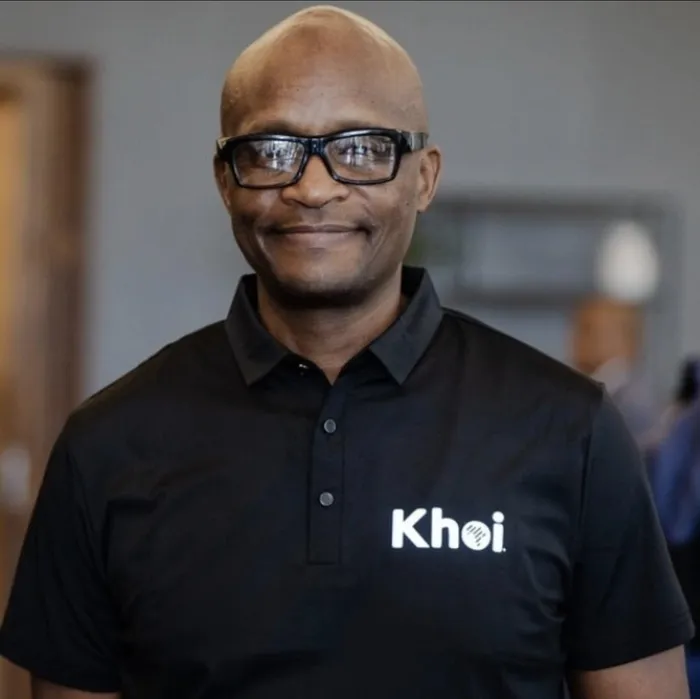
Seati Moloi, founder and chief executive of Khoi Tech.
Image: Supplied
Follow Business Report on Facebook, X and on LinkedIn for the latest Business and tech news.