

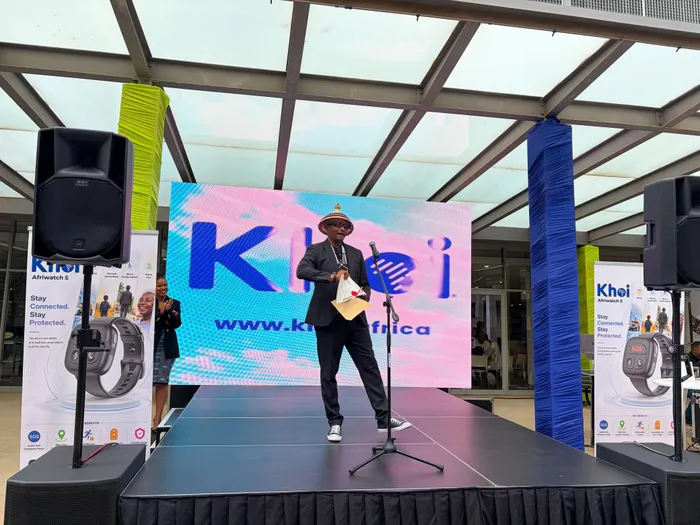
Seati Moloi, Founder and CEO at Khoi Tech.
Image: Supplied.
I was born in Soweto during the final years of Apartheid South Africa, in a country where the architecture of oppression had already decided what dreams were permissible for children who looked like me.
Back then, possibility felt distant.
Technology did not look African. Innovation did not sound like our surnames.
The future was imagined elsewhere, in Silicon Valley boardrooms, European laboratories, and Asian manufacturing plants.
Certainly not in township homes where young boys carried ambition larger than their circumstances.Yet somehow, despite history, despite inequality, despite the inherited limitations of a wounded continent, hope survived.
And perhaps that is the greatest gift the founders of the Organisation of African Unity gave us on 25 May 1963: the permission to believe that Africa could still rise.
Sixty-three years later, on Africa Day 2026, I stood at Telkom Park in Centurion and watched a dream born in Soweto open the doors to its first permanent home.
Khoi Tech, a proudly South African technology company we built from faith, sacrifice and relentless determination, officially launched its first retail and experiential store.
For many, it may have appeared to be the opening of another tech store.
But for me, it was something far deeper.
It was proof that African dreams still breathe.
One of the greatest mistakes we continue to make as Africans is believing innovation must always come from somewhere else.
For decades, Africa has largely remained a consumer continent; importing devices, importing systems, importing platforms, importing futures imagined by others.
Meanwhile, brilliant African innovators continue trying to build world-class solutions with limited support, limited capital and limited access to markets.
What Khoi Tech’s journey reminded me is that Africa does not suffer from a shortage of talent. It suffers from a shortage of intentional support.
That distinction matters. I say this because talent without opportunity eventually becomes frustration. Innovation without backing becomes abandonment.
Dreams without ecosystems become statistics. This is why the support Khoi Tech received from organisations such as Telkom FutureMakers, Telkom Business, Proudly South African and EDMASA matters so profoundly.
Their support did not simply help launch a store. It helped validate an African possibility.
One of the most moving realities of the launch was recognising how many people and institutions it took to bring this moment to life.
There was a powerful sense throughout the day that no African success story is ever built alone. Speaking at the launch, Jenine van Straaten, Executive for Strategy and Stakeholder Relations at Proudly South African reinforced the importance of South Africans intentionally supporting local innovation and choosing to believe in homegrown excellence.
Her message was simple but urgent: “Economic transformation and industrial growth will depend heavily on whether African consumers and corporations are willing to back African builders.”
This is the conversation Africa urgently needs.
Innovation ecosystems are never accidental. Silicon Valley did not emerge because Americans are inherently more intelligent than Africans.
Shenzhen did not become a manufacturing powerhouse by luck.
Those ecosystems were intentionally built through investment, partnerships, procurement opportunities and institutional support. Africa must now do the same for its own innovators.
Corporate South Africa has immense power to shape the continent’s future.
Every procurement decision, every partnership, every supplier opportunity and every investment decision either strengthens local innovation ecosystems, or weakens them.
Far too often, African innovators are expected to prove themselves repeatedly before they are trusted, while international brands are immediately perceived as credible.
That cycle must end.
The partnership and enablement support provided by Telkom demonstrated what becomes possible when large corporations deliberately create room for emerging African innovators to grow. This support is not charity.
It is economic activism. It is future-making. Because every African technology company that succeeds creates jobs, develops skills, builds intellectual property, inspires young people and contributes toward reducing the continent’s dependence on imported innovation.
What made the launch especially emotional for me was hearing stories that reminded us technology is not simply about devices.
It is about people.
Dr Phillip Makume, a medical professional working with Baragwanath Hospital’s palliative care unit, shared how Khoi Tech’s health technology ecosystem has helped remotely monitor lung cancer patients while allowing them to remain safely at home with their families.
That moment reminded everyone present that African innovation carries a unique responsibility: solving African challenges with African understanding.
Too often, conversations about technology become obsessed with valuation figures, market dominance and hype cycles.
But the true power of innovation lies in dignity. Can technology help a grandmother feel safe? Can it help a patient receive remote care? Can it help a student access learning?
Can it help a township entrepreneur participate in the digital economy? These are the questions that matter. And these are the questions African innovators are uniquely positioned to answer.
As we reflect on Africa Day, let us think deeply about the hopes of the 33 African leaders who came together in Addis Ababa in 1963 to establish the Organisation of African Unity.
Their dream was larger than politics. They hoped of an Africa no longer dependent on external validation to believe in its own genius.
On Africa Day this year, standing inside a proudly African technology store built by young black South Africans, supported by partners willing to believe in local excellence, I felt that dream alive again.
And for the young African child sitting somewhere today with impossible dreams and limited resources; I promise you, there is hope.
Seati Moloi, Founder and CEO at Khoi Tech.
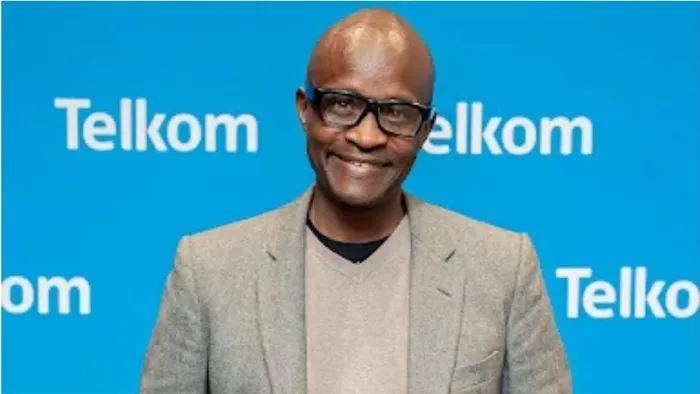
Seati Moloi, Founder and CEO at Khoi Tech.
Image: Supplied.
Follow Business Report on Facebook, X and on LinkedIn for the latest Business and tech news.