

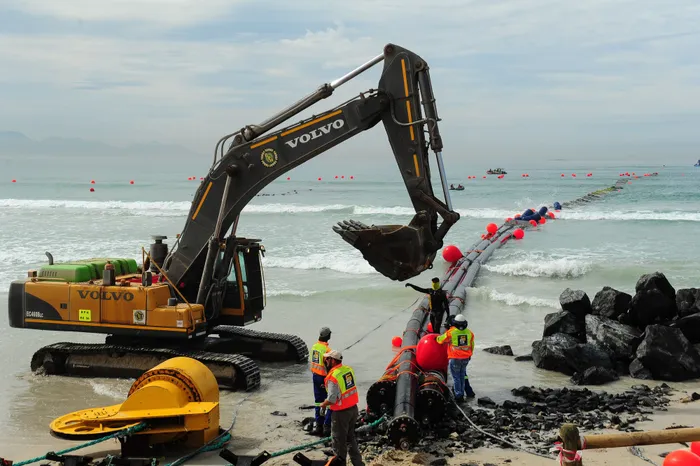
As South Africa marks Youth Month, industry leaders are calling for urgent action to attract more young engineers into municipal roles, warning that infrastructure development and service delivery depend on a stronger pipeline of technical talent.
Image: Henk Kruger/Independent Newspapers
South Africa’s ability to tackle its growing infrastructure challenges will depend heavily on attracting and developing a new generation of engineering professionals, according to the Institute of Municipal Engineering of Southern Africa (IMESA).
As the country commemorates Youth Month, the organisation has called for greater investment in young engineers, warning that a shortage of technical skills within municipalities is placing increasing pressure on service delivery, infrastructure maintenance and economic growth.
Industry estimates suggest South Africa faces a shortage of as many as 60 000 engineering professionals, while universities continue to produce fewer graduates than the economy requires, particularly in scarce skills disciplines.
Municipalities are also competing with sectors such as energy, technology, manufacturing and consulting for a limited pool of engineering graduates.
Bhavna Soni, IMESA operations director for Young Professionals and Membership, said municipal engineering offered young professionals a unique opportunity to make a meaningful difference in communities.
"Municipal engineering is one of the few sectors where engineers can see the direct impact of their work on people's daily lives," Soni said.
"Every road, water treatment works, pump station, stormwater system and sanitation project contributes directly to economic development and community wellbeing. If we want to improve service delivery and infrastructure performance, we need to inspire more young people to see municipal engineering as a career of choice that offers purpose and impact."
The effects of the engineering skills shortage are already being felt within local government structures.
Dhiveshni Naidu, chairperson of IMESA's Young Professionals Portfolio committee in KwaZulu Natal and senior civil engineer at eThekwini Water and Sanitation, said municipalities are increasingly expected to do more with fewer technical resources.
"It often results in increased workloads and the need to manage multiple responsibilities simultaneously," Naidu said.
"Developing young engineers and investing in mentorship and training is an imperative if we are to improve service delivery and ensure the long term sustainability of our municipalities."
Lenesh Sukhlal, area manager in Wastewater Planning at eThekwini Municipality and a committee member of IMESA's Young Professionals Portfolio, echoed those concerns.
"In many instances, I have had to take on responsibilities that would typically be managed by multiple engineers," Sukhlal said.
Despite these challenges, young professionals working in municipal engineering describe the sector as one of the most rewarding career paths available.
Dhiresh Dhewki, who works in the water sector, said the opportunity to contribute directly to communities inspired his decision to pursue municipal engineering.
"The ability to work on infrastructure projects that have a tangible and lasting impact on people was a key motivator," Dhewki said.
"Working in the water sector combines the technical aspects of engineering with the human element of delivering an essential service."
Water design technologist Ntokozo Mjwara said seeing the benefits of infrastructure projects firsthand remains one of the most satisfying aspects of the profession.
"Whether it is water, sanitation, roads or stormwater systems, these are services people rely on every single day," Mjwara said.
"Seeing communities benefit from completed projects reminds you that engineering is about improving people's quality of life. Something as simple as people being able to open a tap and have access to clean running water brings such joy."
Civil engineering technologist Zlungile Memela said municipal engineering offers a broad range of experiences beyond technical design work.
"It is never just laying a pipe and supplying water," Memela said.
"It is reservoirs, pump stations, planning, budgets and stakeholder engagement. Municipal engineering allows young graduates to tackle diverse, community focused projects while gaining broad experience."
IMESA Young Professionals Portfolio committee member Nkanyezi Mdlalose encouraged graduates to consider municipal engineering as a long term career option.
"Municipal engineering is a rewarding path to choose as a civil engineer as you become a vital part of the communities you work in," Mdlalose said.
IMESA believes efforts to attract young people to the profession need to begin long before university.
Naidu said greater engagement with school learners was essential to help them make informed subject choices.
"There needs to be more proactive engagement with learners before they select their subjects in high school," she said.
To help strengthen the talent pipeline, IMESA is expanding its Young Professionals Portfolio nationally. The programme provides mentorship, leadership development, technical learning opportunities and professional networking for young engineers and engineering technologists.
The organisation is also increasing collaboration with universities to expose students to municipal engineering careers before graduation.
"We are committed to building stronger relationships with universities and creating opportunities for students to engage with the profession before they graduate," Soni said.
She added that the engineers entering the profession today would play a pivotal role in shaping South Africa's future infrastructure landscape.
"The young engineers entering the profession today will shape South Africa's infrastructure for decades to come. That is an extraordinary responsibility, but also an extraordinary opportunity."
Follow Business Report on Facebook, X and on LinkedIn for the latest Business and tech news.