


Despite rising fuel costs, South Africa’s consumer class is driving a remarkable resurgence in new car sales. Discover what’s behind this unexpected trend and how changing perceptions about car ownership are reshaping the market landscape.
Image: Supplied.
April 2026 has seen an unexpected surge in the South African automotive market, leaving analysts and consumers alike scrambling to decipher the driving forces behind this resurgence.
Despite the ever-increasing prices of petrol and diesel tightening household budgets, new car sales in South Africa are accelerating at a remarkable pace.
For the calendar year 2025, passenger car sales achieved a phenomenal peak of 422,000 units, a staggering 20% growth compared to the previous year and the highest level recorded since 2014.
As 2026 unfolds, the trend shows no signs of slowing as March alone saw over 39,000 units sold, representing an 18% increase in year-on-year sales.
According to TransUnion’s Q4 2025 South Africa Industry Insights Report, the consumer credit landscape is stabilising after a tumultuous period, with the vehicle finance market now marking its fifth consecutive quarter of vigorous growth.
This reinvigoration of car sales highlights a significant cultural shift in consumer attitudes, one that prioritises personal mobility in a way rarely seen before.
Despite rising fuel costs, South Africa’s consumer class is driving a remarkable resurgence in new car sales. Discover what’s behind this unexpected trend and how changing perceptions about car ownership are reshaping the market landscape.
Image: Supplied.
“There’s definitely a glass half-full outlook when it comes to car ownership, despite the geopolitical chaos at the moment,” said Brandon de Kock, Director of Storytelling for BrandMapp.
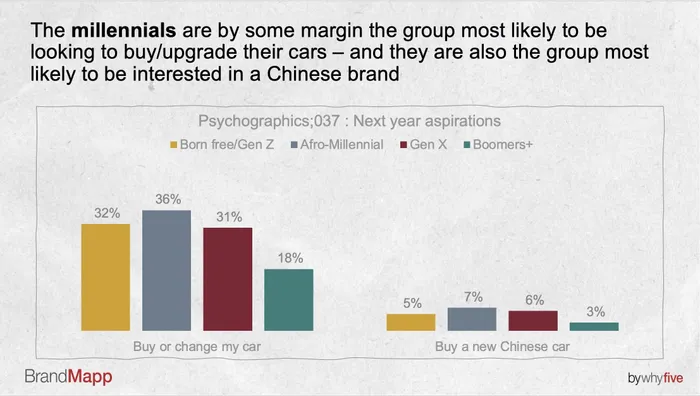
Evidence from BrandMapp's 2025 dataset revealed that 31% of South African adults in the consumer class are keen to buy or upgrade their vehicles within the coming year.
This figure rises to 36% among the ‘new family’ generation of millennials, overshadowing aspirations for home ownership or entrepreneurship.
Despite rising fuel costs, South Africa’s consumer class is driving a remarkable resurgence in new car sales. Discover what’s behind this unexpected trend and how changing perceptions about car ownership are reshaping the market landscape.
Image: Supplied.
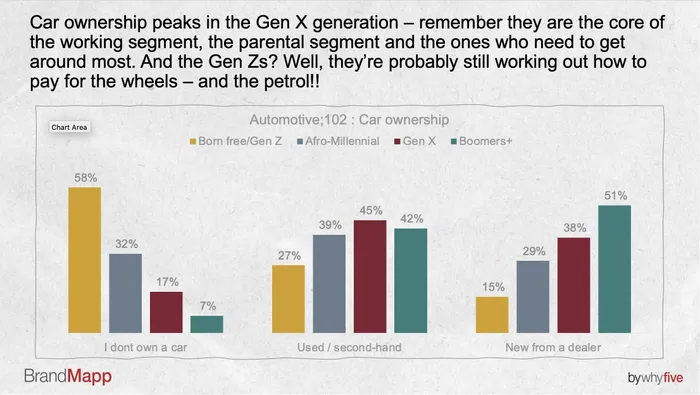
De Kock added, “South Africa has always been a passionate automotive country, both for emotional and practical reasons. The country’s spatial design, long distances, and limited public transport make owning a car a necessity for millions. Furthermore, cars are an intrinsic part of our identity and a symbol of social status.”
However, the motivations underpinning this newly invigorated demand for cars are multifaceted.
While many sources attribute the uptick in car sales to an influx of more affordable options in the market, the reality is more nuanced.
The average car loan has increased by R10,000 over the past year.
Entry-level models from newer Chinese brands often mirror the price points of established legacy brands, indicating that affordability alone is not the driving force.
de Kock pointed out, “It’s about the changing perception of what our cars represent, people are no longer fixated on brand prestige but instead seek value and savvy purchases.”
Despite rising fuel costs, South Africa’s consumer class is driving a remarkable resurgence in new car sales. Discover what’s behind this unexpected trend and how changing perceptions about car ownership are reshaping the market landscape.
Image: Supplied.
In this evolving landscape, South Africans are not shying away from spending money on their vehicles, they simply expect to maximise their returns.
De Kock said that the shifting demographic is no longer primarily focused on legacy brands and instead is increasingly inclined to consider the merits of newer, possibly less prestigious options.
“We still desire the 'latest and greatest,' but that doesn't necessarily mean sticking with traditional brands,” he added.
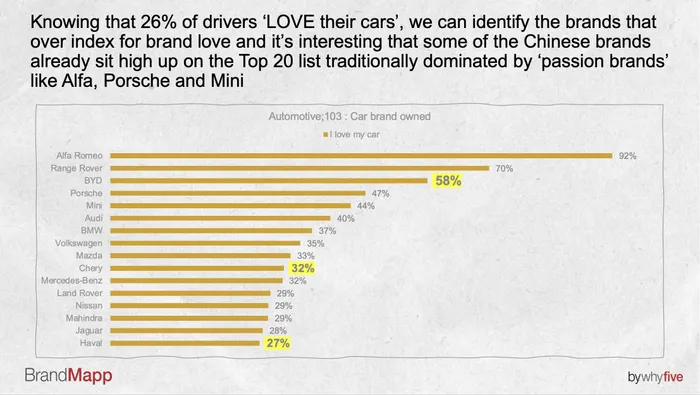
Chinese automotive brands are particularly capitalising on this perceptual shift.
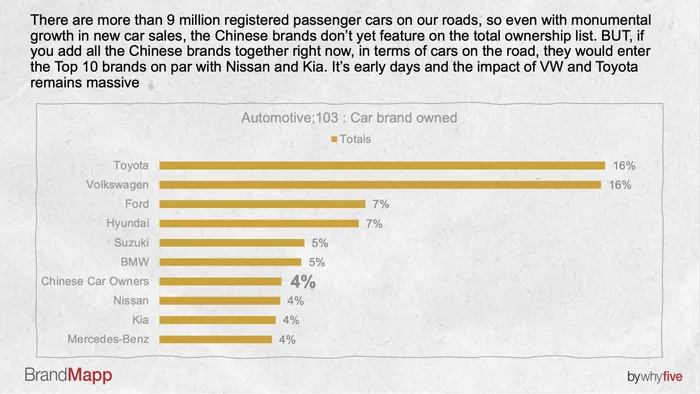
Currently, they account for 10 to 15% of all new car sales and have firmly established their presence in the South African market.
"Despite having a relatively nascent footprint, these brands already rank in the top 10 for new car sales, on par with Nissan and Kia,” de Kock noted.
Despite rising fuel costs, South Africa’s consumer class is driving a remarkable resurgence in new car sales. Discover what’s behind this unexpected trend and how changing perceptions about car ownership are reshaping the market landscape.
Image: Supplied.
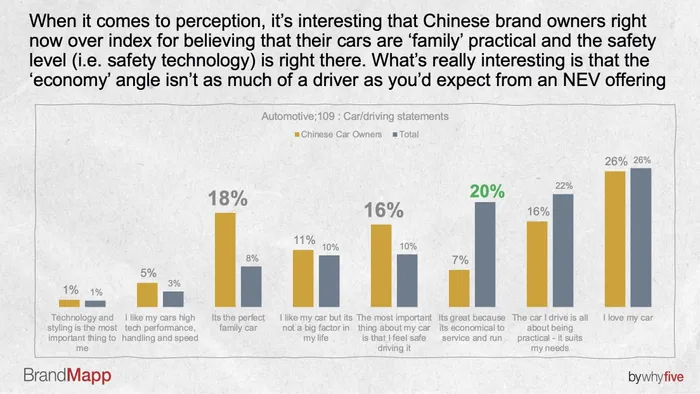
As consumer enthusiasm for Chinese vehicles grows, perceptions of quality and practicality are paramount.
Data from BrandMapp showed that 26% of South African drivers adore their cars, with several Chinese brands climbing the ranks of brand affection.
As consumers increasingly seek family-friendly options with higher safety ratings, the new wave of automotive offerings is establishing itself with remarkable compatibility for South African lifestyles.
Despite rising fuel costs, South Africa’s consumer class is driving a remarkable resurgence in new car sales. Discover what’s behind this unexpected trend and how changing perceptions about car ownership are reshaping the market landscape.
Image: Supplied.
Ultimately, the burgeoning popularity of Chinese cars serves as a sign that the automotive landscape is irrevocably changing in South Africa.
de Kock said, “The change has already occurred; consumers are re-evaluating their choices and showing a significant openness to brands that promise value and reliability.”
With the road ahead looking promising, South Africa's consumer class is once more revving its engines, signalling a hopeful future for both the economy and the automotive sector.
Follow Business Report on Facebook, X and on LinkedIn for the latest Business and tech news.