

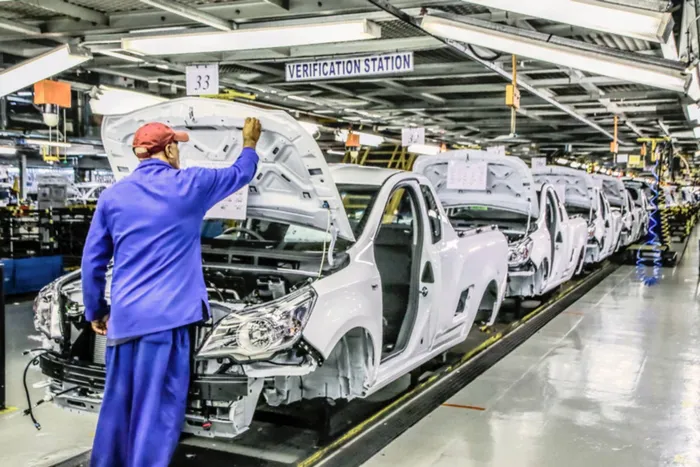
Data reported to the Automotive Business Council (naamsa) shows that combined vehicle sales for January and February reached 103,918 units, marking a strong 9.8% increase from the 94,632 units recorded during the same period in 2025.
Image: Supplied
South Africa’s new vehicle market has roared into 2026 with renewed momentum, surpassing a key milestone for the first time in a decade as improving economic conditions boost consumer and business confidence.
Data reported to the Automotive Business Council (naamsa) shows that combined vehicle sales for January and February reached 103,918 units, marking a strong 9.8% increase from the 94,632 units recorded during the same period in 2025.
The performance represents the first time since 2015 that cumulative sales have exceeded the 100,000 mark by the end of February.
In March, aggregate domestic vehicle sales climbed to 58,060 units, marking a 17.3% increase compared to the same period last year.
According to Lightstone Auto data analyst Andrew Hibbert, the early-year surge signals a significant recovery in the domestic automotive sector.
“It is the first time in a decade that cumulative sales broke through the 100,000 mark by the end of February, a level last seen in 2015 (104,613 units),” Hibbert said.
“The Passenger segment tracked in line with the broader market’s strong start to the year, with sales for the first two months of 2026 at 75,145 units, up 9.8% year-on-year. This is the highest level recorded since 2013, when 77,348 units were sold over the same period.”
The upward trend extended into February alone, with total new vehicle sales reaching 53,383 units. This reflects an 11.2% increase compared to February 2025 and a 5.6% rise from January 2026, underscoring sustained demand across key segments.
Passenger vehicles continued to dominate the market, with February sales climbing 11.1% year-on-year to 37,500 units. Light commercial vehicles also delivered a solid performance, rising 11.8% to 13,238 units. Together, these gains produced the strongest February showing for the light vehicle market since 2013.
The growth has been supported in part by lower interest rates, which have improved affordability for consumers. However, analysts caution that geopolitical tensions in the Middle East could push up fuel prices and inflation, potentially limiting further monetary easing.
Dealerships remained the primary sales channel, accounting for 84% of light vehicle sales in the first two months of the year. Meanwhile, the car rental industry’s share of new passenger vehicle purchases declined to 12.8%, down from 17.1% in 2025, suggesting a shift in demand dynamics.
In terms of vehicle preferences, crossover and SUV models continued to dominate the market. This category, which includes popular models such as the Chery Tiggo 4 Pro, Haval Jolion and Toyota Corolla Cross, accounted for 43% of all light vehicle sales, with 42,667 units sold in January and February.
Other segments also posted notable gains. The minibus and MPV category emerged as the fastest-growing segment, with sales surging 64% year-on-year to 4,328 units. Hatchbacks remained a key volume driver, contributing 25,139 units, or a quarter of total light vehicle sales.
Looking ahead, Lightstone expects the market to maintain moderate growth through 2026, supported by a relatively stable macroeconomic environment, but cautioned that the full implications of the war in the Middle East could alter expectations.
GDP growth is forecast at 1.5%, up from 1.1% in 2025, while inflation is expected to remain within the South African Reserve Bank’s 2% to 4% target range, albeit closer to the upper limit.
Hibbert noted that full-year vehicle sales are projected to reach around 617,500 units, with light vehicles accounting for the bulk at 585,500 units. This would represent growth of approximately 3.4% in 2026—an improvement on earlier forecasts, but significantly slower than the nearly 16% expansion recorded in 2025.
Electric and hybrid vehicles also continued to gain traction, with sales rising 7.4% year-on-year to 2,350 units in the first two months of 2026. Despite this growth, these vehicles still make up a relatively small share of the market at just over 3%.
BUSINESS REPORT