
Consumers must be prioritised now. South Africans from all walks of life are bearing the economic burden that sustains the economy.
Image: GCIS
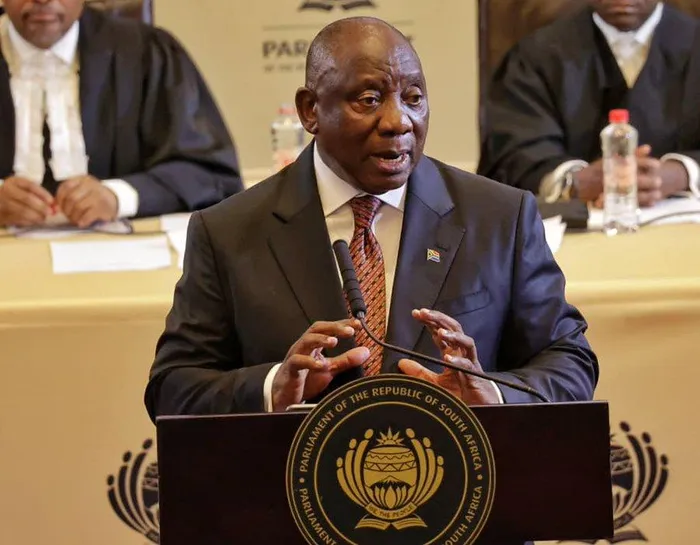
This week, when the President addresses 65 million South Africans during his State of the Nation Address (SONA), he will outline interventions for the coming financial year, flag the challenges ahead and highlight the country’s achievements. With the eyes of the nation upon him, he will outline the government’s agenda for the coming year.
My wish, Mr. President, is that you will respond to the urgent questions of ordinary South Africans who will be listening with the hope that you have heard their voices. That you will announce firm plans to take decisive action in their best interest.
Consumers must be prioritised now. South Africans from all walks of life are bearing the economic burden that sustains the economy.
Over the past year and beyond, the people have been driven to their knees, mostly as a result of debilitating living costs that have spiralled out of control, infrastructure that is failing them, poor job creation and wages that fall far short of rising inflation.
We desperately need solutions to the pressing challenges facing us all, including high unemployment, sluggish economic growth that has had a devastating impact on the quality of life of the man on the street, and essential living costs that have spiralled out of control, setting the scene for a nation of debt-ridden taxpayers who have reached the end of their tether.
None of this is new of course. It simply needs to be pointed out while there is someone listening.
What we need right now is a plan of action for a change of course.
There is a need for immediate, tangible relief measures from the impact of inflation on everyday prices of essential goods and services, such as food, electricity, fuel and water. This is a burden too heavy to be carried by the man on the street.
Plans to alleviate the cost-of living burden should be at the top of the agenda this year.
Infrastructure constraints and neglect, particularly in electricity (Eskom) and water, have severely hindered long-term growth and private investment. Nowhere is the resultant impact more glaring than the current water crisis that threatens to destabilise the country.
As the universal adage goes, ‘Water is life’ – an unequivocal acknowledgement that water is the essential, irreplaceable foundation for all living things. The prime necessity of life, without which life cannot exist.
South Africa is facing a worsening water crisis driven by failing municipal infrastructure, with national water reliability at only 68% and over 40% of water lost due to leaks. Nowhere is this more evident right now than in Gauteng, where residents are confronting a deepening water crisis that exposes not only infrastructural decay and municipal failure but also a lack of governance. As always, when regulation fails, it is the most vulnerable who pay the price. This time millions of lives are at stake. Literally.
Behind this is ageing water infrastructure, increased demand, and delays to the second phase of the Lesotho Highlands project, all of which are in the hands of government. As a result, the national Department of Water has called for a 40% reduction in water use from Gauteng’s residents to stave off further shortages and limit the pressure on infrastructure.
I and millions of my fellow countrymen understand the call to use water sparingly and regard it as a precious life resource. I return an even stronger call for government to take care of our water infrastructure, resources and management.
Otherwise, how will the country’s population survive without a steady and secure water supply?
Surely this must be at the very top of the agenda of this year’s SONA.
According to Business Leadership South Africa (BLSA) CEO Busi Mavuso, the strong electricity reforms that paved the way to ending load shedding and bring rates down in South Africa are at risk of being undone and heading backwards.
This is clearly such a crucial issue that Mavuso recently penned a letter to yourself President Ramaphosa, urging you to clear up confusion around Eskom’s monopoly before investors start fleeing. At the core of this concern is a revised unbundling strategy for Eskom approved by the Department of Electricity and Energy in December 2025. Basically, this keeps the country’s transmission assets under Eskom’s control.
In fact, it gives Eskom full control over the country’s electricity transmission system. Mavuso believes this will put over R440 billion of necessary investment at risk.
This is very bad news for South Africans who have endured years of load shedding and are now paying the price for mismanagement with exorbitant electricity tariffs.
We need to know what your position is on this Mr President. Will you take the necessary action to turn this around?
The National Treasury has acknowledged the unsustainable nature of the state’s debt burden and growing debt service costs, with plans to stabilise the debt burden in the 2025/26 fiscal year.
South Africa’s lacklustre economic growth has played a significant role in the slow economic growth as the economy has not grown fast enough to keep pace with government spending and the rise in state debt over the past few decades.
Averaging only 0.7% annually over the past decade, it has failed to keep pace with government spending and rising debt, creating a severe, self-reinforcing, low-growth trap.
Ballooning debt-service costs have constrained fiscal capacity for infrastructure, while energy and logistics bottlenecks further cripple economic expansion.
At the same time, debt service costs have rendered the government unable to sufficiently allocate state resources towards productive spending items like infrastructure, education and healthcare, which would have benefitted the economy in the long term.
In a nutshell, this spells trouble for the economy and trouble for the economy spells trouble for the consumer.
The people need to know that you have a plan to turn this around Mr President.
With South Africa's official unemployment rate standing at an unsustainable 31.9% according to Statistics South Africa and Trading Economics, and youth unemployment remaining critically high, between 45-60% depending on the definition used, job creation is an urgent priority.
Very little explanation is needed, I believe, to outline how vital job creation is to a thriving economy, except to say that most consumer spend comes from the working economy and this circulates and keeps the working economy going.
While Operation Vulindlela (Phase II) is firmly in execution mode, showing, tangible albeit slow, progress in structural reforms designed to boost South Africa's economy and create jobs, the latest government report fails to reassure regarding progress pertaining to job creation, instead focusing on the success achieved with regard to regulatory progress relating to electricity and water reforms.
Meanwhile, the country is stuck in the midst of an ongoing unemployment crisis, that threatens the fabric of society.
It is encouraging that the Presidential Employment Stimulus has provided opportunities to over 1.9 million people, according to recent reports. However, critics point out that, while it provides critical income support, many of these are temporary, short-term public works jobs rather than sustainable, structural employment.
Much more needs to be done to dig the country out of the current unemployment crisis and especially to address the youth unemployment catastrophe, which already poses a serious threat to the future leadership of the country.
With last year’s speech, we were promised bold and decisive action to address the country’s urgent challenges, and it’s true that some boxes have been ticked off, but the perception of many is that government still fails to reflect any real sense of urgency regarding the plight of its citizens, in the face of the country’s ongoing economic crisis.
The people are in deep, deep trouble. They have reached the end of the line.
Where to from here, Mr President?
Neil Roets, CEO of Debt Rescue.
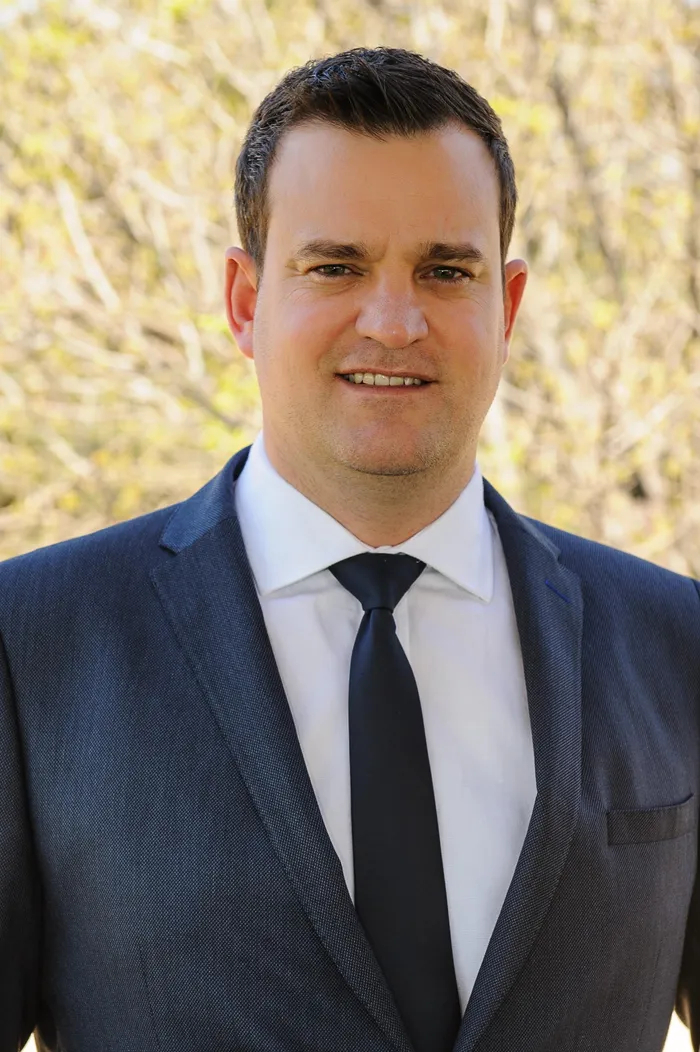
Neil Roets, CEO of Debt Rescue
Image: supplied
BUSINESS REPORT