

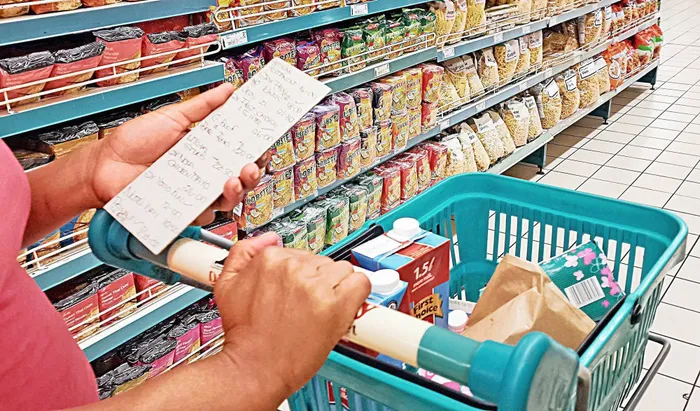
Explore how South African consumers are ramping up their saving strategies despite challenging economic conditions, signalling a shift towards smart shopping behaviours and diversified financial planning.
Image: File
In the face of ongoing economic challenges, a remarkable shift is taking place among South African consumers who are increasingly exhibiting financial resilience and optimism.
A recent study by consumer insights agency KLA, utilising data from YouGov Profiles+, reveals that a staggering 83% of South Africans plan to save more money over the next year.
This finding underscores a significant transformation in consumer behaviour, as individuals strive to make every rand count through savvy shopping tactics and diversified savings approaches.
The research, which surveyed over 39,000 South Africans, indicates a widespread belief in the potential for improvement, with 68% of respondents expecting their household finances to be in a better position within the next year.
Alongside this optimism lies a pronounced keen sense of value, as 84% of consumers report actively seeking special offers while 83% consistently leverage sales and coupons during their shopping expeditions.
The data paints a vivid picture of a 'smart shopper economy,' where value-seeking has become deeply embedded in the purchasing psyche of South Africans.
Over 90% of participants have engaged with various discount methods in the past six months, with gift vouchers (57%), promotional deals (52%), and online promo codes (52%) standing out as the most favoured ways to save.
Notably, only 8% of consumers report not utilising any discounts, highlighting a pervasive trend towards strategic spending.

Explore how South African consumers are ramping up their saving strategies despite challenging economic conditions, signalling a shift towards smart shopping behaviours and diversified financial planning.
Image: Supplied.
Interestingly, consumers exhibit selectivity in their price research, dedicating their efforts primarily to high-value purchases.
For example, 52% use price comparison websites for mobile phones and accessories, while 40% do so for electronics, and 35% for computers.
In contrast, only 29% of respondents apply the same diligence to groceries, indicating a focus on maximising savings where it matters most.
While traditional savings accounts remain the preferred choice for 73% of respondents, South Africans are broadening their financial horizons with diverse savings strategies.
The study reveals that 37% hold Tax-Free Savings Accounts, 27% opt for fixed deposits, and 25% contribute to retirement annuities.
Additionally, 18% participate in stokvels, illustrating a unique blend of formal banking tools and community-based savings methods that characterise the South African landscape.
The survey also highlights key players in the retail sector as retailers continue to compete for consumer loyalty by providing perceived value for money.
Checkers (48%), Shoprite (47%), and Pick n Pay (47%) dominate the list of favoured retailers, followed by SPAR (45%) and Makro (40%).
This trend suggests that consumer loyalty is driven more by consistent value delivery rather than merely the lowest prices available.
The findings present both opportunities and challenges for businesses operating in South Africa.
A permanent shift towards value-seeking behaviour means consumer price sensitivity is now deeply entrenched, necessitating brands to cultivate loyalty through reliable value delivery instead of sporadic promotions.
Additionally, with consumers heavily engaging in digital channels – from online promo codes to comparison tools – brands must prioritise digital interaction and value communication.
As 83% of South Africans intend to save more in the coming year, there lies significant potential for financial institutions to capture new savers with accessible, goal-based savings products.
Moreover, the consumer perception of value extends beyond mere price, encompassing aspects such as quality, consistency, and brand trust.
Thus, a holistic approach to value proposition is essential.
The data confirms that South African consumers are not simply tightening their belts in response to economic pressures; they are fundamentally reimagining their financial relationship.
This transition from reactive cost-cutting to proactive value-seeking signifies a structural market change that businesses must adapt to or risk being left behind.
BUSINESS REPORT