

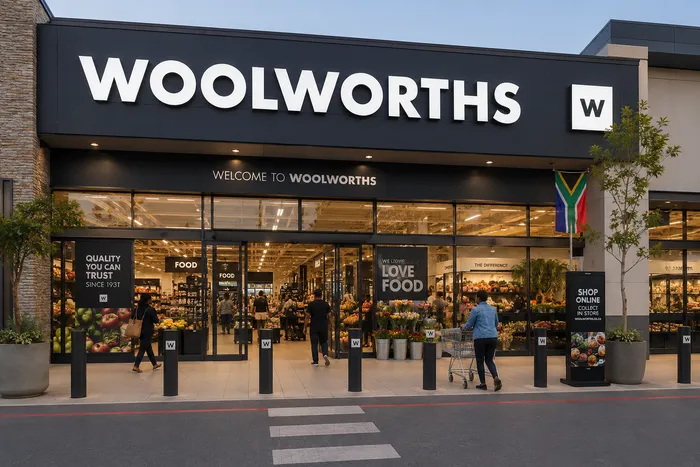
Woolworths South Africa delivered solid turnover and concession sales growth of 5.4% in the 52 weeks to June 30, 2026. Trading momentum moderated to 4.1% in the second half, with particular weakness in the fourth quarter.
Image: Supplied
Woolworths Holdings’ share price surged over 4% on the JSE Thursday even after the retailer reported a more challenging operating environment during the second half of a 52-week period to June 30.
The more difficult trading environment was caused by the war in the Middle East driving fuel prices and inflation higher, and dampening consumer confidence and demand, while also increasing operating costs, the group said in a trading statement.
Adjusted headline earnings per share was only expected to increase between 1% to 6% for the period, to between 306.4 to 321.6 cents. The share price was trading 4.62% higher at R49.19 on Thursday afternoon on the JSE, a price much in line with the R50 that it traded at a year ago.
“This, coupled with the resumption of interest rate increases across South Africa and Australia, saw consumers increasingly prioritise promotional offerings and essential purchases,” Woolworths’ directors said.
Group turnover and concession sales grew by 4.3%, and by 4.8% in constant currency, with positive sales growth in all segments of the business on a full-year basis.
Growth in the second half, however, slowed to 3.3%, reflecting “a particularly challenging final quarter.”
Woolworths South Africa delivered "solid" turnover and concession sales growth of 5.4%. Trading momentum moderated to 4.1% in the second half, with particular weakness in the fourth quarter, however, reflecting the impact of a strong comparative base, softer consumer demand, and disruptions to trade.
This impact was more pronounced in Fashion, Beauty, and Home (FBH).
The Food business continued to deliver above-market turnover and concession sales growth of 5.7%, and 3.7% on a comparable-store basis, supported by quality and innovation of the product offering, and focus on an elevated in-store customer experience.
Price movement averaged 4.7% (3.9% excluding meat). Sales growth softened to 4.4% in the second half, as a result of slower growth in select produce and grocery categories.
Revenue through the Woolies on-demand service grew by 19.6%, with the online channel contributing 7.3% to SA Food sales. Net trading space increased by 3.5%, and by 2.5% on a weighted basis, in the prior period.
Gross profit margin was maintained due to operational efficiencies, despite higher distribution costs and investment in the Midrand distribution centre.
FBH turnover and concession sales increased by 4.4% and by 4.0% on a comparable-store basis.
While trading momentum accelerated in the first half, the war in the Middle East had a pronounced impact on demand, particularly in the fourth quarter; second half sales slowed considerably to 2.6% at PBH. Price movement averaged 2.4%, with Fashion inflation at 0.9%.
Price investment in Kidswear, together with additional promotional activity and clearance of excess inventory following the unplanned weaker sales performance in the last quarter, placed significant pressure on gross profit margin in the second half.
The Home business delivered strong growth of 11.7%, supported by an enhanced Homeware offering. Beauty grew by 7.9%, despite increased competition in this category.
The annualised impairment rate for the year ended June 30 increased to 7%, compared to 6.1%.
At Country Road Group (CRG) in Australia, rising interest rates at the start of the second half saw consumer sentiment, footfall, and spend coming under significant pressure as a result. “The sector remains intensely promotional as retailers reduce excess inventory levels.”
CRG sales increased by 1% for the period and by 1.6% on a comparable-store basis, with second half sales growth declining by 0.5%.
A focus on greater full-price sales and reduced discounting resulted in a higher second half gross profit margin year-on-year, notwithstanding the impact of higher freight costs.
This, with the reduced cost of doing business as a result of a reset operating model, saw CRG pleasingly return to full-year profitability.
The Country Road brand traded marginally ahead of last year, while Witchery and Politix were well up on the prior period, benefiting from the repositioning of their respective brands. The results are expected to be published on September 2.
BUSINESS REPORT