

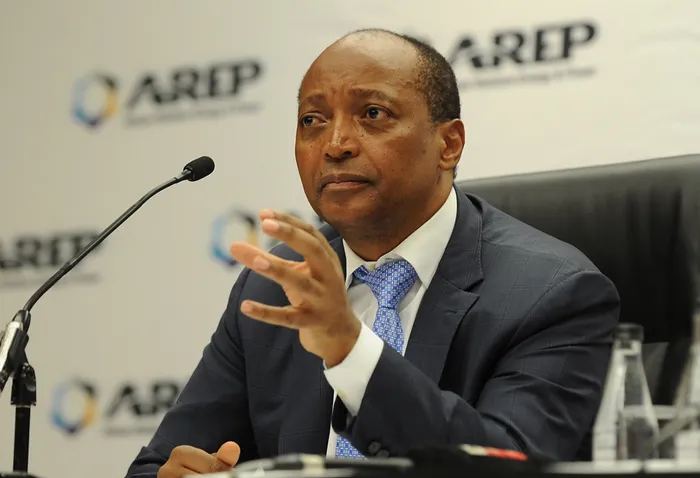
African Rainbow Capital (ARC) chairman and founder Patrice Motsepe. The Johannesburg High Court has ruled in ARC's favour in a dispute with Pula Graphite Partners, involving the alleged reneging on a graphite mining deal in Tanzania and investing instead in a competitor.
Image: Karen Sandison/Independent Newspapers
African Rainbow Capital (ARC), an empowerment investment company founded by prominent South African businessman Patrice Motsepe, said Wednesday the Johannesburg High Court has granted orders in favour of ARC, including that US-based Pula Graphite Partners Tanzanite had not made out any cause of action based on allegations of breach of contract against ARC in the Tanzanian court case.
The High Court had also found that Pula did not have a claim for contractual damages in respect of a surrendered prospecting licence, a statement from ARC said.
Pula Group and Pula Graphite Partners Tanzania had instituted a claim against African Rainbow Minerals (ARM), ARCH Sustainable Resources, (ARCH), ARC and Dr. Patrice Motsepe in the Tanzanian courts based on allegations that ARM, ARC, ARCH and Motsepe breached the terms of a non-disclosure agreement (NDA), governed under South African law, albeit that the NDA was entered into between Pula Group and ARM only.
Pula alleged that confidential information was shared with ARC and/or ARCH. Pula further alleged that this enabled ARCH to acquire a stake in Evolution Energy, a competitor of Pula, in Tanzania. Consequently, Pula claimed it suffered a future loss of profit in respect of its exploration right. Pula advanced a contractual claim for those alleged damages against ARM, ARCH, ARC and Motsepe, notwithstanding that only ARM was a party to the NDA.
Although Pula alleged that it held the exploration right at the time the proceedings were instituted in Tanzania in October 2023, it later transpired that Pula had attempted to renew that right, that the right could not be renewed and had to be surrendered.
In August 2023, a newly incorporated entity, Pula Carbon, was granted a fresh exploration right in respect of the same tenements covered by Pula's surrendered right. Pula Carbon was, however, neither a party to the NDA nor to the litigation.
In light of the fact that the NDA was governed by South African law, ARC brought an application in the Johannesburg High Court to obtain clarity on the South African law position with regards to the claims made by Pula in the Tanzanian court case.
“In the process leading up to the hearing in South Africa, Pula admitted that ARC was not bound by the terms of the NDA; ARC could not be in breach of the NDA and could be held liable for damages; and Pula did not have a claim for contractual damages in respect of the surrendered prospecting licence, the statement said.
“ARC has been advised that the effect of the High Court’s judgment is that Pula has no legal basis for any of its claims against any of the defendants in the Tanzanian case. Although Pula approached the High Court for leave to appeal, it subsequently elected to abandon the appeal. By not prosecuting the appeal, Pula has accepted that the High Court’s judgment is final and binding upon it,” ARC said.
In the Tanzanian case, ARC argued that the Johannesburg High Court’s judgment rendered the issues to be decided in Tanzania res judicata. The matter in Tanzania is sub judice with judgment to be handed down at the end of July 2026.
Visit:www.businessreport.co.za