

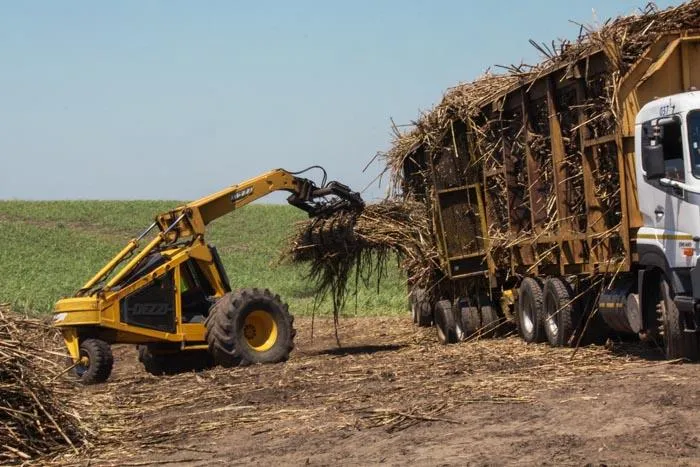
Tongaat Hulett's stakeholders, including thousands of small scale sugar cane farmers, will be relieved that the Business Rescue Practitioners have been able to withdraw their provisional liquidation application.
Image: Supplied
The Durban High Court earlier today allowed the joint Business Rescue Practitioners (BRPs) of Tongaat Hulett (THL) to withdraw the company's provisional liquidation application on the day the KwaZulu-Natal High Court was to reconvene to hear arguments.
The move will save thousands of jobs in KwaZulu-Natal that might have been lost had the liquidation proceeded. It follows substantial progress being made between Vision, the private company that won a bid to take over Tongaat, the BRPs, and the Industrial Development Corporation (IDC), to implement the adopted Business Rescue Plan.
The liquidation application was launched in October 2023 as a last resort by the BRPs in line with their statutory obligations, and the withdrawal of the application is a significant milestone for everyone who depends on Tongaat Hulett and the sugar value chain.
“The BRPs have consistently recognised the dire consequences that liquidation would have for employees, growers, suppliers, creditors, and the broader communities that depend on Tongaat Hulett and the sugar value chain. The decision to apply for liquidation was taken only after the BRPs concluded that the adopted Business Rescue Plan could no longer be implemented.”
The BRPs said on Wednesday two requirements had needed to be fulfilled to consider withdrawing the application.
The first was securing sufficient liquidity to support Tongaat's ongoing operations; and the second was concluding a transaction to achieve the adopted Vision Business Rescue Plan.
“Significant progress has now been made in advancing both requirements,” said the BRPs.
The IDC had agreed to extend Tongaat Hulett’s R2,75 billion PCF (post commencement finance) facility to September 2026 from the end of this month, providing continued liquidity to support the company's operations while the implementation of the business rescue transaction proceeds.
Secondly, the IDC, Vision, and THL concluded an agreement that includes arrangements relating to the refinancing of the PCF facility, treatment of the South African Sugar Association (SASA) obligation, the concurrent creditor distribution, and the conclusion of new sale agreements.
“The BRPs are satisfied sufficient progress has been made to justify the withdrawal of the liquidation application, and for the implementation of the adopted Business Rescue Plan to proceed,” they said in a statement.
The BRPs said they were relieved and deeply grateful that they were no longer required to pursue the liquidation application, an outcome “they, and all stakeholders, have worked to avoid.”
However, they said that while the withdrawal of the liquidation application and the extension of the PCF were positive developments, the underlying structural challenges facing the local sugar industry were not resolved, including the growing influx of cheap imported sugar into the South African market.
“Unless these challenges are urgently addressed, they will continue to pose a material risk not only to Tongaat Hulett’s recovery but to the long-term sustainability of the broader industry,” the BRPs said.
South Africa is currently experiencing record-high levels of imports, with an estimated 111,696 tons of deep-sea sugar imported or anticipated in the first three months of the current season alone.
“This represents almost 50% of the total imports during the entire 2025/26 season. Should this trend continue, imports could reach approximately 450,000 tons this season. Similar import levels in 2018 contributed to significant job losses and the closure of two sugar mills,” they said.
“This is a fast-unfolding emergency that demands decisive action. If a South African sugar industry is to survive in the short term and thrive in the long term, imports must be curtailed immediately and a conducive local trading environment fostered. The gains secured through the rescue process will be eroded without it, at direct cost to jobs, grower livelihoods, and the sustainability of the broader industry,” they said.
BUSINESS REPORT