

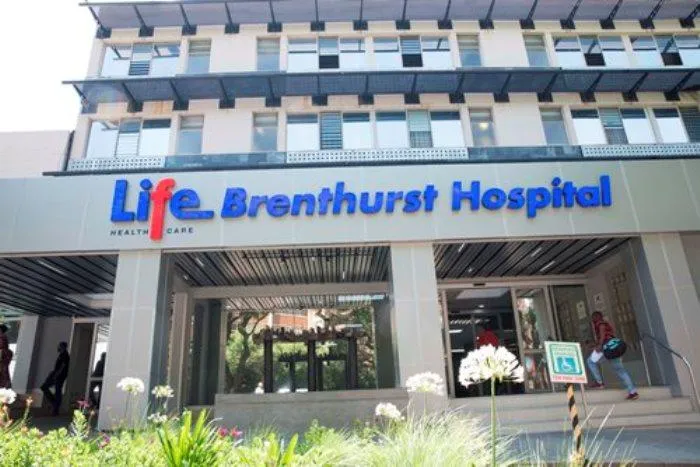
One of Life Healthcare's hospitals in Parktown, Johannesburg.
Image: Supplied
Life Healthcare reported a R771 million attributable profit in the six months to March 31, a turnaround from the R2.22 billion loss it made a year before, as it continued to work on aligning capacity with patient demand and expanding access to healthcare.
Alongside a series of brownfield expansion projects across the portfolio was the start of construction on the 140-bed Life Paarl Valley Hospital. The other initiatives include additional acute beds and specialised facilities, to respond to shifting disease profiles and growing demand for complex care.
“Our focus is on building capacity where it is needed most, improving utilisation across our network, and advancing our optimisation program to strengthen returns,” said CEO Peter Wharton-Hood at the release of the interim results on Thursday.
“Encouragingly, we saw a meaningful recovery in activity in the second quarter, reflecting the underlying resilience of our business.”
The share price, however, fell by 5% by Thursday afternoon to R10.80.
Ashburton Investments equity analyst Lurresha Chetty said in her view the decline in share price was due to targets for 2026 being downgraded. She said group revenue increased a modest 2.4%, as volumes declined due to a Life Healthcare funder being placed under curatorship, negatively impacting paid-patient-days (PPDs) to -0.4%, a tough print for an industry that requires operating leverage to deliver improved profits.
Wharton-Hood said the group also continued to scale its complementary services, expanding high-demand offerings in acute rehabilitation, advanced diagnostic imaging, and renal dialysis while progressing its investment in cyclotron infrastructure.
Progress continued on asset optimisation, under board oversight, with a focus on enhancing portfolio alignment, improving operational efficiency, and strengthening long-term returns while maintaining continuity and quality of care.
Group revenue increased by 2.4% to R12.4bn in the six months, and normalised earnings before interest, tax, depreciation, and amortisation (EBITDA) increased by 5.2% to R2bn. Operating profit increased by 8.4%. Second-quarter occupancies exceeded 70%. The interim cash dividend was raised by 9.5% to 23 cents per share.
Wharton-Hood stated that while the first half was impacted by external factors, including funder-related disruptions, the group saw an improvement in occupancies recovering above 70% and utilisation trends strengthening across the portfolio.
Acute hospitals reported occupancies on a like-for-like basis of 67% and strong ICU utilisation at 82%. Momentum improved in the second quarter, with occupancies exceeding 70%, signaling a recovery in activity levels, he said.
Medical admissions continued to account for a large portion of admissions, with a medical-to-surgical case mix of 54% to 46%, consistent with underlying demand trends.
Complementary services was benefiting from sustained demand across mental health, diagnostic imaging, and renal dialysis.
Capital expenditure of R722m was directed toward expansion and infrastructure development, aligned with the focus on targeted capacity growth and service diversification. Over the past few years, Life Healthcare has consolidated its operations and refocused its business on Southern Africa.
Wharton-Hood said their focus for the rest of the year was to restore activity levels, improve utilisation and drive revenue growth, while maintaining a strong focus on productivity and cost discipline to support margin expansion, including cost savings of R400m over three years.
The group expected occupancies of about 68% and revenue growth of 2% for the rest of the year.
Chetty said optimisation of the portfolio alongside the investment in brownfields and greenfields promised a potentially leaner and better-positioned business, but a skilled level of operational excellence will be needed to achieve the medium-term targets.
BUSINESS REPORT