

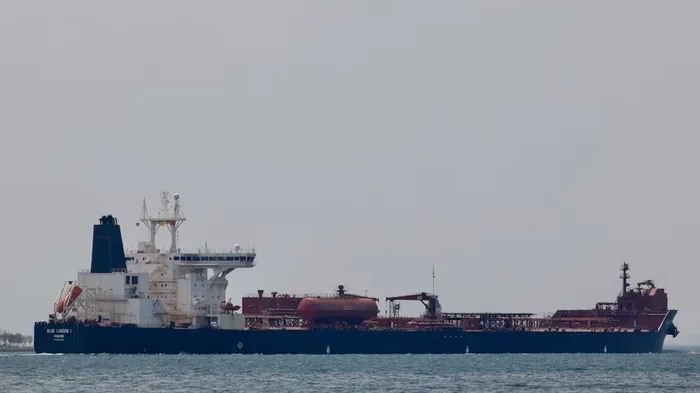
Shipping through the Strait has slowed dramatically amid security risks and soaring insurance costs, with around 17 million barrels per day typically transiting the narrow waterway.
Image: File
Oil prices fell sharply on Tuesday after an earlier surge triggered by escalating tensions in the Middle East, as signals from the United States suggested the conflict with Iran may be nearing an end.
The Brent crude price fell more than 8% to below $90 per barrel after briefly approaching $120 on Monday, reflecting the extreme volatility gripping global energy markets.
The earlier spike came after disruptions in the Strait of Hormuz prompted several major Middle Eastern producers to cut output, raising fears of a global supply shock.
Markets, however, steadied after US President Donald Trump said the military operation involving Iran was progressing ahead of schedule and could conclude sooner than expected.
Trump also indicated that the US may waive certain oil-related sanctions and deploy naval escorts for tankers passing through the Strait of Hormuz in an effort to maintain the flow of crude and stabilise prices.
Additional pressure on oil prices came after G7 finance ministers said the group stands ready to release oil from strategic reserves if necessary to prevent supply disruptions, although no such measures have been implemented so far.
Despite the sharp price retreat, analysts in Tuesday warned that the episode highlights the vulnerability of global supply chains to geopolitical shocks.
Neil Wilson, Saxo UK investor strategist, said though Trump had to do something to calm markets, it cannot be seen as a sign peace is about to break out.
“We should note that oil and gas prices, while sharply lower over the last 24 hours, remain higher than before the war,” Wilson said. “The risks are still high, just not as elevated as predicted over the weekend.”
Dr Ernst van Biljon, the head lecturer in supply chain management at IMM Graduate School, said energy price volatility quickly spreads through the global logistics system.
Energy costs form a fundamental component of modern supply chains, meaning higher oil prices affect a wide range of industries beyond the energy sector.
Transport is typically the first to feel the impact, as fuel accounts for a significant portion of the costs associated with road freight, shipping and air cargo. When oil prices rise, shipping lines often introduce bunker fuel surcharges while airlines and logistics companies pass on higher fuel costs to customers.
“These cost increases ultimately move throughout the entire logistics network, raising the price of moving goods between continents, regions and cities,” Van Biljon said.
For African economies that rely heavily on imported inputs and finished goods, Van Biljon said the result is higher landed costs that ultimately feed into consumer prices.
The pressure is particularly acute in South Africa, which remains a net importer of crude oil and depends heavily on road transport for the movement of goods across its domestic supply network.
Higher global oil prices quickly translate into higher fuel costs locally, placing strain on distribution networks, agricultural supply chains and retail logistics.
Van Biljon warned that supply disruptions could also lead to fuel shortages if companies fail to prepare for potential shocks.
“There could be severe fuel shortages, meaning companies have to plan ahead to avoid production shutdowns and supply chains not operating at optimal levels,” he said.
Prolonged volatility in energy markets may also prompt businesses to rethink the structure of their supply chains.
Paul Gooden, the head of global natural resources at Ninety One, said where prices go from here depends largely on duration.
Gooden said if tensions de-escalate in the coming weeks, oil prices could retreat as supply chains normalise and markets rebuild confidence.
Even in that scenario, he said it was unlikely prices will return to the $60–$70 range seen earlier this year. A geopolitical risk premium is likely to persist as importers rebuild inventories and reassess supply security.
“If the disruption lasts longer, the consequences become more significant. Oil prices could spike further – potentially above $120 or even higher – until higher prices begin to curb demand,” he said.
“Beyond the immediate crisis, there are also longer-term forces reshaping the oil market. And global demand forecasts suggest oil consumption may continue growing well into the 2030s or beyond under current policy trajectories.”
Financial markets have also reacted strongly to the changing outlook for the conflict.
Bianca Botes, director at Citadel Global, said markets staged a recovery after Trump’s comments raised hopes of a de-escalation.
The rand also strengthened as oil prices retreated and global risk sentiment improved, trading at around R16.38 to the US dollar.
“The focus will remain squarely on the events in the Middle East with markets having the potential to see a sharp recovery should we see an end to the conflict.”
BUSINESS REPORT