

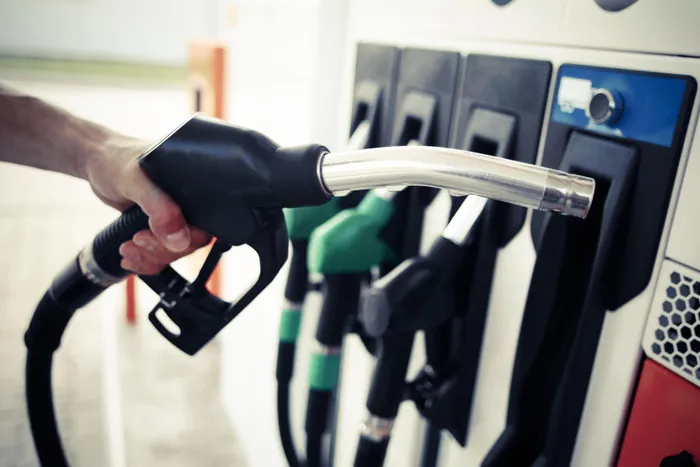
The fuel levy increases will compound existing cost pressures for SMEs, particularly those in logistics, manufacturing, and retail sectors that rely heavily on transportation, says the author.
Image: File
The fuel levy and general excise duty increases announced in the National Budget may appear measured, but their effect on consumers is cumulative and the impact moves through the economy in layers.
An increase in the general fuel levy by 9 cents per litre to R3.96 for petrol and 8 cents per litre to R3.82 for diesel was announced, alongside inflation-linked increases in the carbon fuel levy and the Road Accident Fund (RAF) levy.
And while there was no new personal income tax burden, excise duties on alcohol and tobacco products will also rise in line with inflation - the tax on a 20-pack of cigarettes has increased from R22.81 to R23.58, a 340ml can of beer by 8 cents, a 750ml bottle of wine by 15 cents, and a 750ml bottle of spirits by R3.20.
“In this environment, even incremental adjustments matter. Grocery spending is cyclical and constant. Small pressures, sustained over time, alter disposable income allocation in meaningful ways. For some households, this may mean trimming discretionary purchases. For others, it may influence food choice, pack size or brand selection,” the Spar retail group said in a statement about the Budget.
“Fuel is not simply a transport cost for motorists. It underpins the entire retail value chain. From farm to distribution centre to store, every product carries embedded logistics costs. A levy increase, even a modest one, gradually filters through these systems. It does not create a sudden spike in prices. It creates incremental pressure,” the retailer said.
Budget Insurance senior manager Tando Ngibe said: “Fuel increases are financially regressive. They hit lower-income households hardest. This is where emergency funds and careful cash-flow planning become essential,” Ngibe said.
“This Budget includes some welcome changes that should improve the financial landscape for consumers as it stabilises the country’s finances and protects social spending. However, it does not eliminate cost-of-living pressures” said Ngibe.
“Consumers should not view this Budget passively. While sin taxes have increased broadly in line with inflation and the fuel levy has risen, these adjustments will still have an impact on monthly household budgets. Now is the right time for individuals to…adjust for these incremental cost pressures,” said Old Mutual’s head of Education John Manyike.
Spar said that while excise duty adjustments are often framed as public health measures, increases in sin taxes reshape discretionary spending patterns.
“When certain categories become more expensive, consumers adjust. They trade down, substitute, or reallocate spending to protect essential items. That behavioural shift influences the composition of the overall basket and the rhythm of retail demand,” the retailer said.
South African consumers have already had to adapt to a prolonged period of constrained growth, elevated cost pressures and cautious income expectations. While economic growth is projected at 1.6% in 2026, revenue projections remain conservative.
“Across the retail sector, we continue to see heightened price sensitivity, deliberate basket management and increased uptake of value-oriented products. Households are making conscious trade-offs long before policy changes fully filter through,” the retailer said.
The Road Freight Association (RFA) said the “general fuel levy” was the largest levy faced by the RFA, yet there were many more so-called “stealth taxes” such as in vehicle sales (carbon taxes), tolls, licence fees, permits and special tariffs for special operations, municipal compliance and registration tariffs for “dangerous goods – both transported and warehoused” and parking and special use areas (within local authorities).
RFA CEO Gavin Kelly said the allocated funding from the “general fuel levy” also did not appear destined for road infrastructure, but for other issues such as education, water and electricity and health requirements. Notwithstanding this, the deterioration of general road networks not under the domain of SANRAL has been noticeable, he said.
He said the increase in fuel levy may not seem noticeable to motorists now while international oil prices were relatively low, but the decline in crude oil prices may be temporary. He said one of the reasons cited for the increase was to help fund the Road Accident Fund (RAF), with its history of absorbing and consuming vast quantities of taxpayers' money, without really offering anything in return.
On Minister of Finance Enoch Gondogwana’s words about the government “dismantling bottlenecks in rail and ports that have throttled exports and raised the cost of doing business,” Kelly questioned how private sector participation in the rail network could be guaranteed a fair chance when Transnet owned the infrastructure, while still operating trainsets on the same rail routes.
“If we quote the phrase “Operation Vulindela” enough – will that ensure efficient implementation and operation? Just like the unbundling of Eskom, the time has come for Transnet to be privatised or to give out concessions, for any real change to occur. Transnet cannot be the referee and a competitor at the same time,” he said.
BUSINESS REPORT