

Foreigners absolutely qualify for mortgage bonds, and banks are very receptive to foreigners.
Image: Facebook
“Of the R6 billion worth of transactions registered in the deeds office, a third have been purchased by foreigners," says Paul Berman, CEO, Berman Brothers Group.
The Cape Town property developer says that it is one-third of the market, recorded in the deeds office and not estimated. It adds that of those foreign purchases, 18% are funded by South African mortgage bonds.
It says that the banks are not just open to lending to foreigners; they are actively writing the paper.
“The data tells a different story from the rumour. The Atlantic Seaboard is not a market that happens to accept foreign buyers. It is a market that has, quarter after quarter, been substantially built by them.”
The property development group says the myth runs in two parts. First, it says that foreigners are not allowed to own property here. Second, even if they are, no bank will fund them. Both are wrong, and the data is sharper than the rumour, says the company.
The CEO says the figure that matters is the split. Berman says of foreign buyers transacting on the Atlantic Seaboard, eighty-two percent pay cash.
He says 18% take a South African bond.
“Read that the right way around. The myth assumes the 18% is impossible. It is not impossible; it is happening every month. The reason cash dominates is not that bonds are unavailable; it is that the buyers in this segment frequently do not need them.
"Someone moving capital in from London or Zurich to acquire a 120 square metre apartment in Sea Point is often making the decision on a balance sheet where a bond is a structuring choice, not a necessity.
"They take the bond when it suits the tax position, the currency view, or the cash flow plan. They skip it when it does not. That is a different conversation from 'you cannot get one'," Berman says.
The group says the standard bond structure for a foreign applicant on the Atlantic Seaboard is 50% contribution, 50% mortgage. It says that ratio is not a hard rule; it is a working baseline that banks adjust against the applicant's balance sheet.
“A buyer with deeper liquidity and clear documentation can negotiate a smaller deposit. A buyer presenting a leaner profile may be asked for more.”
“Foreigners absolutely qualify for mortgage bonds, and banks are very receptive to foreigners." Berman says.
The company says the point is that the conversation exists. It says South African banks have built the credit appetite, the FICA workflow, and the cross-border verification process to underwrite foreign applicants.
They have done this because the applicant pool is real, the asset class is sound, and the loan book performs; it adds.
“Receptivity is not a courtesy; it is a commercial decision the banks have made repeatedly across multiple cycles. What the bank wants from a foreign applicant is the same thing it wants from any applicant, with two additional layers. It wants documented income or wealth.
“It wants clean source-of-funds evidence, run through the Financial Intelligence Centre Act framework. And it wants the funds to flow into South Africa through an authorised dealer, with the South African Reserve Bank record that comes with it.
"That last step matters because it is what allows capital and future proceeds to leave the country again on resale. Skip it, and you have created a problem for yourself that has nothing to do with the bank.”
The developer says a buyer sitting in Munich, Geneva, Dubai, or New York is not comparing Sea Point to Stellenbosch. It says they are comparing it to Lisbon, Mallorca, the south of France, and the coastal pockets of California and Florida that share its scale and climate.
On that comparison set, the group says the per-square-metre numbers on the Atlantic Seaboard are not in the same league. “They are in a different league entirely, and the gap is what brings the buyer to the table. The currency layers a second asymmetry on top, one that local buyers do not feel and foreign buyers do.”
The CEO says this is what produces the one-third figure. He adds that it is not a cyclical anomaly. “It is what happens when a coastline becomes globally priced, and the global buyer realises the local buyer has been getting it at half the rate.
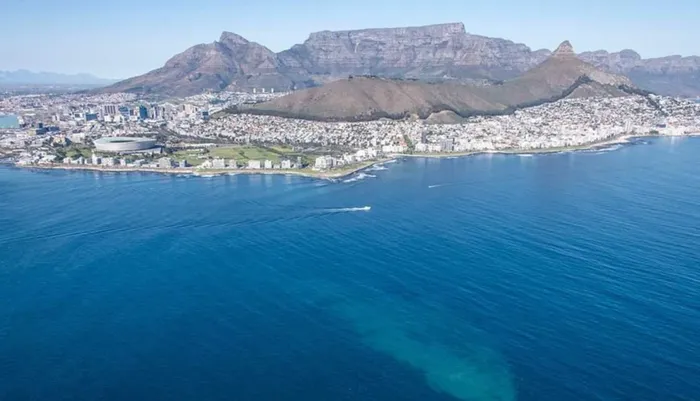
"The geographical constraint reinforces it. The Atlantic Seaboard is bounded by Table Mountain on one side and the ocean on the other, with stringent heritage and environmental controls in between.”
According to Berman, there is no meaningful supply pipeline. He says every transaction sits inside a fixed envelope, which is why the structural argument they make in their Q1 2026 read, that scarcity here is geographical rather than cyclical, applies to international demand specifically.
A bigger global buyer pool entering a fixed-supply corridor produces one outcome over time, he adds
Lightstone’s percent of the approximately 2.39 million residential transactions recorded in SA over the last ten years was bought by a natural person born outside of the country.
The transactions reviewed by Lightstone recently were limited to natural persons/individuals and excluded those involving companies or trusts. Foreign buyers refer to South African citizens born outside the country, as well as buyers identified as foreign by other indicators.
The data provider said while foreign buyers made up a relatively small amount of the period’s transactions, they accounted for 15% of transactions on properties valued between R4m – R10m, 26% between R10m – R20m and 39% for properties above R20m.
That means two out of every five homes valued at more than R20m were bought by a foreign buyer, it said.
Despite the widespread perceptions, Lightstone said foreign investment has not just been about the upper end of the market, nor restricted to the Western Cape.
A suburb-level analysis revealed distinct patterns, each telling a different story about who is buying, why, and with what effect on local property markets, it says.
Lightstone’s analysis of transactions from 2016 to 2025 shows that more than 2.2 million purchases to individuals, or 94%, were made by South African-born buyers.
A further 77 902 transactions, or 3%, were by South African citizens born outside the country, while 71 977 transactions, or another 3%, were classified as foreigner buyers.
Foreign buyers accounted for fewer than one in thirty transactions below R1m, but their share of the market rose sharply with each price band becoming particularly visible above R4m, Lightstone said.
According to lan van Jaarsveld, a professional property practitioner at Meridian Realty, in the past decade, 6% of residential property transactions in SA were made by foreign buyers, revealing interesting trends in the property market.
He says while they constitute a minor portion overall, foreign investment is significant in the higher-end market: 39% of homes valued over R20 million were bought by this group.