

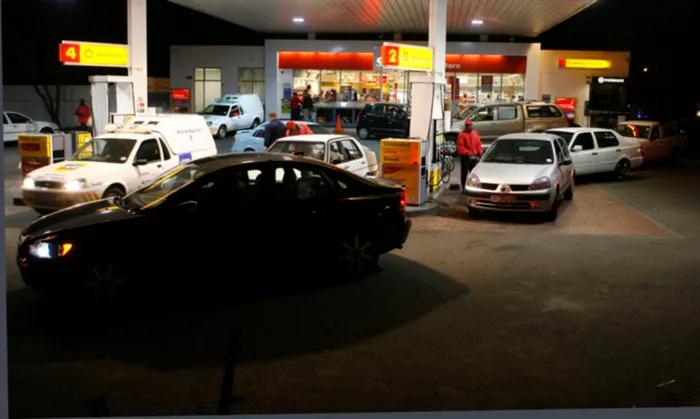
What was once simply a place to fill up, grab a snack and continue with one's journey is increasingly becoming a destination in its own right-combining fuel, food, convenience retail, hospitality and community-focused spaces.
Image: TJ Lemon
The future of commercial property is not only about owning space - it is about understanding how that space can work harder.
Retail, fuel, convenience and hospitality-led properties can offer compelling investment potential when they are located correctly, designed thoughtfully and occupied by businesses that understand changing consumer behaviour, says Vermaak Properties
The real estate agency in Cape Town says that as the demand for accessible, experience-driven destinations continues to grow, investors should consider opportunities that go beyond traditional commercial models.
“Properties with strong visibility, reliable access, high traffic volumes and adaptable retail components may be well positioned to benefit from this evolving landscape.”
A unique shift is said to be taking place in South Africa's convenience retail space as retail convenience sales are fast making up almost half of the forecourt’s turnover.
Two key research findings were presented on the retail landscape and more specifically on the convenience side of the fuel retailers’ business, showing that the scales are tipping in the fuel-to-convenience ratio, with convenience, QSR & FMCG contributing 46% of all sales in the retail forecourt space.
South African forecourts are said to be operating in a highly pressured, value-driven market, where success depends on: Winning on price + promotions, Serving convenience-led missions effectively and Adapting to reduced brand loyalty and increased switching.
That was the clarion call at the Convenience Leaders’ Exchange recently held in Sandton, hosted by the Fuel Retailers’ Association(FRA) in partnership with the international National Association of Convenience Stores, headquartered in the USA and attended by senior retail leaders from the fuel and retail convenience sectors.
The traditional petrol station model is evolving, says Vermaak Properties.
They say that what was once simply a place to fill up, grab a snack and continue with one's journey is increasingly becoming a destination in its own right, combining fuel, food, convenience retail, hospitality and community-focused spaces.
“A standout example is The Pantry by Marble in Rosebank, Johannesburg. Positioned alongside a Sasol forecourt, the concept has transformed the everyday fuel stop into a premium lifestyle experience, offering customers far more than convenience shopping.”
With restaurant-quality food, bakery offerings, curated grocery products, coffee, takeaway meals and inviting seating areas, The Pantry has created an environment where people do not simply stop - they stay, the real estate agency says.
It adds that the success of the Rosebank location has already supported the brand’s expansion into standalone stores in Hazelwood, Pretoria and Bassonia, Johannesburg South.
This is a strong example of how well-positioned commercial property, paired with the right tenant mix and customer experience, can create value beyond the traditional boundaries of a fuel station or convenience retail space, it says.
For property investors, Vermaak Properties says concepts such as The Pantry highlight an important shift in the market: location is no longer the only driver of success.
It adds that consumers are increasingly drawn to spaces that offer convenience, quality and experience in one place. It says that a well-designed forecourt or retail property can now serve multiple purposes, including:
“This creates opportunities for stronger foot traffic, longer customer dwell times and a more diversified income stream for owners and investors.”
The Pantry’s Rosebank forecourt reportedly includes eight fuel pumps, EV charging points, hospitality-style outdoor seating and a premium food-and-retail offering - demonstrating how a conventional site can become a high-demand, mixed-use destination, Vermaak Properties says.
Meanwhile, Dianne Davies, an independent advisor, says that for more than a century, petrol stations have been woven into South Africa's economic and social landscape.
She says they have evolved from simple roadside fuel depots into essential community hubs that support commuters, freight transport, tourism, emergency services and local businesses.
“While many familiar brands have disappeared through mergers, acquisitions and rebranding, the industry itself continues to adapt to changing technologies and consumer expectations.
"Although electric vehicles and alternative energy are beginning to reshape the market, petrol and diesel will remain critical to South Africa for many years because of the country's vast distances, heavy reliance on road transport and relatively slow transition to electric mobility.”
The service stations of the future are therefore likely to become integrated mobility centres, combining traditional fuels with EV charging, renewable energy, convenience retail, food services and digital customer experiences, demonstrating that the forecourt's greatest strength has always been its ability to evolve with the needs of South Africans, the advisor says.