

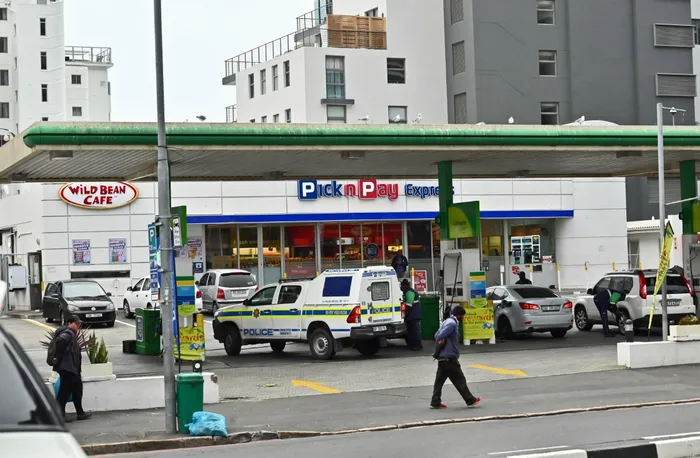
To evolve into smart, inclusive lifestyle hubs, convenience retailers need to identify and seize the emerging opportunities that extend beyond traditional fuel services.
Image: Ayanda Ndamane
A unique shift is taking place in South Africa's convenience retail space as retail convenience sales are fast making up almost half of the forecourt’s turnover.
Two key research findings were presented on the retail landscape and more specifically on the convenience side of the fuel retailers’ business, which showed that the scales are tipping in the fuel-to-convenience ratio, with convenience, QSR & FMCG contributing 46% of all sales in the retail forecourt space.
South African forecourts are operating in a highly pressured, value-driven market, where success depends on: Winning on price and promotions, serving convenience-led missions effectively and adapting to reduced brand loyalty and increased switching.
That was the clarion call at the Convenience Leaders’ Exchange held in Sandton, hosted by the Fuel Retailers’ Association in partnership with the international National Association of Convenience Stores, headquartered in the USA and attended by senior retail leaders from the fuel and retail convenience sectors.
“With the global energy market in disarray, it has become crucial that the industry stands together, consolidates and plots a way forward”, says Reggie Sibiya, CEO of the Fuel Retailers Association, which represents over half of the 4 600 fuel retailers in South Africa.
“With fuel prices under strain due to the global energy crisis, with local margins reducing as fuel prices skyrocket, coupled with illegal trading, statutory levies, Road Accident Fund (RAF) contributions and high credit card/reward costs, the challenge becomes one of sustainability and profitability for the fuel retailer.”
The collaboration with the international National Association of Convenience Stores started in 2019, with one of its main purposes to tap into the international arena to see how fuel retailers would be adapting to the EV revolution that, though still years away, would eventually hit South Africa.
According to Nicola Allen of Trade Intelligence, who surveyed on behalf of Nedbank, this means that 46% of customers are not buying fuel, but other things in a forecourt, from QSR to FMCG and other services.
“Convenience retailers must recognise the opportunities that this opens up and move beyond fuel to create smart, inclusive lifestyle destinations.”
A market and consumer survey conducted by NielsenIQ is said to have further cemented the shifts in consumer spending based on shifting needs, and their convenience retail in fuel forecourts scored highly in the "use on-the-go", "emergency need", "everyday needs" and "last minute shopper" categories - incentives that drive convenience store choices.
Store expansion, retail partnerships for credibility and increasing shopper missions, loyalty programme benefits with retailers and banks also add to bringing feet to the forecourt.
Population densities, household sizes, and age distributions are just some of the factors that are driving retail convenience spending.
According to Mark Wohltmann, Director at NACS-Global, “there are very few ‘silver bullets’ because there are so many different fish in the ocean. What people (especially young people) want today, they may not want in the future, and the one-size-fits-all doesn’t work anymore.”
He says the trend globally is from being a c-store with food to being a restaurant with convenience. The previous transition was from being a gas (fuel) station with food to being a food store with fuel.
Areas of growth to watch out for include:
“At the end of the day, says Sibiya, “it is all about the customer, what they want and how to cater to them as effortlessly as possible. Retail convenience stores in forecourts are fast becoming the go-to destinations for a blend of FMCG, QSR and other services – as a group we need to capitalise on the opportunities this presents.”
Underpinning these shifting trends is the understanding and development of the AI environment. The Convenience Leaders’ Exchange held a panel discussion focused on the sector keeping up with the technological age.
Where automation, which is familiar in the fuel/retail environment, follows fixed rules, AI introduces systems that learn over time. The tech revolution is happening in small increments, but then needs to move to the next, more sophisticated operational levels that will free up time, give efficiency and save money.
AI in convenience retail will have the biggest impact on the demand, reporting, price optimisation, quality control, stock analysis, and customer preferences - fundamentally having the elasticity to develop various solutions that criss-cross systems.
What all retailers need to understand is that AI will allow them to focus on their customers, who remain at the core of their businesses.
In the years since 2019, the high-level leaders’ exchange with NACS has meant that the FRA and its members would always be one step ahead of the game.
Growth and momentum in the convenience retail space are universal and cross all borders.
According to Mark Wohltmann, Director, NACS-Global: “Whilst every country has its own specific challenges and develops at its own pace with its own uniqueness, the growth and momentum in the convenience retail space is universal and crosses all borders.
"We all learn from each other, whether it’s in new QSR offerings and Fresh food services, to leveraging Real Estate to increase income or following the customers’ mood and catering to it.
"The key is what makes a site different: its offerings ... It’s look and feel... It’s positioning. Without differentiation, it becomes a scale and margin battle.”
The FRA strongly believes that “following international trends is beneficial to SA as it has all been done before, you just need to follow the NACS trajectory”.
Independent Media Property