

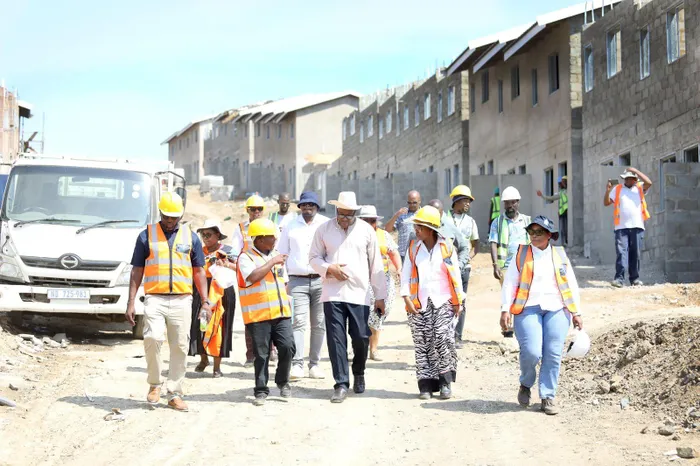
Unlocking strategically situated state-owned land is crucial for catalysing investment in sustainable, interconnected communities, enabling people to live closer to jobs, educational institutions, healthcare services and transport networks.
Image: eThekwini Municipality
There are intensified efforts to attract strategic investment partners to advance a transition from traditional housing delivery toward integrated urban development.
This exercise by the Housing Development Agency (HDA) is aimed at reshaping South Africa’s cities, unlocking economic opportunities, and restoring dignity for communities.
“We are focused on creating scalable, bankable developments that deliver both social and economic returns. Together with our investment partners, we can build projects that create lasting impact for communities and future generations,” says HDA CEO Bheki Khenisa.
As the country confronts rapid urbanisation, rising housing demand, spatial inequality, and infrastructure constraints, the HDA says it is positioning human settlements as a key driver of inclusive economic growth and long-term sustainability.
The Agency says its evolving model moves beyond standalone Reconstruction and Development Programme (RDP) housing toward integrated, mixed-use precincts that combine affordable and social housing, student accommodation, commercial activity, transport connectivity and social infrastructure in well-located urban areas.
At the heart of this strategy is unlocking strategically located state-owned land to attract investment in sustainable, connected communities where people can live closer to jobs, education, healthcare, and transport networks.
A key milestone in this drive was the launch of the HDA Investment Focus booklet, showcasing catalytic opportunities to the estimated value of R1 bn+ across the country, including projects in Braamfontein (Johannesburg), Sea Point, and Strand (both in Cape Town), alongside a broader national portfolio of mixed-use and housing developments.
These projects are said to present significant investment potential while contributing to spatial transformation, urban regeneration, and economic inclusion.
Together, these developments are expected to have a combined investment value of over R1 billion, reflecting a deliberate shift toward clearer project packaging, improved readiness, and stronger alignment with private-sector investment frameworks, thereby reducing uncertainty and accelerating implementation.
The projects are also said to demonstrate how public–private partnerships can unlock well-located land, reduce development costs, and improve project viability.
For investors, this is said to create access to bankable opportunities with strong demand and measurable social impact. For the government, it is said to enable accelerated housing delivery, job creation, infrastructure investment, and spatial transformation, an alignment increasingly recognised as essential to sustainable urban development.
The HDA’s pipeline spans metropolitan and coastal markets and includes residential, rental, mixed-income housing, student accommodation, and precinct revitalisation projects. The current roadshow represents the first phase of a broader national pipeline that will expand as additional assets are brought to market.
The agency says it has strengthened its institutional foundation through improved governance, enhanced financial management, organisational restructuring, and a clean audit outcome, positioning it to engage effectively with investors through transparent and accountable frameworks.
The HDA emphasises that strong collaboration between government, developers, financiers, and institutional investors will be critical to delivering development at scale.
Among the leaders supporting this strategic direction and presenting speeches at the launch are South Africa’s Deputy President Paul Mashatile; Human Settlements Minister Thembi Simelane; Minister of Trade, Industry, and Competition Parks Tau; Western Cape’s MEC of Infrastructure Tertuis Simmers, alongside public and private sector stakeholders committed to advancing inclusive infrastructure-led development.
The HDA says investment in human settlements goes beyond construction; it is about reducing spatial inequality, enabling economic participation, and building integrated communities that create long-term social and economic value for South Africans.
While South Africa has a R6 trillion residential property market, less than 2% of the R150 billion institutional property capital pool is allocated to that, said Murray Clark, the Co-founder and the CEO of Neighbourgood, recently.
He said residential is the largest asset class in the country by value, yet effectively absent from institutional portfolios.
By contrast, he said the US has a $3.5 trillion multi-family market making up 15-20% of its capital allocation, and the UK has $1.5 to $2, making up 5 - 10%.
Neighbourgood breakdown of allocation in SA: