

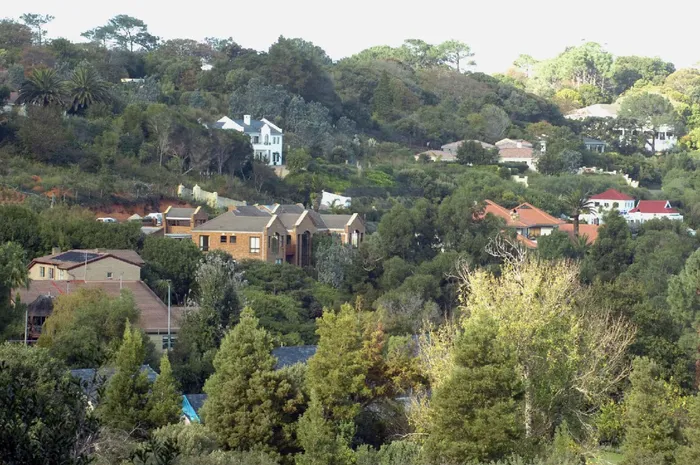
Knysna shares a psychological appeal with towns like Hermanus, Plettenberg Bay, St Francis, and Langebaan. For those relocating, particularly remote workers, retirees, and high-net-worth individuals, the potential lifestyle benefits of these areas outweigh concerns about municipal risk.
Image: Leon Lestrade
Despite prolonged municipal instability, Knysna’s property market is proving resilient, with average sales values rising from around R1.97 million in 2022 to approximately R2.7 million in 2026 year-to-date (about 37%).
“Knysna isn’t behaving like a normal distressed town,” asserts Paul Stevens, CEO of Just Property. “It’s behaving like a lifestyle‑driven, semigration‑magnet coastal node-and those markets follow different rules.”
According to Stevens, the town’s resilience is being driven by lifestyle migration, semigration and the growing ability of buyers to self‑provision against unreliable municipal services.
“People aren’t overlooking the service issues-they’re planning around them. Living next to a lagoon bordered by forests in a friendly small-town environment is why there’s no shortage of buyers. For them, the lifestyle value of Knysna outweighs the inconvenience of securing their own services like solar, batteries, water storage and gas,” he says.
“Knysna falls into the same psychological category as Hermanus, Plettenberg Bay, St Francis, and Langebaan. These are towns people aspire to live in, and for semigrants, especially remote workers, retirees, and high-net-worth buyers, the lifestyle value outweighs the municipal risk.”
Sales activity at the high end of the market remains particularly strong, he continues, with luxurious homes in estates such as Pezula Golf Estate, Simola, Thesen Island and Belvidere regularly achieving multi‑million‑rand prices.
According to publicly available deeds office data, annual transactions have risen from 954 sales in 2023 and 964 transactions in 2024 to more than 1 070 sales in 2025, even as water, sewage and governance failures have intensified.
Referencing Just Property’s own market data, Stevens says it indicates a market that’s being driven strongly by later-life movers and retirees.
“Many of our buyers are relocating from Gauteng and KwaZulu-Natal, and many of them are paying cash or putting down hefty deposits.”
Current Knysna property price bands (indicative ranges based on prevailing market pricing), according to Stevens:
“Estates offer stability in a town where the municipality is struggling,” he says. “Buyers see them as controlled environments with reliable governance and better‑managed infrastructure, which is a major drawcard for people who want greater predictability and security.”
Building on that point, the CEO advises buyers and landlords to plan with service delivery realities in mind and to budget accordingly for self-sufficiency.
“Right now, the market shows no sign of weakening, but it’s wise to bear in mind that if bulk municipal infrastructure were to fail, property values could eventually come under pressure.”
Talking about the property boom in Ballito and the broader North Coast in KwaZulu-Natal, RealNet Properties SA said Ballito combines hospitals, schools, retail and commercial activity into a year-round economy that is increasingly shaped by gated estates and managed developments.
The estate agency says this is a high-functioning ecosystem that operates on its own terms, reflecting a broader shift toward convenience, security and reduced everyday friction.
Gerhard Kotze, CEO and Franchisor at RealNet Properties SA, posed a few thought-provoking questions: "What does it mean for our broader cities when the estate manager starts to hold more significance for your property's value than a city councillor, suggesting a shift in the very definition of a public suburb?"
“Are we moving toward a future where the municipality is just a line item on a private levy statement, and is that even a sustainable model for the rest of the country?”
Looking ahead, Stevens believes that the early momentum in 2026 suggests Knysna’s market still has room to run. “As long as lifestyle demand remains strong and households continue to invest in private back‑up infrastructure, buyers will keep pricing Knysna as a premium coastal destination, not a town in decline.”
According to Lightstone data, South Africa added just over 150 000 new residential properties over the last five years in the over R500 000 property segment, a 4.7% increase which brought properties in this segment to just under 3.3 million units.
The insights provider said this has turned several cities in the Western Cape into vibrant residential and investment markets.
The area around Mossel Bay was, proportionately, the big winner in the Eden District, with 675 (46%) new properties added.
George (11%), Keurboomstrand (9%) near Plettenberg Bay, Mossel Bay and nearby Groot Brakrivier (6% each) all grew above the national average, while Knysna, Herolds Bay (outside George) and Sedgefield grew just under the national average.
Independent Media Property