

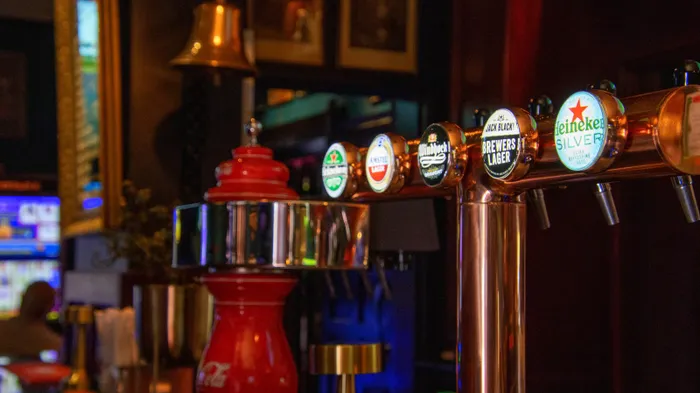
National Treasury is consulting on a different tax regime for alcohol taxes.
Image: Nicola Mawson | IOL
South African Breweries (SAB) has called on National Treasury to permanently link annual alcohol excise tax increases to inflation, saying a predictable framework would provide certainty for businesses, protect investment and support jobs across the beer value chain.
The brewer's submission forms part of National Treasury's consultation on South Africa's future alcohol excise policy framework, which will determine how alcohol taxes are calculated in the years ahead.
National Treasury's discussion document proposes moving away from annual excise adjustments towards a rules-based framework. Under the proposed framework, beer with an alcohol content of between 2.5% and 9% would be taxed at 1.2 times the current excise rate.
The Beer Association of South Africa (BASA) has warned that proposed changes to the country's alcohol excise policy could increase taxes on most beers by 20%, raising concerns that higher prices may push more consumers towards the illicit alcohol market rather than reducing harmful drinking.
Rather than recurring above-inflation increases, SAB wants annual adjustments tied to the Consumer Price Index, arguing that this would preserve the real value of government revenue while providing certainty for businesses and consumers.
SAB builds on the industry's support for inflation-linked excise increases, which were welcomed when they were announced in February's Budget. The company now wants that approach embedded in the country's long-term alcohol tax policy rather than determined annually.
"Sustainable economic growth requires a stable and predictable policy environment," said Zoleka Lisa, vice-president of corporate affairs at South African Breweries. "Linking annual excise adjustments to inflation is a fair and predictable approach that protects government revenue while giving businesses the confidence to invest, create jobs and plan for the future,” she said.
SAB warned that repeated above-inflation excise increases would place additional pressure on consumers, reduce spending power and create uncertainty throughout the beer value chain, affecting farmers, suppliers, retailers, hospitality businesses and the jobs they support.
Unemployment is currently at 32.7%.
The brewer also argued that widening the price gap between legal and illicit alcohol products risks encouraging the growth of the illicit market, undermining tax compliance and reducing government revenue.
BASA said illicit alcohol products are estimated to be around 37% cheaper than legal alternatives, and the illegal market has grown by more than 55% over the past five years, significantly outpacing growth in the regulated market.
The association estimates that illicit alcohol cost the fiscus about R16.5 billion in lost tax revenue during 2024 alone.
According to SAB, an inflation-linked framework would provide a balanced approach by maintaining the real value of excise revenue while avoiding excessive tax escalation or unintended market distortions.
The company said such certainty would support long-term planning, encourage investment in manufacturing and strengthen confidence across the wider beer economy.
SAB also pointed to international markets that have adopted inflation-linked excise adjustment mechanisms, saying these have helped provide policy certainty while preserving government revenue in real terms.
"South Africa has an opportunity to implement an excise system that balances revenue collection with economic growth," Lisa said.
Lisa added that a “predictable framework aligned to inflation can support consumers, businesses and government alike, while helping to create the certainty needed for investment and sustainable growth”.
SAB said it remains committed to working with National Treasury and other stakeholders on an evidence-based and economically sustainable excise framework that supports the country's long-term growth ambitions.
IOL BUSINESS