

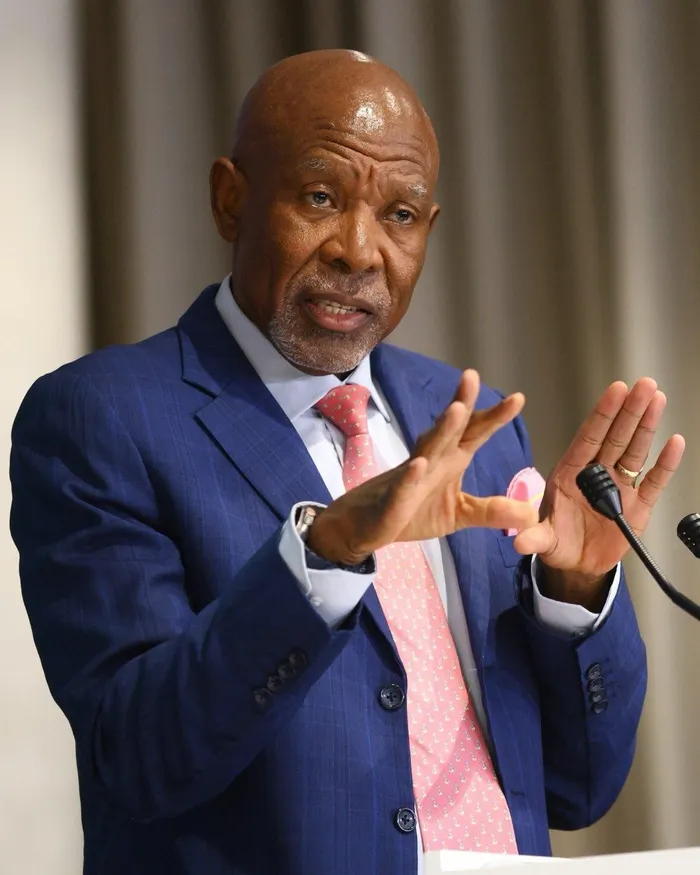
South African Reserve Bank Governor Governor Lesetja Kganyago.
Image: Facebook | SARB
The South African Reserve Bank's Monetary Policy Committee (MPC) at 10.5% on Thursday, after the cost of living accelerated more sharply than expected in June, with the risk of another hike dependent on the Middle East war.
Consumer inflation rose to 5% year-on-year in June, from 4.5% in May, driven largely by higher transport costs following fuel price increases linked to the conflict in the Middle East.
The reading was above market expectations and pushed inflation further past the upper end of the South African Reserve Bank's 3% - with a one percentage point band either side – target range.
Governor Lesetja Kganyago said the bank expected inflation to increase while economic growth would likely slow. “We see upside risks to inflation.”
The latest inflation data left economists divided ahead of the decision, with some arguing that rising inflation expectations and persistent price pressures warranted another interest rate increase, while others believed the central bank could afford to pause given the absence of widespread second-round inflation effects.
Standard Bank Group head of South Africa macroeconomic research Dr Elna Moolman said June's inflation increase was largely the direct result of the Iran war, which pushed up fuel prices and filtered through to public transport costs.
She said the Reserve Bank faced a difficult balancing act, with inflation remaining well above its preferred 3% target while South Africa's interest rates were already relatively high. Moolman noted that the Reserve Bank was among the few central banks globally to have already tightened monetary policy following the outbreak of the conflict.
Should the MPC decide to raise rates further, she believes it would likely mark the end of the current hiking cycle, with scope for rates to be reduced again once the conflict subsides and oil prices ease sustainably.
Anchor Capital economist Dr Lerato Ntuli was among those expecting a 25 basis point increase, arguing that higher oil prices, rising inflation expectations, elevated food inflation risks and concerns over second-round inflation effects would reinforce the Reserve Bank's determination to anchor inflation expectations around its 3% target.
Investec chief economist Annabel Bishop also expected a 25 basis point increase, warning that policymakers were likely to remain focused on containing inflation expectations after discussing a larger 50 basis point increase at their May meeting. She said a 50 basis point increase remained a risk should the Reserve Bank conclude that inflation pressures were becoming more entrenched.
PSG chief economist Johann Els took a more cautious view, maintaining that leaving interest rates unchanged remained his base case despite the stronger-than-expected inflation reading.
Els said the June inflation figures were unlikely to materially alter the MPC's deliberations because much of its forecasting work would have been completed before the data was released. He nevertheless expected a closely contested decision, with the possibility of a split vote among committee members.
He said there remained a strong case for another rate increase, but also a compelling argument for waiting to assess how long tensions in the Middle East persist and whether higher oil prices continue feeding into inflation.
While transport costs had risen, Els noted there was still little evidence that higher fuel prices had triggered broader second-round inflationary pressures across the economy, giving the Reserve Bank room to pause if it judged the recent increase in inflation to be temporary.
IOL BUSINESS