

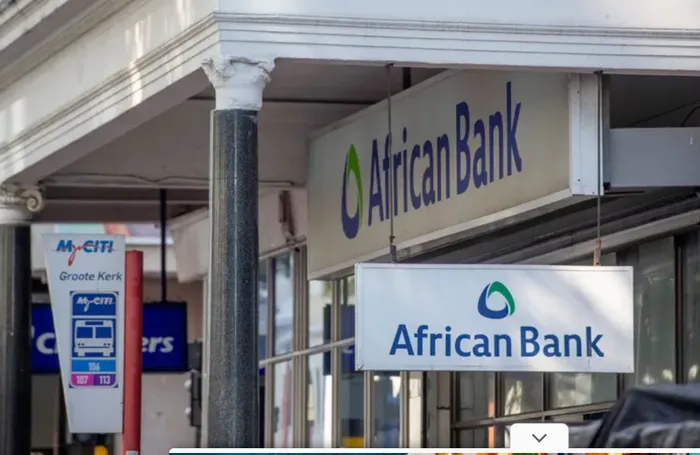
African Bank says transformation costs, acquisition integration and higher impairments contributed to its R624 million interim loss, despite maintaining a strong capital position.
Image: File
African Bank has reported a R624 million loss for the six months ended March 2026, blaming the setback on the costs of transforming the business, integrating recent acquisitions, higher credit impairments and a difficult operating environment.
According to Business Report, the lender said on Thursday that although earnings came under significant pressure, it had completed a major strategic expansion and was now shifting its focus to consolidating operations, improving efficiency and extracting value from the enlarged banking group.
Interim group CEO Zweli Manyathi said the bank had concluded its Accelerate 2025 strategy, which transformed African Bank into a diversified retail and commercial banking group through acquisitions, including Ubank, Grindrod Bank, and Sasfin's Capital Equipment Finance (CEF) and Commercial Property Finance (CPF) businesses, alongside initiatives such as the launch of a business banking division.
Speaking to Business Report, Manyathi said management was confident the interim loss could be reversed. He added that the group's balance sheet remained strong despite the weaker earnings performance, with a capital adequacy ratio of 25.8% — comfortably above regulatory requirements — while liquidity reserves increased to R6.6 billion from R3.7bn.

Zweli Manyathi, interim group CEO of African Bank. He said a operational consolidation strategy will restore earnings growth at the bank.
Image: Supplied
The stronger liquidity position was supported by a R700m debt capital markets issuance.
Manyathi said the acquisitions had broadened the bank's customer base, strengthened its funding profile and expanded its secured lending capabilities. However, integrating multiple technology platforms and retaining employees under the terms of the acquisitions had resulted in duplicated functions and a top-heavy management structure.
"The next phase of African Bank's journey will see it shift from expansion to operational consolidation as it focuses on integrating capabilities and unlocking value from its diversified offering. There won't be fancy strategies, just a back-to-basics approach to banking," he said.
As part of that strategy, African Bank aims to reduce costs by R1.2bn by 2028, implying negative cost growth over the coming years. The bank has launched a broad efficiency programme focused on simplifying operations, improving productivity and unlocking integration benefits across the enlarged business.
Operating expenses were broadly unchanged at R2.3bn during the reporting period. While cost-control measures reduced discretionary spending, weaker revenue pushed the cost-to-income ratio up to 70% from 62% a year earlier.
Total net income from operations before impairments and costs fell to R3.27bn from R3.78bn previously. Interest income on advances amounted to R3.7bn, supported by growth in the Business & Commercial advances book.
Non-interest income declined by 39% to R550m, mainly due to a R46m fair-value loss compared with a R65m gain in the corresponding period, as well as lower commission income from value-added products including prepaid airtime, data and utility services.
Although Personal Banking generated higher transactional fee income through increased customer activity and strategic partnerships, surplus funds from term deposits awaiting deployment into future projects were held at a higher cost.
Net insurance income increased by 11% to R342m, supported by lower claims and improved credit and insurance risk management practices.
Credit impairment charges rose to R1.8bn from R1.2bn, reflecting pressure from the current credit environment. Manyathi said the group continued to apply disciplined credit risk management through portfolio optimisation strategies and proactive rehabilitation and recovery initiatives.
He added that these efforts had been reinforced by investments in data and modelling capabilities, upgraded credit systems and additional capacity across both the first and second lines of defence.
"We are entering a phase where implementation and delivery will be paramount to scale our business, preserve our capital, drive higher transactional activity, and continue prudently managing our costs. We will remain agile and responsive to changes in the external environment, ensuring that we can navigate uncertainty," Manyathi said.
He said 2026 was expected to remain a challenging year as the bank implemented its consolidation plan, which is intended to create a stronger platform for future growth.
Meanwhile, African Bank has prioritised filling key leadership positions as it enters its next strategic phase. Following regulatory approval, Happy Ralinala has been appointed Group CEO for Personal Banking.
Ralinala, who has extensive banking and entrepreneurship development experience, said the division plays a central role in helping customers achieve their financial goals while improving access to meaningful financial solutions.
"I look forward to working with colleagues across the Group to continue building a bank that serves customers with care, supports broader economic participation and contributes to growth," she said.
IOL Business