

With more than three weeks of pricing data still to be collected, and oil markets continuing to react to developments in the Middle East, the outlook for next month's fuel prices remains highly fluid.
Image: Graphic: Nicola Mawson | Pexels & Pixabay | IOL
South African motorists hoping for substantial fuel price cuts in July may want to temper their expectations.
Current Central Energy Fund (CEF) data points to petrol and diesel price decreases of around R2.60 for petrol and between R2.15 and R2.60 for diesel, grade dependent.
However, Investec chief economist Annabel Bishop has noted that fuel levies are set to increase further from 1 July, which will reduce some of the benefit motorists might otherwise have received from lower fuel prices.
Motorists have already seen part of the temporary fuel-levy relief reversed this month, with the remainder due to fall away from July. That will add R1.50 per litre for petrol and R1.96 per litre for diesel back as government withdraws its temporary cushion implemented on the back of spiking oil prices.
Writing on Wednesday, Bishop said the latest over-recovery figures pointed to significantly larger fuel-price cuts building for July, although she stressed that it was still very early in the month.
Bishop noted that the over-recovery is calculated over the course of an entire month and that current figures represent only the first few days of June.
"A R2.91/litre cut is initially indicated for the 1st of July in the over-recovery figures, although it is just the start of June and the over(/under)-recovery is calculated over the course of an entire month, for the following month's fuel price change," she said.
For diesel, Bishop said an initial reduction of R8.30 a litre was indicated by the calculations.
Yet, these prices come with the caveat that they depend on what happens in the Middle East, given that the potential peace deal hangs in the balance and continued hostilities would increase the price of oil and likely weigh on the rand.
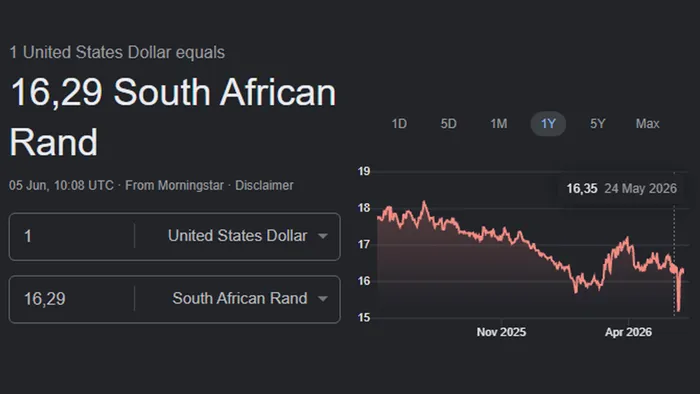
The rand has been range bound this week at R6.30.
Image: Morningstar
TreasuryONE currency strategist Andre Cilliers said that oil remains elevated near $95 a barrel, “keeping inflation concerns and risk aversion elevated.”
However, with markets optimistic that a deal may yet be struck to end the war, Trading Economics says brent crude futures traded below $95 per barrel on Friday after losing nearly 3% in the previous session.
Trading Economics said “the international oil benchmark is still up more than 4% for the week, as negotiations between Washington and Tehran have yet to show meaningful progress, while Israel’s ongoing military operations in Lebanon is becoming a key obstacle”.
Iran-backed Hezbollah rejected a US-mediated ceasefire proposal between Israel and Lebanon, although Trump said the group had approached the White House to discuss ending the hostilities, the website noted.
Cilliers said markets remain focused on geopolitical developments in the Middle East and the latest setback suggests a resolution could take longer than markets had hoped.
In addition to oil prices, fluctuations in the rand-dollar exchange rate over the remainder of June will also influence the eventual fuel-price adjustment.
This week has seen the rand fluctuate to its current level of R16.29 and, on Thursday, hitting R16.22. Trading Economics notes that the rand has remained relatively firm at around R16.30 to the dollar, supported by export earnings, fiscal discipline and South Africa's relatively high interest rates.
According to Trading Economics, the South African Reserve Bank's recent interest-rate increase has reinforced confidence in the currency, while markets are pricing in the possibility of another rate hike in July.
Yet, Bishop noted that South Africa's fuel import bill more than doubled to R44.3 billion in April from R19 billion in January as oil prices surged following the outbreak of conflict in the Middle East. While international diesel prices have moderated somewhat, she said petrol prices have also eased, helping to build the current over-recoveries.
With more than three weeks of pricing data still to be collected, and oil markets continuing to react to developments in the Middle East, the outlook for next month's fuel prices remains highly fluid.
IOL BUSINESS