

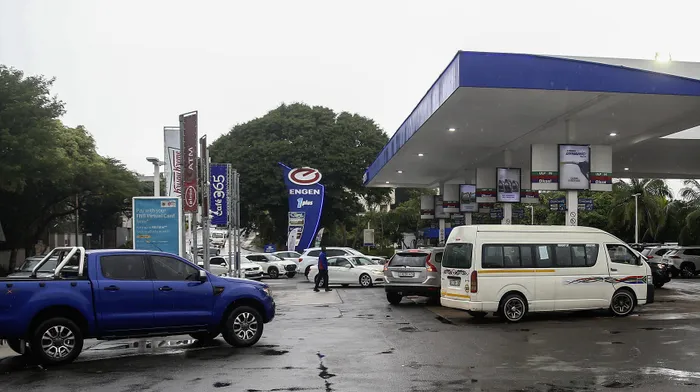
South Africa’s inflation rate climbed to 4% in April as record fuel price increases pushed up transport costs and renewed pressure on consumers.
Image: Leon Lestrade / Independent Newspapers
South Africa’s inflation rate accelerated sharply in April as record fuel price increases filtered through the economy, pushing annual consumer inflation to its highest level since August 2024.
According to Statistics South Africa, annual consumer inflation rose to 4.0% in April from 3.1% in March, sooner than most economists had expected the figure to reach 4%. The monthly increase in the consumer price index was 1.1%, causing fears that interest rates may increase.
Fuel was the main driver with petrol prices up 15.2%, while diesel surged by 35.4%.
Statistics South Africa said the fuel index increased by 18.2% between March and April, the steepest monthly increase since the current consumer price index series began in 2008.
The price of inland 93-octane petrol increased from R20.19 per litre in March to R23.25 in April. According to Statistics South Africa, this was the fifth-largest increase for that fuel grade in 50 years and the biggest this century.
Diesel users were hit even harder. The average diesel price jumped from R21.28 per litre in March to R28.80 in April.
Elna Moolman, head of South Africa macroeconomic research at Standard Bank Group, said the South African Reserve Bank would be closely watching whether higher fuel prices start feeding into broader inflation across the economy.
“The Reserve Bank is really concerned that this sharp rise in fuel prices will mean that much more prices in the economy will start to rise,” Moolman said.
Investec chief economic, Annabel Bishop, said the outcome of today’s elevated inflation rate increases the chance of an interest rate hike from the SARB at the end of the month. She predicts a hike of 0.25 percentage points next Thursday.
“From a market perspective, the Forward Rate Agreement curve now shows over a 100 basis point hike in the repo rate for this year on the elevated consumer price index outcome,” Bishop said.
Lerato Ntuli, economist at Anchor Capital, said "inflation risks remain tilted to the upside. Global oil prices are expected to remain elevated should the Iran conflict persist, sustaining pressure on fuel costs."
Ntuli also noted that the removal of the temporary R3/litre between June and July 2026 is expected to add to inflationary pressures in the coming months.
According to Moolman, core inflation – which excludes food and energy prices – remained lower at about 3.6%, suggesting broader underlying inflation pressures were still relatively contained.
Statistics South Africa separately noted that South Africans filling up inland 93-octane petrol today are paying dramatically more than motorists did 50 years ago.
In January 1976, inland 93-octane petrol cost just 21.1 cents per litre. By May 2026, that had climbed to R26.52 per litre, an increase of roughly 12,470%, according to the agency.
“For those wondering about the decimal places in these two amounts – yes, the petrol price was set at fractions of a cent in the old days!” Statistics South Africa said.
According to the agency, the R1 per litre mark was reached in November 1985 and increased to R5 about two decades later. Fuel prices then doubled in just three years, breaching R10 per litre in 2008.
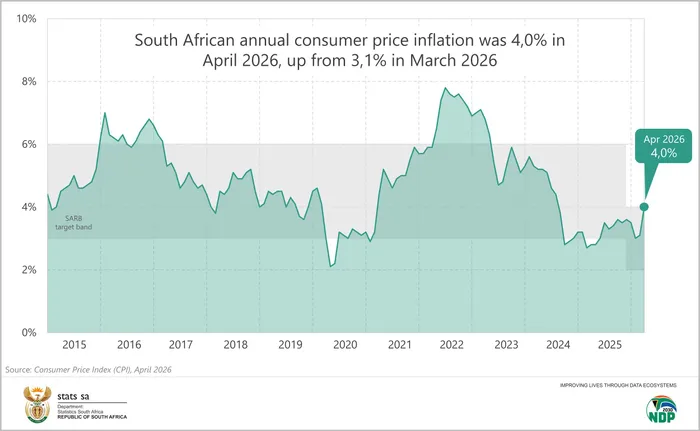
Historical inflation figures.
Image: Statistics South Africa
The latest figures add to South Africa’s long and often volatile inflation history. Historical inflation data published by Statistics South Africa shows annual inflation averaged 18.7% in 1986, while inflation remained above 10% for much of the late 1970s, 1980s and early 1990s.
South Africa’s inflation rate reached 16.1% in 1985 and remained above 14% through several years of the late apartheid period. By comparison, annual inflation averaged 3.2% in 2025 before beginning to accelerate again this year.
The fuel shock also filtered into transport costs. Statistics South Africa said the passenger transport services index rose by 3.1% between March and April, the largest monthly increase since July 2022.
Airfares climbed particularly sharply. Following a 14.3% increase in March, ticket prices increased by a further 24.5% in April, marking the biggest monthly airfare increase since March 2008.
Moolman said the Reserve Bank would be monitoring so-called “second-round effects”, where higher fuel costs begin pushing up prices more broadly across sectors of the economy.
“At this stage, we only see substantial increases in transport costs,” Moolman said, referring to airfares, taxi fares and bus tickets.
Consumers did receive some relief from slowing food inflation. Annual inflation for food and non-alcoholic beverages eased from 3.6% in March to 2.9% in April.
Several staple food categories remained in deflationary territory, including maize meal, porridge, white rice and bread flour.
Meanwhile, medical aid costs continued rising. The insurance index increased by 1.3% month-on-month, largely because of medical aid contribution increases, while annual health insurance inflation reached 8.3%.
“Several medical schemes increased their contributions earlier in the year, with the remainder implementing new premiums in April,” the agency said.
IOL BUSINESS