

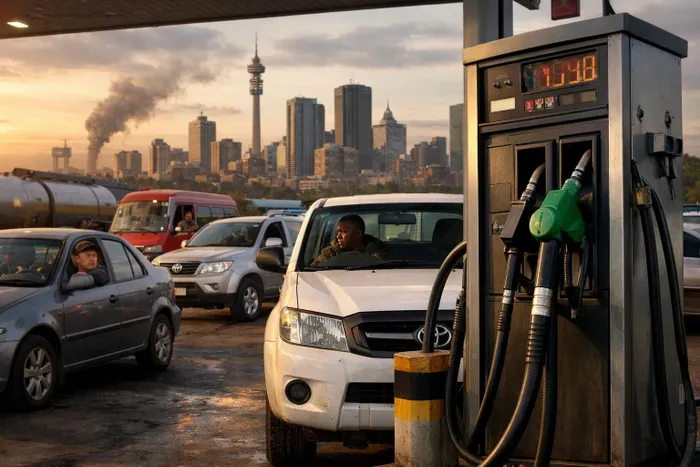
As the war in the Middle East continues to affect oil supply, South Africans are set to feel the pinch at the pumps
Image: Sora
As the war in the Middle East continues to affect oil supply, South Africans are set to feel the pinch at the pumps, with diesel prices expected to rise significantly next week.
According to the latest data from the Central Energy Fund, diesel prices could rise by between R9.86 and R10 per litre, depending on the grade, making it the biggest increase among all fuel types. Petrol, meanwhile, is also expected to rise, with 93-octane and 95-octane grades forecast to increase by around R5.24 to R5.76 per litre, respectively.
Even though the official increases have yet to kick in, South Africans are already reporting that some fuel stations have raised their diesel prices.
This has raised questions about how diesel prices are determined and why stations can adjust them ahead of the official monthly increase.
Diesel prices in South Africa are influenced by a mix of international and local factors.
The Basic Fuel Price (BFP) is the starting point for all fuel pricing. It reflects the cost of buying crude oil, refining it, and transporting it to local depots. The BFP is updated monthly and depends on:
The BFP itself is made up of several components:
Taxes and levies also make up a large portion of the price at the pump, including:
From April 2026, the RAF and GFL taxes will collectively add R6.35 to the price of every litre of petrol or diesel sold in South Africa, an increase of 21 cents. The 'BFP' that determined the March fuel prices is R9.84 for 500ppm diesel. However, this looks set to rise to around R19.88 for April, as illustrated by the latest unaudited CEF data.
Diesel prices in South Africa are not strictly regulated. While the government publishes a monthly reference price, this serves only as a guideline. Wholesalers and service stations are free to set their own diesel selling prices, which is why some stations can raise prices ahead of the official monthly increase.
The bottom line is that diesel retail pricing in South Africa is not regulated in the same way petrol is. Unlike petrol — where the government sets a regulated pump price that all stations must follow — diesel’s retail price is only guided by a monthly reference price.
Stations can adjust diesel prices at any time during the month — and many have done so this week — in anticipation of a large increase expected when the new monthly fuel price takes effect. For instance, TotalEnergies reportedly instructed its network to gradually raise diesel prices by around R8 per litre ahead of the April 1 adjustment to manage demand and avoid stock‑outs due to panic buying, MyBroadband reported.
There have been unverified reports of localised supply tightness or stations temporarily running low on diesel, which can distort pricing dynamics and contribute to patchy price behaviour.
Following oil price surges, fuel companies will inevitably purchase petrol and diesel at higher prices during the month preceding the official price increases that come into effect as a result. However, there is a 'Slate Levy' mechanism in place, that compensates importers for this by building the difference into the following month's official fuel price calculation. Given that, there are concerns that retailers who increase diesel prices ahead of the official increase are effectively 'double dipping', as Engineering News reports.
Robert Maake, Senior Manager at the Department of Mineral and Petroleum Resources, said the situation was being scrutinised by the government.
“The immediate problem is that it will affect how we calculate the slate, because the slate is calculated based on the price reference number for diesel that the department has determined for the period.
“If increases are implemented before the adjustment, it means you're going to be double-dipping, because you are recovering your money now, and next month,” Maake told Engineering News.
Whether the pre-emptive diesel increases are justified or not, the bottom line is that motorists looking to buy diesel should shop around as far as it's feasible, and fill their tanks long before the official price hikes take effect on April 1.
IOL BUSINESS