

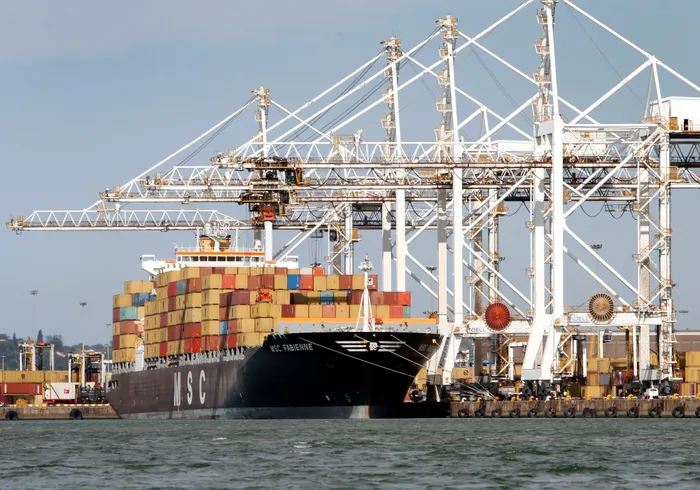
South Africa's economy expanded by 1.1% in 2025, according to StatsSA. South Africa's economy grew by 1.1% in 2025.
Image: Shelley Kjonstad / Independent Media
South Africa’s economy grew a mere 1.1% in 2025, highlighting the country’s continued challenge in achieving significant growth despite a slight improvement over 2024.
Data released by Statistics South Africa (StatsSA) on Tuesday indicated that while this growth outpaced the dismal 0.5% recorded in 2024, it fell short of the anticipated 1.4%, spotlighting urgent fiscal pressures and soaring unemployment rates in the country, according to Business Report.
The figures illustrate the precarious nature of South Africa’s economic recovery, with growth heavily reliant on consumer spending and the services sector, rather than on vital investments and industrial development, which are essential to usher in meaningful change.
According to StatsSA, the measured growth was primarily spurred by notable advancements in the finance, real estate, and business services sector, which grew by 1.9%, contributing a significant 0.5 percentage points to the overall GDP.
Additionally, the agriculture, forestry, and fishing sectors showcased a remarkable surge of 17.4%, adding a further 0.4 percentage points to overall growth, while trade, catering, and accommodation activities contributed another 0.3 percentage points with a 2.3% increase, Business Report reported.
However, the report also articulated concerning contractions across several critical industries, stalling the broader economic expansion. Manufacturing, electricity, gas, and water supply, as well as the construction sector, each registered negative growth in 2025, thereby exposing ongoing structural frailties within the economy's productive sectors.
StatsSA's chief director for national accounts, Bokang Vumbukani-Lepolesa, highlighted that manufacturing was the largest detractor, shrinking by 0.6%.
Key segments within the sector, particularly the automotive division, wood, paper and publishing, as well as food and beverages, faced major downturns. Furthermore, declines were observed in the fourth quarter across electricity, gas, water, construction, mining, and transport-related activities, raising alarms among policymakers and investors about their potential impacts on job creation and industrial growth.
The fourth quarter of 2025 reflected a continuation of this sluggish momentum, with GDP rising by only 0.4% compared to the preceding quarter, following a modest 0.3% growth in the third quarter.
Once again, the finance, real estate, and business services sectors spearheaded recovery efforts by growing by 1.4%, while trade, catering, and accommodation saw a growth of 0.9%, and personal services and government services each increased by 0.4%. The agriculture sector also managed a 0.4% growth, buoyed by stronger outputs in field crops and horticulture.
Despite the uptick in consumer spending, which saw household final consumption expenditure increase by 3.6% and contribute 2.4 percentage points to GDP growth, investment activities took a significant hit.
Gross fixed capital formation plunged by 2.2% over the year, detracting from overall economic growth by 0.3 percentage points. Low investment levels remain one of the primary hurdles facing South Africa's long-term economic prospects by constraining productive capacity and infrastructure development.
Additionally, the country's external trade dynamics posed a further challenge.
Net exports curtailed overall growth by one percentage point in 2025 as declining exports were overshadowed by rising imports. A decrease in the export of goods and services was attributed to lower trade in vehicles, transport equipment, vegetable products, and prepared food, while a surge in imports was observed driven by machinery, electrical equipment, vehicles, and agricultural products.
As South Africa grapples with these challenges, economists urge policymakers to prioritise effective reforms and bolster investment to secure a more sustainable path toward growth and job creation. Until there is a substantive shift away from reliance on consumption-based growth, the prospects for a robust recovery may remain elusive for the foreseeable future.
The economic landscape for South Africa remains precarious in 2025, urging immediate action and comprehensive strategies for transformation.
IOL Business