

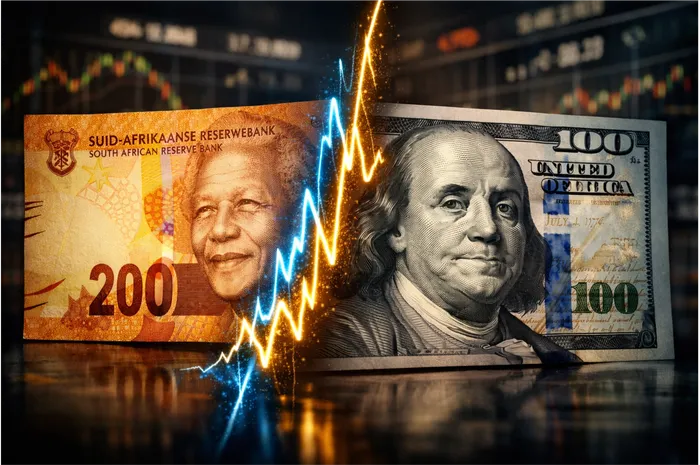
A weaker rand will spur inflation higher and could curb interest rate cuts.
Image: Manus
South Africa’s inflation outlook has shifted ahead of the next South African Reserve Bank meeting to announce interest rates.
This comes as oil prices skyrocket and the rand weakens amid escalating war in Iran.
Brent crude traded at $82.45 a barrel on Tuesday, up from below $80 a day earlier, following a coordinated US and Israel military offensive targeting Iran’s nuclear programme.
The rand depreciated towards R16.30 to the dollar, the lowest in nearly a month, from R15.87 on Friday, as investors reduced exposure to emerging market assets.
Annabel Bishop, chief economist at Investec, noted that given the currency’s sharp decline from Friday’s R15.87 and the rapid rise in oil prices, fuel prices are likely to increase in April if the situation does not reverse.
Bishop said that a higher rand fuel price could lift inflation from a forecast 2.9% in April to 3.3%.
Headline inflation currently stands at 3.5%. Market commentators had expected inflation to settle towards the South African Reserve Bank’s 3% target during the first half of the year.
Dr Ernst van Biljon, head lecturer of Supply Chain Management at the IMM Graduate School, said the rand, already sensitive to global risk sentiment, could weaken further in a “flight to safety” environment, compounding imported inflation given the current situation in the Middle East.
Kevin Lings, chief economist at STANLIB, said there are substantial unknowns around the duration and scope of the conflict, including whether it broadens into a wider regional war.
Lings said oil supply through the Strait of Hormuz was being disrupted, which places upward pressure on prices and raises concerns about global supply chains.
“We need to monitor what that may mean to supply disruptions around the world and we need to also be mindful of what that oil price could mean for things like South Africa's inflation rate and therefore the potential outlook for interest rates,” said Lings.
Lings said petrol inflation is currently around minus 10%, creating a low base effect. The under-recovery on South Africa’s petrol price is about 75 cents, indicating “we're facing a fairly hefty price increase going into the next couple of weeks; next couple of months”.
If oil prices remain higher and the currency stays under pressure, this would translate into upward pressure on a key component of the inflation basket in the coming weeks and months,” said Lings.
Lings said while this is unlikely to derail progress towards achieving a 3% inflation outcome, it could result in the Reserve Bank adopting a more conservative approach.
The risk is that interest rates remain unchanged for longer if upward pressure on inflation becomes more pronounced, said Lings.
The Monetary Policy Committee is scheduled to announce its decision on 26 March.
“I think it's a key event we're going to monitor together with any sort of supply disruption coming out of the Middle East,” said Lings.
IOL BUSINESS