

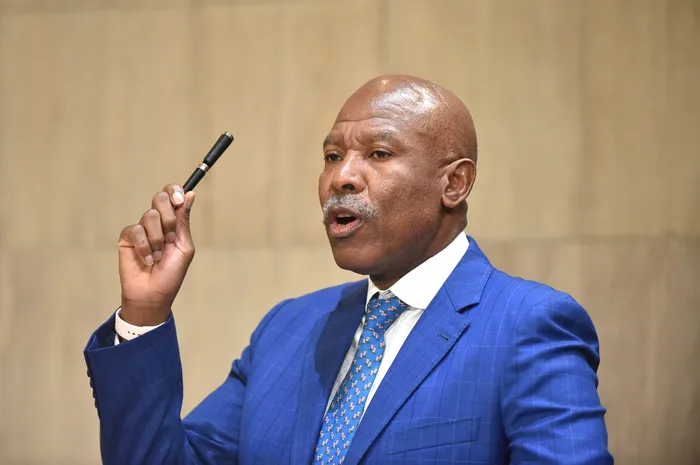
South African Reserve Bank governor Lesetja Kganyago gets his wish of a lower inflation target granted during MTBPS.
Image: Thobile Mathonsi | Independent Newspapers
South Africa’s inflation target has been lowered, with South African Reserve Bank Lesetja Kganyago’s wish being granted this afternoon - almost.
Presenting the Medium-Term Budget Policy Statement in Parliament this afternoon. Finance Minister Enoch Godongwana announced a target of 3% with a 1 percentage point tolerance band.
This, Godongwana said, followed an agreement with the central bank, and consultations with President Cyril Ramaphosa and cabinet.
“The 1 percentage point band provides flexibility to accommodate any unexpected inflationary shocks,” said Godongwana.
This is in line with South Africa’s approach to inflation targeting, which has always been a flexible one, looking beyond short-run deviations in inflation, the minister said.
The Reserve Bank will pursue the target on a continuous basis and clearly communicate any deviations from the target.
This new target immediately replaces the previous target range of between 3% 6% and will be implemented over the next two years, said Godongwana.
“Over time, the lower target will decrease inflation expectations and inflation, creating room for lower interest rates,” he said.
This supports household spending and business investment, boosting economic growth, and job creation.
While the short-term fiscal costs of a lower target mean lower nominal gross domestic product and revenue growth, the long-term benefits of taking this step far outweigh these costs.
GDP is expected to come in at 1.2% this year, he said.
Kganyago said lowering the interest rate target would result in stronger economic growth.
“Economic growth in South Africa has been weak, averaging a mere 0.8% annually over the past ten years. This growth performance is worse than that of 87% of other economies,” he said.
Kganyago said a lower inflation rate would enable policy to ease and support the economy despite the various factors dragging growth down.
“It would also allow policy to be more flexible, even if inflationary shocks materialised. Improving the credibility of monetary policy could strategically offset the deteriorating fiscal position, slowing growth and the effects of weakened institutions,” he said.
Kganyago has said “our inflation performance is still mediocre. Our price level is more than 60% higher than it was in 2015.”
Making his argument for a tighter rate, Kganyago said that “something that cost R60 ten years ago now costs about R100
“In a nutshell, we are in the bottom 10% of the class for growth and the bottom 30% for inflation. This is not the kind of country report you want,” the governor said.
IOL Business