

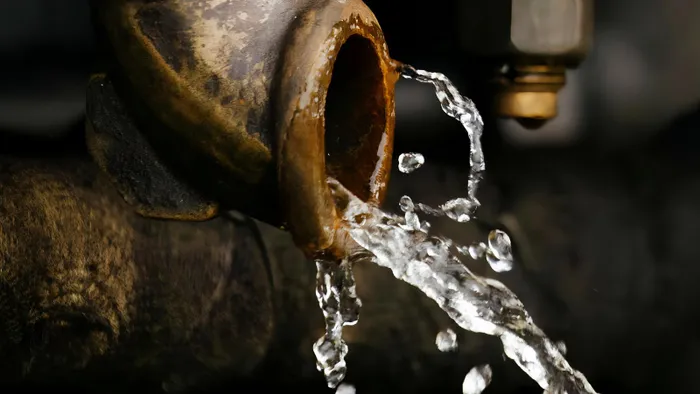
The Auditor-General warned that the continued failure to invest in preventative maintenance was placing pressure on Johannesburg Water's finances while increasing the risk of service delivery failures for residents.
Image: Johannesburg Water
Water outages have become an increasingly familiar part of life for Johannesburg residents. Sometimes there is warning, with Johannesburg Water and Rand Water announcing planned maintenance days in advance.
Often there is not, with burst pipes, pump failures or reservoir problems leaving suburbs without running water for hours or even days. The problem is unlikely to disappear anytime soon.
The Auditor-General reached a similarly concerning conclusion in the latest audit of Johannesburg Water, finding that the utility had failed to maintain its water infrastructure proactively.
Instead of carrying out planned preventative maintenance, the entity increasingly relied on emergency repairs after pipes had already burst or infrastructure had failed.
According to the Consolidated Report on Local Government Audit Outcomes 2024-25, inadequate maintenance planning, poor execution and weak oversight contributed to the deterioration of the network, leading to more frequent pipe bursts, declining reliability and rising repair costs.
The Auditor-General warned that the continued failure to invest in preventative maintenance was placing pressure on Johannesburg Water's finances while increasing the risk of service delivery failures for residents.
The report also criticised delays in infrastructure projects, weak project management and unreliable performance reporting, saying these contributed to high water losses and undermined oversight.
The Auditor-General said a material irregularity had been raised with Johannesburg Water in December 2024 over the issue, with infrastructure refurbishment now under way. However, it warned that without effective corrective action, the utility would remain exposed to ongoing infrastructure failures, escalating repair costs and growing operational and financial risks.
Johannesburg Water's own planning documents paint a sobering picture. The utility says it faces an infrastructure renewal backlog of R26.61 billion, while one in five of its assets has less than 10 years of useful life remaining.
Among its biggest risks are ageing infrastructure, funding constraints and water demand outstripping available supply.
Its latest mid-year performance report also acknowledges significant service delivery challenges, including unplanned outages that sparked community protests in areas including Coronationville, Westbury and Claremont. Less than half of burst pipes were repaired within the utility's 48-hour target during the reporting period.
While residents cannot fix ageing infrastructure, they can make the next outage considerably less disruptive.
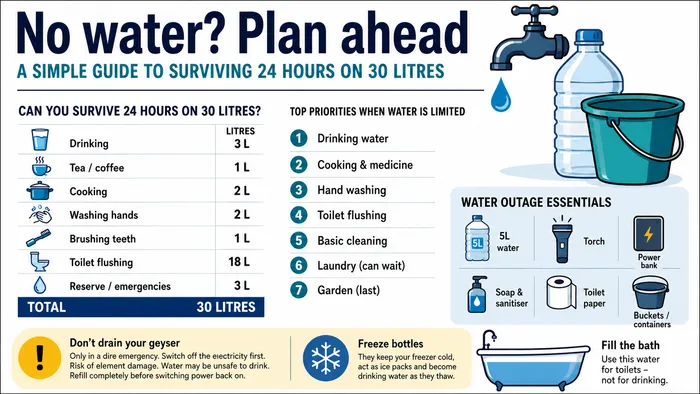
Emergency water survival guide.
Image: ChatGPT
The mistake many people make is waiting until Johannesburg Water announces an outage before rushing to the shops. Even though the utility says Johannesburg is not at Day Zero, and a ware water room has been established, it's always best to stock up on some water.
Buy a few 5-litre water bottles once, use the water normally, then refill and rotate them every few months. The upfront cost is in buying the bottles; afterwards they become reusable emergency storage.
If you know water will be shut off, fill the bath before the supply is interrupted. That water is ideal for flushing toilets but should not be used for drinking unless it has been treated appropriately.
Buckets, washing-up bowls, cooking pots and even empty ice cream tubs can also provide valuable emergency storage.
The first priority is drinking water. After that comes cooking, medicines and basic hygiene.
Rather than running precious stored water down the drain, pour a few litres into a basin for hand washing. A basin of clean water will serve an entire household for much longer than repeatedly opening a tap or pouring directly from a bottle.
If you have stored enough water, wash dishes using one container for washing and another for rinsing. Laundry, however, can usually wait until supply is restored. Saving drinking-quality water is far more important than washing clothes.
Your toilet is not your biggest problem as most people use far more water flushing toilets than they realise. Bath water, collected rainwater or other greywater can all be used for flushing. Drinking-quality water should be reserved for people, not plumbing.
The utility says it faces an infrastructure renewal backlog of R26.61 billion, while one in five of its assets has less than 10 years of useful life remaining.
Image: Johannesburg Water
If a planned outage is coming, freeze some of those bottles. They keep your freezer colder for longer if the electricity also fails, double as ice packs in a cooler box if food needs to be moved and become chilled drinking water as they thaw.
Don't assume everyone can buy a JoJo tank. Advice to install a JoJo tank is useful for homeowners with space and spare cash, but it is unrealistic for many Johannesburg residents.
People living in flats, backyard rooms and many township homes often have nowhere to install a large storage tank. Instead, think about storage that fits your home.
A collection of refillable 5-litre bottles can slide under a bed or into the bottom of a cupboard. Twenty-litre containers fit into wardrobes, behind doors or in garages where available.
Small amounts of stored water spread across several containers are often easier to manage than one large drum.
Don't drain your geyser. It is one of the most common suggestions on social media – and one of the riskiest.
While a household geyser may contain more than 100 litres of water, plumbing experts advise that it should only be accessed in a genuine emergency. If the municipal supply has stopped, the geyser's electricity should first be switched off at the distribution board.
Running an empty geyser risks burning out the heating element, while the stored water may contain sediment and is not considered safe for drinking.
Once municipal supply returns, allow the geyser to refill completely and wait until hot taps run normally without spitting air before restoring power.
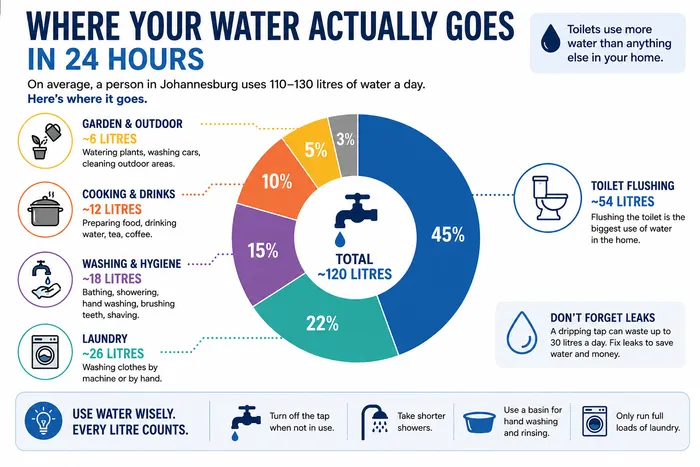
How much water actually gets used during the day.
Image: ChatGPT
Homeowners can also stretch stored water by reusing greywater. Water left over after bathing or rinsing clothes can be used on ornamental plants or lawns, reducing the need to use fresh drinking water outdoors.
Vegetable gardens require more care, as untreated greywater is generally unsuitable for edible crops.
When the taps stop unexpectedly:
Johannesburg's water problems are unlikely to disappear overnight. But a few inexpensive preparations – and knowing which mistakes to avoid – can turn an unexpected outage from a crisis into an inconvenience.
IOL BUSINESS